
多元醇对AZ31B镁合金上58S生物活性溶胶-凝胶涂层体外生物降解及生物活性的影响
Influence of Polyols on the In Vitro Biodegradation and Bioactivity of 58S Bioactive Sol-Gel Coatings on AZ31B Magnesium Alloys.
作者信息
Chandrasekar Ashok Raja, Merino Emilia, Pakseresht Amirhossein, Galusek Dusan, Duran Alicia, Castro Yolanda
机构信息
Centre for Functional and Surface-Functionalized Glass, Alexander Dubček University of Trenčín, 911 50 Trenčín, Slovakia.
Instituto de Cerámica y Vidrio (CSIC), Campus de Cantoblanco, 28049 Madrid, Spain.
出版信息
Polymers (Basel). 2023 Mar 2;15(5):1273. doi: 10.3390/polym15051273.
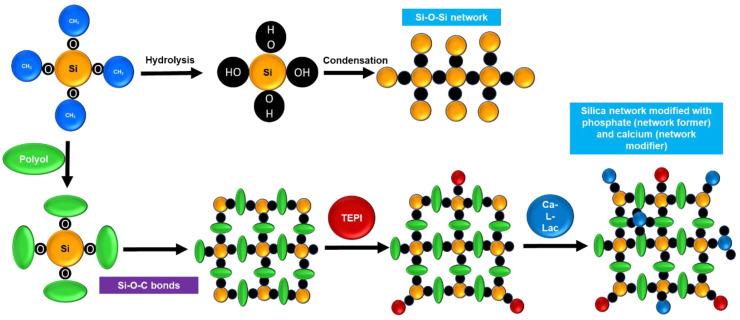
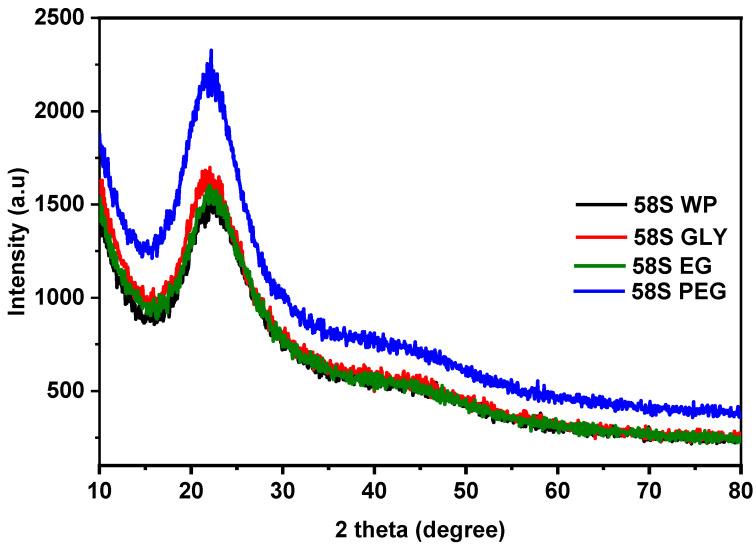
The mechanical qualities of AZ31B magnesium alloys make them a promising material for biodegradable metallic implants. However, rapid degradation limits the application of these alloys. In the present study, 58S bioactive glasses were synthesized using the sol-gel method and several polyols such as glycerol, ethylene glycol, and polyethylene glycol, were used to improve the sol stability and to control the degradation of AZ31B. The synthesized bioactive sols were dip-coated onto AZ31B substrates and then, characterized by various techniques such as scanning electron microscopy (SEM), X-ray diffraction (XRD) and electrochemical techniques (potentiodynamic and electrochemical impedance spectroscopy), among them. FTIR analysis confirmed the formation of a silica, calcium, and phosphate system and the XRD the amorphous nature of the 58S bioactive coatings obtained by sol-gel. The contact angle measurements confirmed that all the coatings were hydrophilic. The biodegradability response under physiological conditions (Hank's solution) was investigated for all the 58S bioactive glass coatings, observing a different behaviour depending on the polyols incorporated. Thus, for 58S PEG coating, an efficient control of the release of H2 gas was observed, and showing a pH control between 7.6 and 7.8 during all the tests. A marked apatite precipitation was also observed on the surface of the 58S PEG coating after the immersion test. Thus, the 58S PEG sol-gel coating is considered a promising alternative for biodegradable magnesium alloy-based medical implants.
AZ31B镁合金的机械性能使其成为用于可生物降解金属植入物的一种很有前景的材料。然而,快速降解限制了这些合金的应用。在本研究中,采用溶胶 - 凝胶法合成了58S生物活性玻璃,并使用了几种多元醇,如甘油、乙二醇和聚乙二醇,来提高溶胶稳定性并控制AZ31B的降解。将合成的生物活性溶胶浸涂到AZ31B基底上,然后通过各种技术进行表征,其中包括扫描电子显微镜(SEM)、X射线衍射(XRD)和电化学技术(动电位和电化学阻抗谱)。傅里叶变换红外光谱(FTIR)分析证实了二氧化硅、钙和磷酸盐体系的形成,XRD证实了通过溶胶 - 凝胶法获得的58S生物活性涂层的非晶态性质。接触角测量证实所有涂层都是亲水性的。对所有58S生物活性玻璃涂层在生理条件(汉克溶液)下的生物降解性响应进行了研究,观察到根据所掺入的多元醇不同而有不同的行为。因此,对于58S聚乙二醇(PEG)涂层,观察到对氢气释放的有效控制,并且在所有测试过程中pH值控制在7.6至7.8之间。浸泡试验后在58S PEG涂层表面还观察到明显的磷灰石沉淀。因此,58S PEG溶胶 - 凝胶涂层被认为是基于可生物降解镁合金的医用植入物的一种有前景的替代品。



 Zotero 插件