School of Civil Engineering and Transportation, South China University of Technology, Guangzhou 510641, China.
Sensors (Basel). 2023 Feb 25;23(5):2567. doi: 10.3390/s23052567.
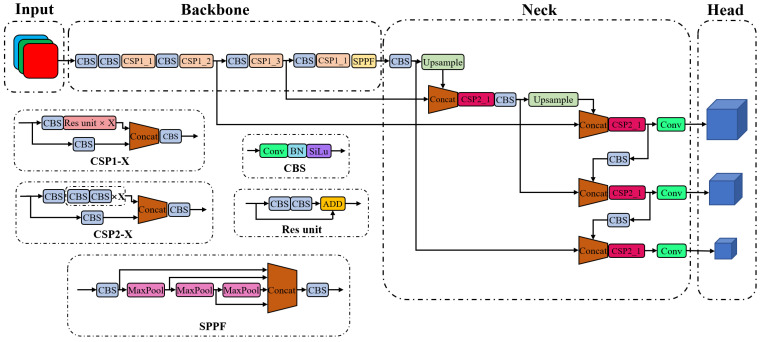
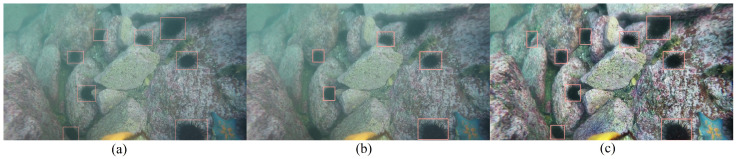
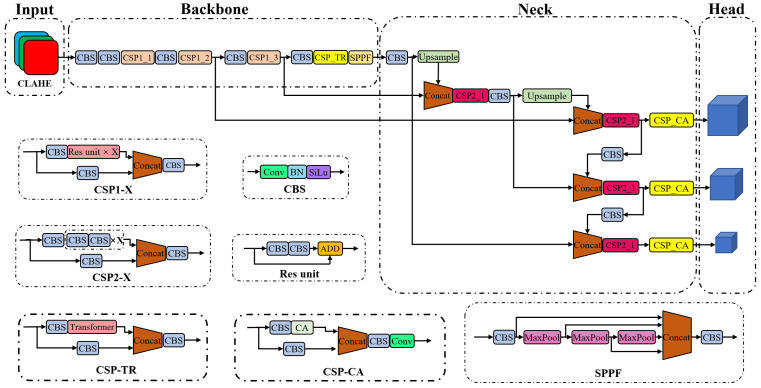
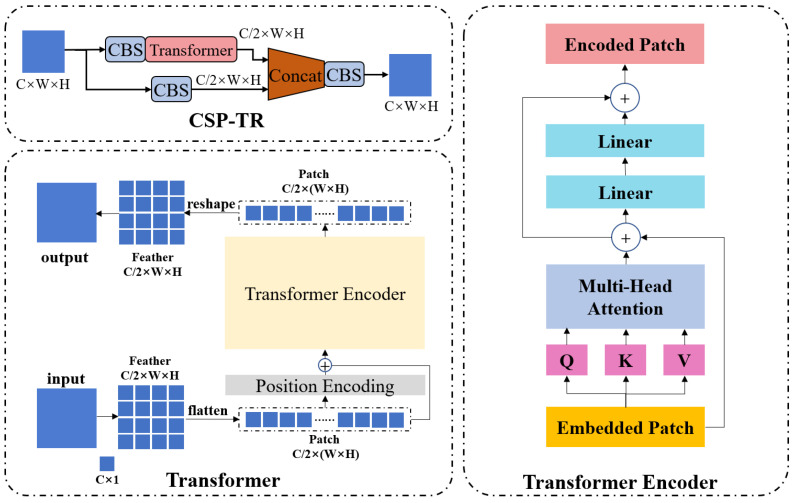
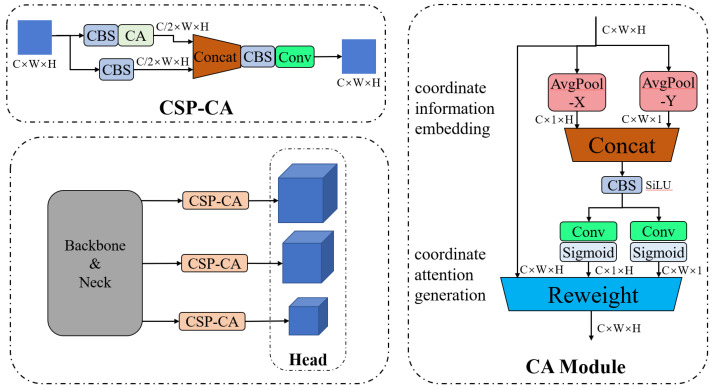
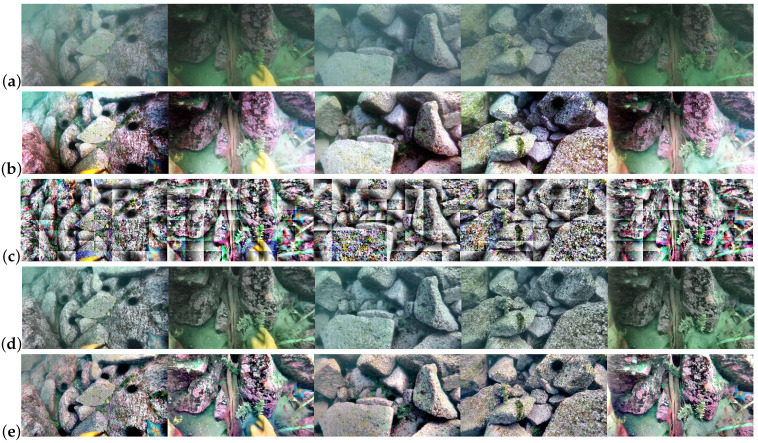
Underwater object detection is a key technology in the development of intelligent underwater vehicles. Object detection faces unique challenges in underwater applications: blurry underwater images; small and dense targets; and limited computational capacity available on the deployed platforms. To improve the performance of underwater object detection, we proposed a new object detection approach that combines a new detection neural network called TC-YOLO, an image enhancement technique using an adaptive histogram equalization algorithm, and the optimal transport scheme for label assignment. The proposed TC-YOLO network was developed based on YOLOv5s. Transformer self-attention and coordinate attention were adopted in the backbone and neck of the new network, respectively, to enhance feature extraction for underwater objects. The application of optimal transport label assignment enables a significant reduction in the number of fuzzy boxes and improves the utilization of training data. Our tests using the RUIE2020 dataset and ablation experiments demonstrate that the proposed approach performs better than the original YOLOv5s and other similar networks for underwater object detection tasks; moreover, the size and computational cost of the proposed model remain small for underwater mobile applications.
水下目标检测是智能水下机器人发展的关键技术。目标检测在水下应用中面临着独特的挑战:水下图像模糊;目标小且密集;以及部署平台上可用的计算能力有限。为了提高水下目标检测的性能,我们提出了一种新的目标检测方法,该方法结合了一种称为 TC-YOLO 的新检测神经网络、一种使用自适应直方图均衡算法的图像增强技术以及用于标签分配的最优传输方案。所提出的 TC-YOLO 网络是在 YOLOv5s 的基础上开发的。新网络的骨干和颈部分别采用了 Transformer 自注意力和坐标注意力,以增强水下物体的特征提取。最优传输标签分配的应用可以显著减少模糊框的数量,并提高训练数据的利用率。我们使用 RUIE2020 数据集进行的测试和消融实验表明,与原始 YOLOv5s 和其他类似网络相比,所提出的方法在水下目标检测任务中表现更好;此外,所提出的模型的大小和计算成本仍然很小,适用于水下移动应用。