
非小细胞肺癌靶向治疗的最新进展
Recent progress in targeted therapy for non-small cell lung cancer.
作者信息
Xiao Yanxia, Liu Pu, Wei Jie, Zhang Xin, Guo Jun, Lin Yajun
机构信息
The Key Laboratory of Geriatrics, Beijing Institute of Geriatrics, Institute of Geriatric Medicine, Chinese Academy of Medical Sciences, Beijing Hospital, National Center of Gerontology of National Health Commission, Beijing, China.
Peking University Fifth School of Clinical Medicine, Beijing, China.
出版信息
Front Pharmacol. 2023 Feb 21;14:1125547. doi: 10.3389/fphar.2023.1125547. eCollection 2023.
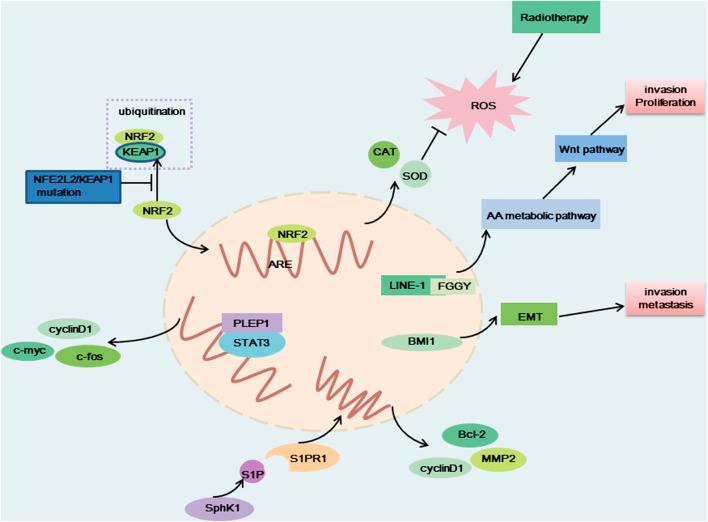
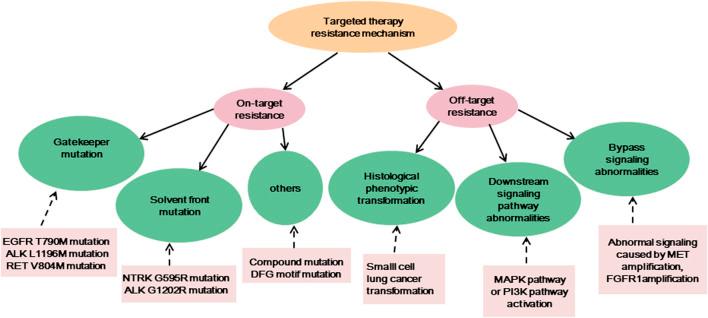
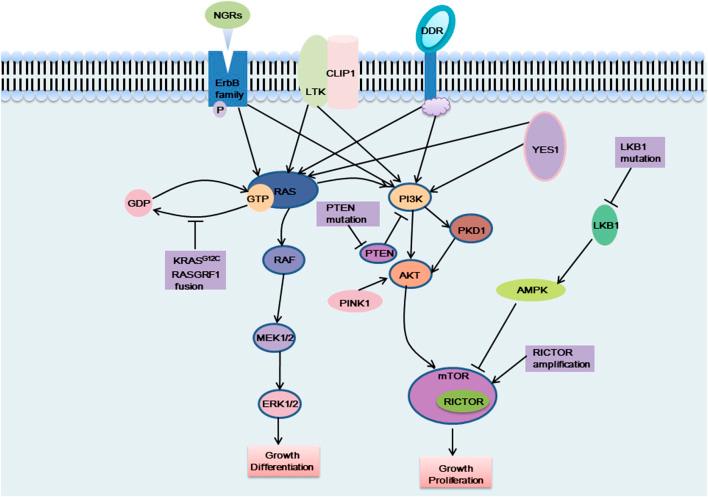
The high morbidity and mortality of non-small cell lung cancer (NSCLC) have always been major threats to people's health. With the identification of carcinogenic drivers in non-small cell lung cancer and the clinical application of targeted drugs, the prognosis of non-small cell lung cancer patients has greatly improved. However, in a large number of non-small cell lung cancer cases, the carcinogenic driver is unknown. Identifying genetic alterations is critical for effective individualized therapy in NSCLC. Moreover, targeted drugs are difficult to apply in the clinic. Cancer drug resistance is an unavoidable obstacle limiting the efficacy and application of targeted drugs. This review describes the mechanisms of targeted-drug resistance and newly identified non-small cell lung cancer targets (e.g., KRAS G12C, NGRs, DDRs, CLIP1-LTK, PELP1, STK11/LKB1, NFE2L2/KEAP1, RICTOR, PTEN, RASGRF1, LINE-1, and SphK1). Research into these mechanisms and targets will drive individualized treatment of non-small cell lung cancer to generate better outcomes.
非小细胞肺癌(NSCLC)的高发病率和死亡率一直是对人们健康的主要威胁。随着非小细胞肺癌致癌驱动因素的确定以及靶向药物的临床应用,非小细胞肺癌患者的预后有了很大改善。然而,在大量非小细胞肺癌病例中,致癌驱动因素尚不清楚。识别基因改变对于NSCLC的有效个体化治疗至关重要。此外,靶向药物在临床上难以应用。癌症耐药性是限制靶向药物疗效和应用的一个不可避免的障碍。本综述描述了靶向耐药的机制以及新发现的非小细胞肺癌靶点(如KRAS G12C、NGRs、DDRs、CLIP1-LTK、PELP1、STK11/LKB1、NFE2L2/KEAP1、RICTOR、PTEN、RASGRF1、LINE-1和SphK1)。对这些机制和靶点的研究将推动非小细胞肺癌的个体化治疗以产生更好的结果。
 Zotero 插件