Yao Yansheng, Ji Peng, Chen Hao, Ge Jianwen, Xu Yajing, Wang Peng, Xu Li, Yan Zhirong
Department of Endocrinology, The Affiliated Taixing People's Hospital of Medical College, Yangzhou University, Taixing, China.
College of Pharmacy and Chemistry & Chemical Engineering, Jiangsu Provincial Key Laboratory of Chiral Pharmaceutical Chemicals Biologically Manufacturing, Taizhou University, Taizhou, China.
Front Oncol. 2023 Feb 23;13:1084289. doi: 10.3389/fonc.2023.1084289. eCollection 2023.
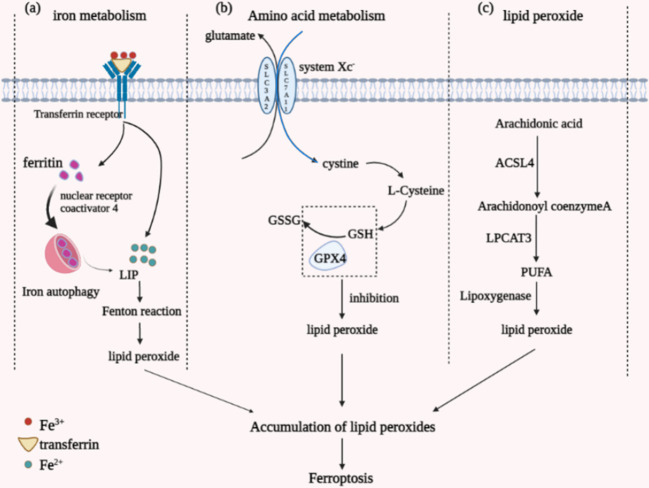
The brain tumor is a kind of malignant tumor with brutal treatment, high recurrence rate, and poor prognosis, and the incidence and death rate is increasing yearly. Surgery is often used to remove the primary tumor, supplemented by radiotherapy and chemotherapy, which have highly toxic side effects. Therefore, there is an urgent need to explore new strategies, methods, and technologies that can genuinely improve the treatment of brain tumors. Ferroptosis differs from traditional apoptosis's morphological and biochemical characteristics, and ferroptosis possesses its unique characteristics and mechanisms, opening up a new field of ferroptosis treatment for cancer. It has been found that there is a close relationship between ferroptosis and brain tumors, and a novel nano-drug delivery system based on ferroptosis has been used for the ferroptosis treatment of brain tumors with remarkable effects. This review firstly analyzes the characteristics of ferroptosis, summarizes the mechanism of its occurrence and some factors that can be involved in the regulation of ferroptosis, introduces the potential link between ferroptosis and brain tumors, and clarifies the feasibility of ferroptosis in the treatment of brain tumors. It then presents the ferroptosis nano drug delivery systems developed under different metabolic pathways for ferroptosis treatment of brain tumors. Finally, it summarizes the current problems and solutions of ferroptosis nano drugs for brain tumor treatment, aiming to provide a reference for developing ferroptosis nano drugs against brain tumors.
脑肿瘤是一种治疗手段残酷、复发率高且预后不良的恶性肿瘤,其发病率和死亡率逐年上升。手术常被用于切除原发性肿瘤,并辅以放疗和化疗,而这些治疗具有高度的毒副作用。因此,迫切需要探索能够真正改善脑肿瘤治疗的新策略、方法和技术。铁死亡在形态学和生化特征上不同于传统的细胞凋亡,它具有独特的特征和机制,为癌症治疗开辟了铁死亡治疗这一新领域。现已发现铁死亡与脑肿瘤之间存在密切关系,一种基于铁死亡的新型纳米药物递送系统已被用于脑肿瘤的铁死亡治疗,效果显著。本文综述首先分析了铁死亡的特征,总结了其发生机制以及一些可能参与铁死亡调节的因素,介绍了铁死亡与脑肿瘤之间的潜在联系,并阐明了铁死亡在脑肿瘤治疗中的可行性。接着介绍了针对脑肿瘤铁死亡治疗在不同代谢途径下开发的铁死亡纳米药物递送系统。最后总结了脑肿瘤治疗中铁死亡纳米药物目前存在的问题及解决方法,旨在为开发抗脑肿瘤铁死亡纳米药物提供参考。