Nordhoff Sina, Lee John D, Calvert Simeon C, Berge Siri, Hagenzieker Marjan, Happee Riender
Department Transport and Planning, Delft University of Technology, Delft, Netherlands.
Department of Industrial and Systems Engineering, University of Wisconsin-Madison, Madison, WI, United States.
Front Psychol. 2023 Feb 23;14:1101520. doi: 10.3389/fpsyg.2023.1101520. eCollection 2023.
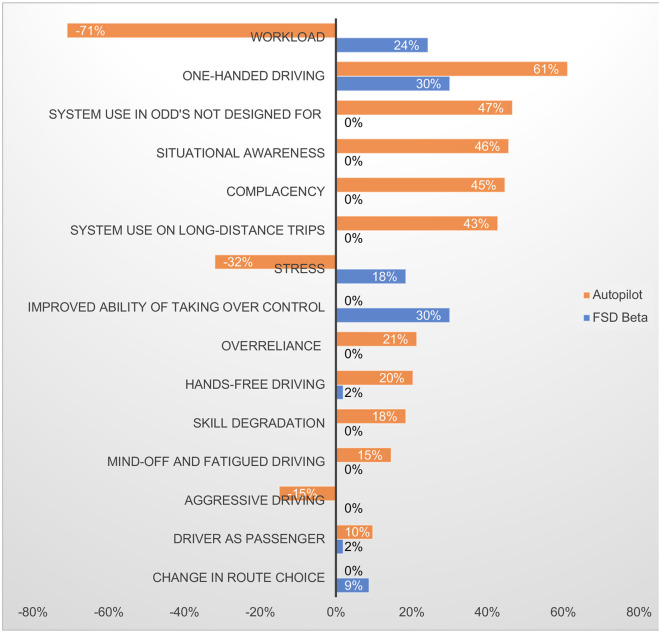
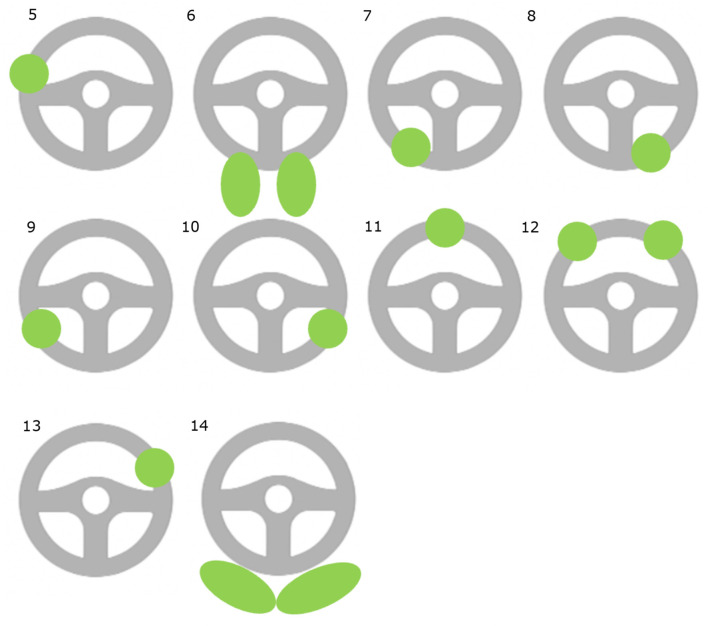
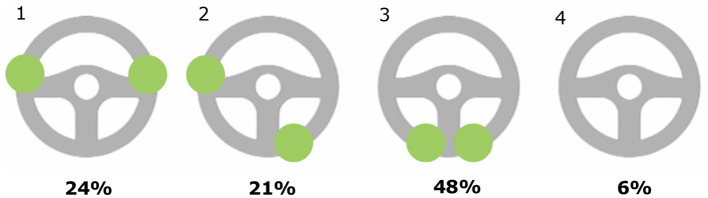
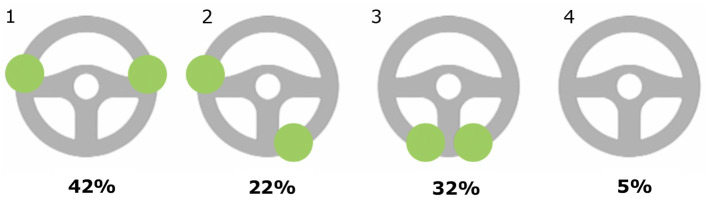
Tesla's Full Self-Driving Beta (FSD) program introduces technology that extends the operational design domain of standard Autopilot from highways to urban roads. This research conducted 103 in-depth semi-structured interviews with users of Tesla's FSD Beta and standard Autopilot to evaluate the impact on user behavior and perception. It was found that drivers became complacent over time with Autopilot engaged, failing to monitor the system, and engaging in safety-critical behaviors, such as hands-free driving, enabled by weights placed on the steering wheel, mind wandering, or sleeping behind the wheel. Drivers' movement of eyes, hands, and feet became more relaxed with experience with Autopilot engaged. FSD Beta required constant supervision as unfinished technology, which increased driver stress and mental and physical workload as drivers had to be constantly prepared for unsafe system behavior (doing the wrong thing at the worst time). The hands-on wheel check was not considered as being necessarily effective in driver monitoring and guaranteeing safe use. Drivers adapt to automation over time, engaging in potentially dangerous behaviors. Some behavior seems to be a knowing violation of intended use (e.g., weighting the steering wheel), and other behavior reflects a misunderstanding or lack of experience (e.g., using Autopilot on roads not designed for). As unfinished Beta technology, FSD Beta can introduce new forms of stress and can be inherently unsafe. We recommend future research to investigate to what extent these behavioral changes affect accident risk and can be alleviated through driver state monitoring and assistance.
特斯拉的完全自动驾驶测试版(FSD)计划引入了一项技术,该技术将标准自动驾驶的运行设计范围从高速公路扩展到了城市道路。这项研究对特斯拉FSD测试版和标准自动驾驶的用户进行了103次深入的半结构化访谈,以评估其对用户行为和认知的影响。研究发现,随着时间的推移,驾驶员在启用自动驾驶后变得自满,未能监控系统,并做出了一些关键安全行为,比如通过在方向盘上放置重物来实现免提驾驶、注意力不集中或在驾驶时睡觉。随着使用自动驾驶经验的增加,驾驶员眼睛、手和脚的动作变得更加放松。由于FSD测试版作为未完成的技术需要持续监督,这增加了驾驶员的压力以及精神和身体负担,因为驾驶员必须时刻为系统的不安全行为做好准备(在最糟糕的时候做出错误的事情)。手握方向盘检查在驾驶员监控和确保安全使用方面并不一定被认为是有效的。随着时间的推移,驾驶员会适应自动化,做出潜在危险行为。有些行为似乎是明知故犯地违反预期用途(例如,在方向盘上加重物),而其他行为则反映出误解或缺乏经验(例如,在不适合的道路上使用自动驾驶)。作为未完成的测试版技术,FSD测试版可能会带来新的压力形式,并且本质上可能不安全。我们建议未来的研究调查这些行为变化在多大程度上会影响事故风险,以及是否可以通过驾驶员状态监测和辅助来缓解。