Department of Pharmacy, Yantai University, Yantai, China.
Pharmacy Department, Wenzhou Nursing School, Wenzhou, China.
Front Endocrinol (Lausanne). 2023 Feb 27;14:1136067. doi: 10.3389/fendo.2023.1136067. eCollection 2023.
The most aggressive subtype of breast cancer, triple-negative breast cancer (TNBC), has a worse prognosis and a higher probability of relapse since there is a narrow range of treatment options. Identifying and testing potential therapeutic targets for the treatment of TNBC is of high priority.
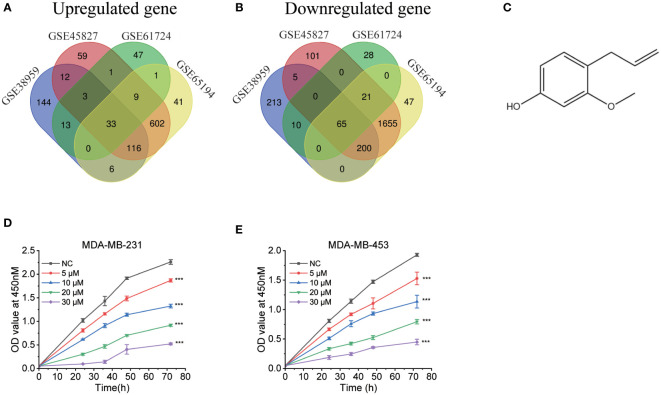
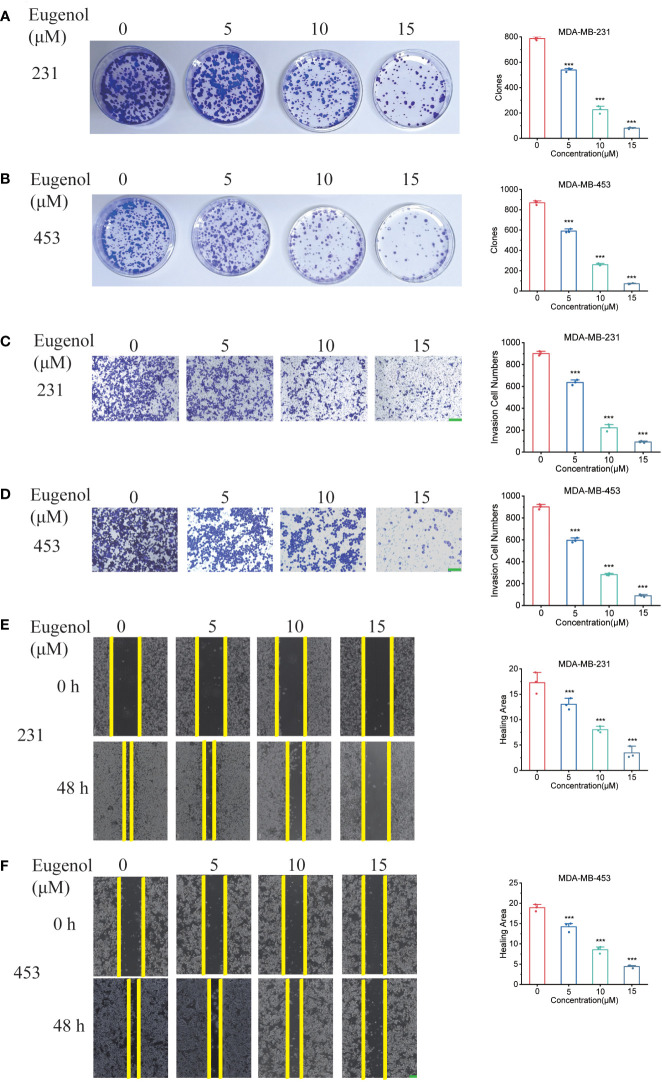
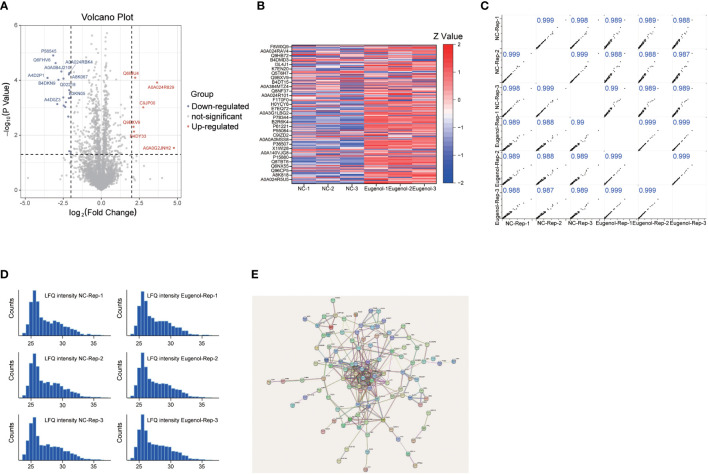
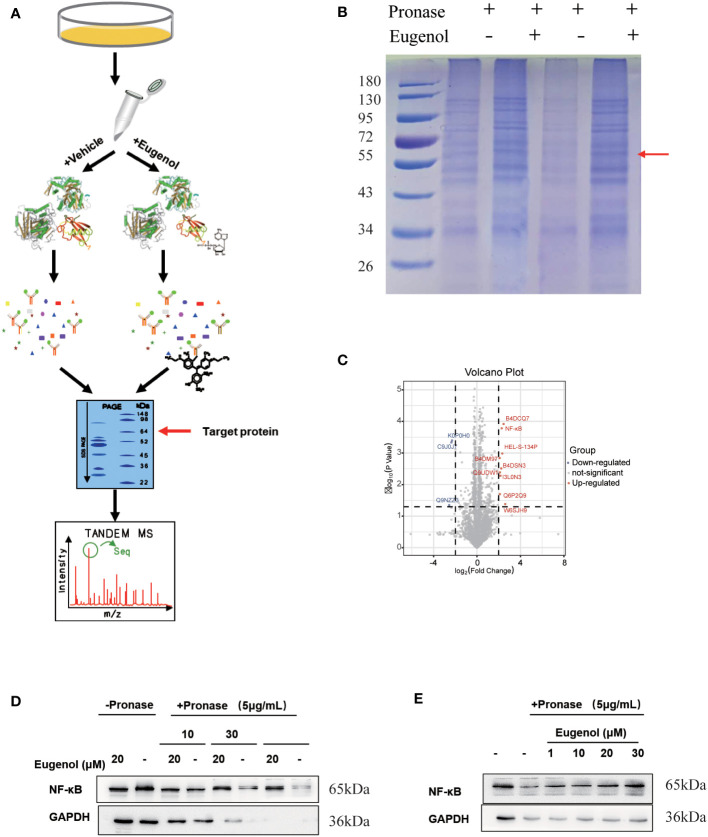
Using a transcriptional signature of triple-negative breast cancer collected from Gene Expression Omnibus (GEO), CMap was utilized to reposition compounds for the treatment of TNBC. CCK8 and colony formation experiments were performed to detect the effect of the candidate drug on the proliferation of TNBC cells. Meanwhile, transwell and wound healing assay were implemented to detect cell metastasis change caused by the candidate drug. Moreover, the proteomic approach was presently ongoing to evaluate the underlying mechanism of the candidate drug in TNBC. Furthermore, drug affinity responsive target stability (DARTS) coupled with LC-MS/MS was carried out to explore the potential drug target candidate in TNBC cells.
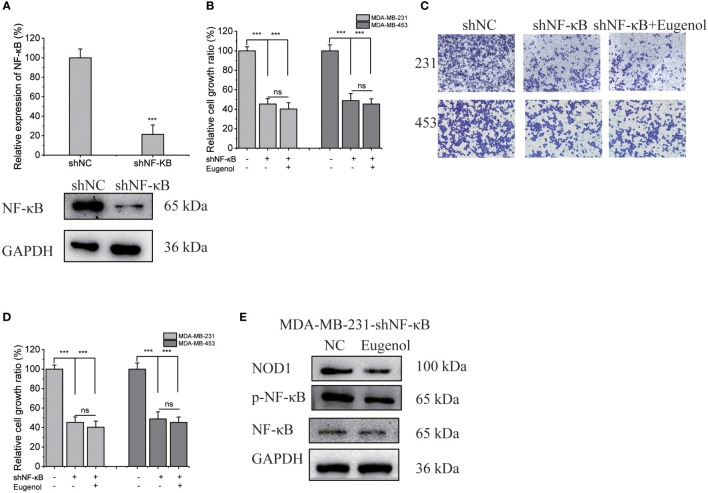
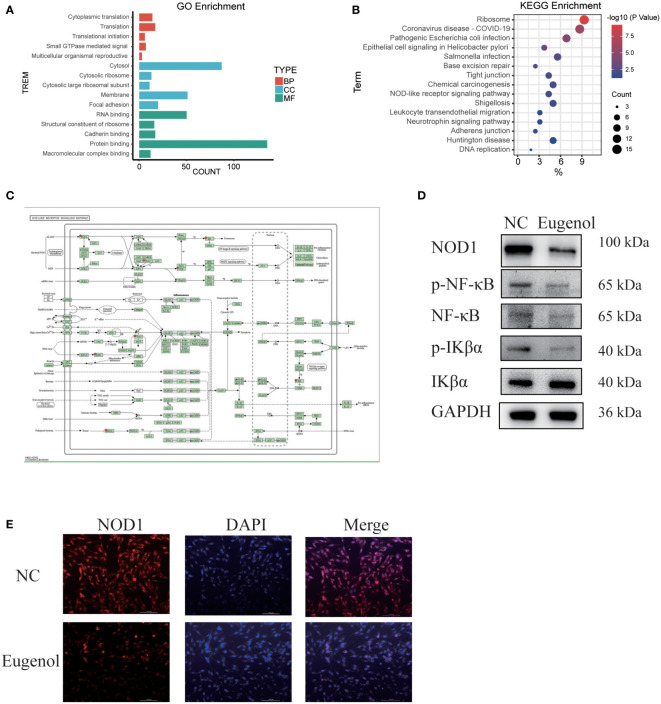
We found that the most widely used medication, eugenol, reduced the growth and metastasis of TNBC cells. According to the underlying mechanism revealed by proteomics, eugenol could inhibit TNBC cell proliferation and metastasis the NOD1-NF-κB signaling pathway. DARTS experiment further revealed that eugenol may bind to NF-κB in TNBC cells.
Our findings pointed out that eugenol was a potential candidate drug for the treatment of TNBC.
三阴性乳腺癌(TNBC)是乳腺癌中侵袭性最强的亚型,由于治疗选择有限,预后较差,复发概率较高。因此,寻找和测试治疗 TNBC 的潜在治疗靶点至关重要。
利用从基因表达综合数据库(GEO)中收集的三阴性乳腺癌转录组学特征,我们使用 CMap 重新定位用于治疗 TNBC 的化合物。通过 CCK8 和集落形成实验检测候选药物对 TNBC 细胞增殖的影响。同时,通过 Transwell 和划痕愈合实验检测候选药物引起的细胞转移变化。此外,目前正在进行蛋白质组学方法来评估候选药物在 TNBC 中的潜在作用机制。此外,还进行了药物亲和反应靶标稳定性(DARTS)实验,并结合 LC-MS/MS 来探索 TNBC 细胞中潜在的药物靶标候选物。
我们发现最广泛使用的药物之一——丁香油,可降低 TNBC 细胞的生长和转移。根据蛋白质组学揭示的潜在机制,丁香油可通过 NOD1-NF-κB 信号通路抑制 TNBC 细胞的增殖和转移。DARTS 实验进一步表明,丁香油可能与 TNBC 细胞中的 NF-κB 结合。
我们的研究结果表明,丁香油可能是治疗 TNBC 的潜在候选药物。