Zheng Yan, Bai Chao, Zhang Kui, Han Qing, Guan Qingbiao, Liu Ying, Zheng Zhaohui, Xia Yong, Zhu Ping
Department of Clinical Immunology, Xijing Hospital, Fourth Military Medical University, Xi'an, China.
National Translational Science Center for Molecular Medicine, Xi'an, China.
Front Physiol. 2023 Mar 3;14:1132214. doi: 10.3389/fphys.2023.1132214. eCollection 2023.
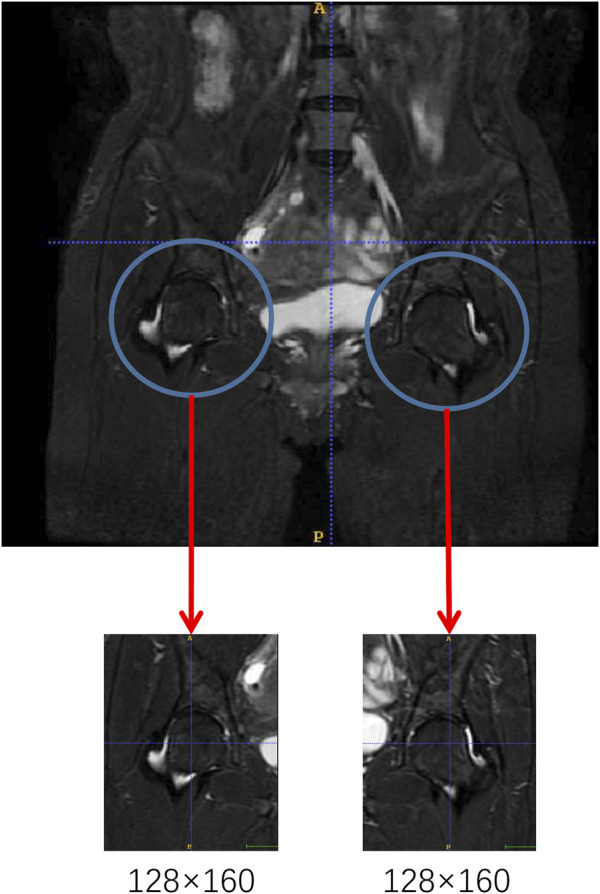
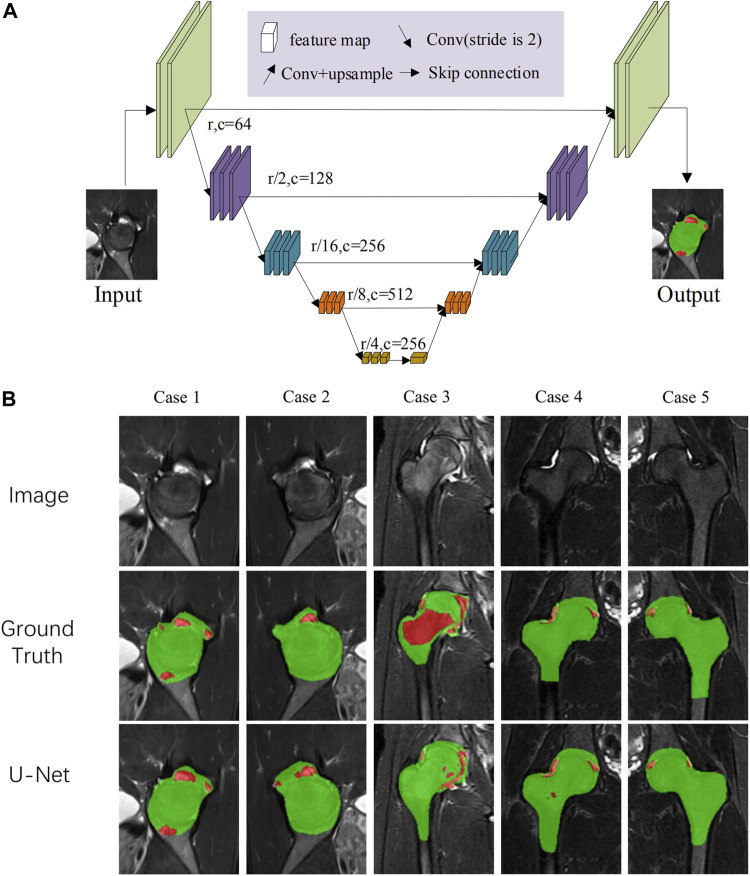
Hip inflammation is one of the most common complications in patients with spondyloarthritis (SpA). Herein, we employed use of a deep learning-based magnetic resonance imaging (MRI) evaluation model to identify irregular and multiple inflammatory lesions of the hip. All of the SpA patients were enrolled at the Xijing Hospital. The erythrocyte sediment rate (ESR), C-reactive protein (CRP), hip function Harris score, and disease activity were evaluated by clinicians. Manual MRI annotations including bone marrow edema (BME) and effusion/synovitis, and a hip MRI scoring system (HIMRISS) assessment was performed by experienced musculoskeletal radiologists. The segmentation accuracies of four deep learning models, including U-Net, UNet++, Attention-Unet, and HRNet, were compared using five-fold cross-validation. The clinical agreement of U-Net was evaluated with clinical symptoms and HIMRISS results. A total of 1945 MRI slices of STIR/T2WI sequences were obtained from 195 SpA patients with hip involvement. After the five-fold cross-validation, U-Net achieved an average segmentation accuracy of 88.48% for the femoral head and 69.36% for inflammatory lesions, which are higher than those obtained by the other three models. The UNet-score, which was calculated based on the same MRI slices as HIMRISS, was significantly correlated with the HIMRISS scores and disease activity indexes ( values <0.05). This deep-learning based automatic MRI evaluation model could achieve similar quantification performance as an expert radiologist, and it has the potential to improve the accuracy and efficiency of clinical diagnosis for SpA patients with hip involvement.
髋关节炎症是脊柱关节炎(SpA)患者最常见的并发症之一。在此,我们采用基于深度学习的磁共振成像(MRI)评估模型来识别髋关节不规则和多发的炎症性病变。所有SpA患者均在西京医院入组。临床医生评估红细胞沉降率(ESR)、C反应蛋白(CRP)、髋关节功能Harris评分和疾病活动度。由经验丰富的肌肉骨骼放射科医生进行包括骨髓水肿(BME)和积液/滑膜炎在内的MRI手动标注以及髋关节MRI评分系统(HIMRISS)评估。使用五折交叉验证比较了包括U-Net、UNet++、Attention-Unet和HRNet在内的四种深度学习模型的分割准确率。用临床症状和HIMRISS结果评估U-Net的临床一致性。从195例有髋关节受累的SpA患者中获得了1945张STIR/T2WI序列的MRI切片。经过五折交叉验证,U-Net对股骨头的平均分割准确率为88.48%,对炎症性病变的平均分割准确率为69.36%,高于其他三种模型。基于与HIMRISS相同的MRI切片计算得出的UNet评分与HIMRISS评分和疾病活动指数显著相关(P值<0.05)。这种基于深度学习的自动MRI评估模型能够达到与放射科专家相似的量化性能,并且有潜力提高SpA髋关节受累患者临床诊断的准确性和效率。