Park Jinwoo, Michels Alexander, Lyu Fangzheng, Han Su Yeon, Wang Shaowen
Department of Geography and Geographic Information Science, University of Illinois Urbana- Champaign, Urbana, IL, USA.
CyberGIS Center for Advanced Digital and Spatial Studies, University of Illinois Urbana- Champaign, Urbana, IL, USA.
Appl Geogr. 2023 May;154:102929. doi: 10.1016/j.apgeog.2023.102929. Epub 2023 Mar 14.
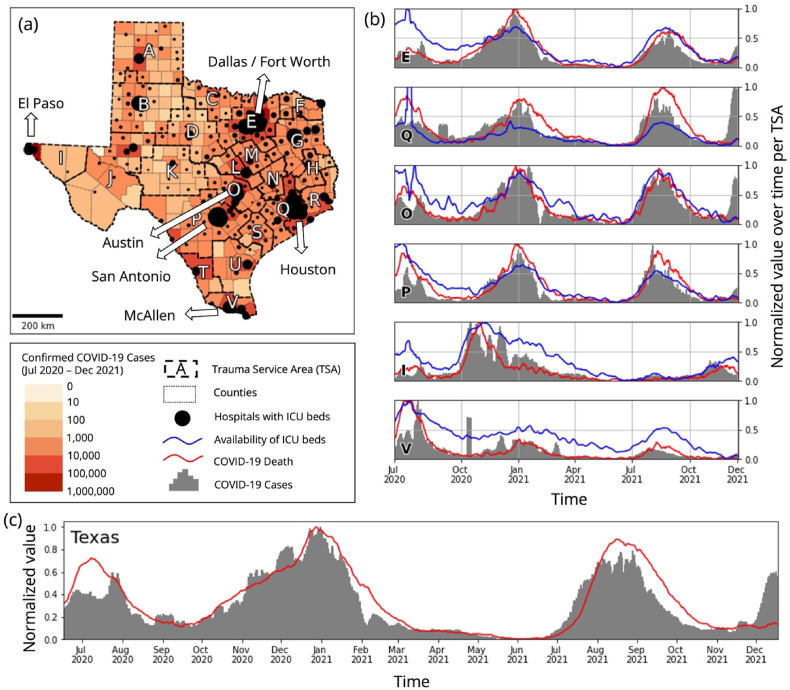
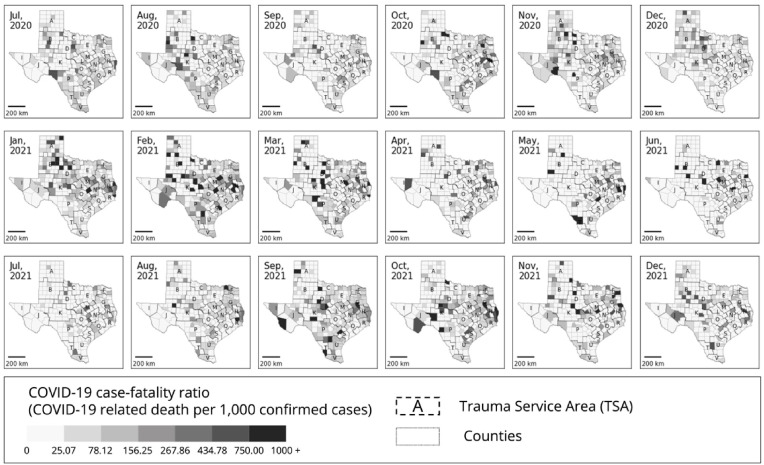
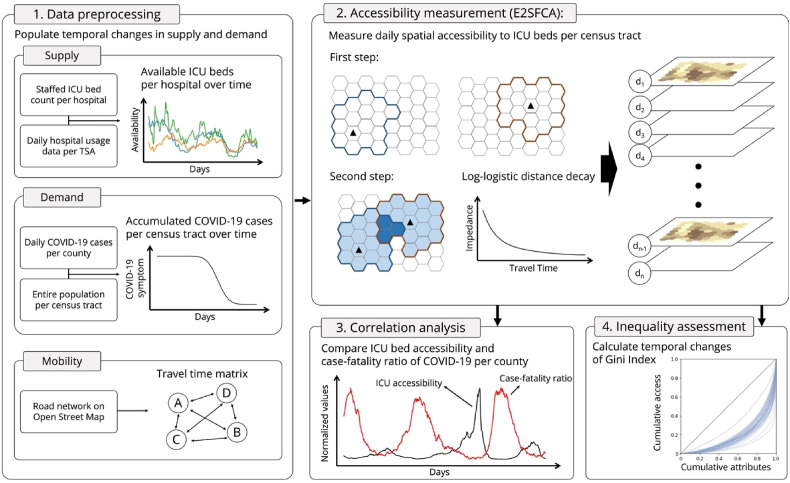
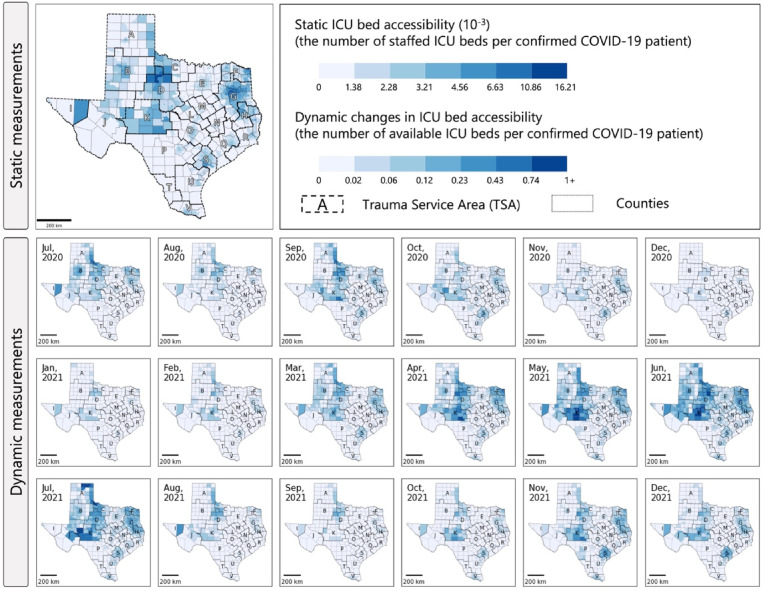
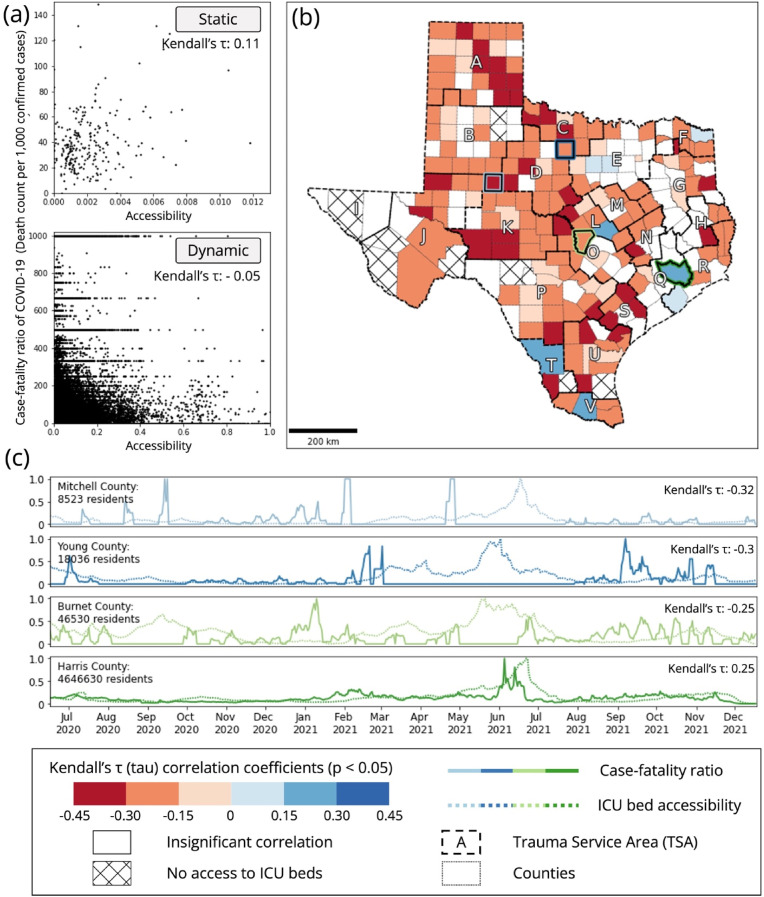
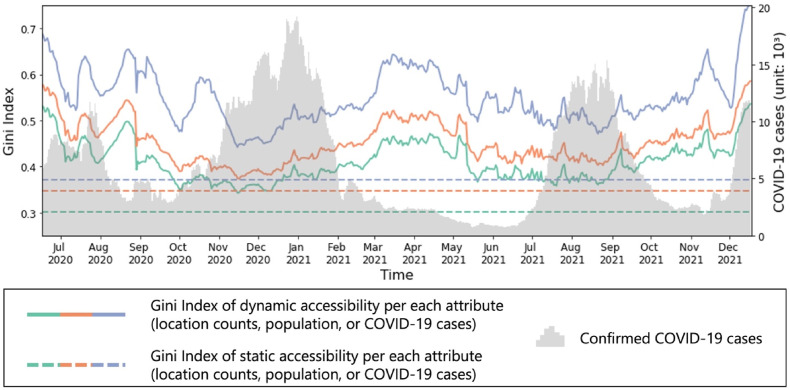
During the COVID-19 pandemic, many patients could not receive timely healthcare services due to limited availability and access to healthcare resources and services. Previous studies found that access to intensive care unit (ICU) beds saves lives, but they overlooked the temporal dynamics in the availability of healthcare resources and COVID-19 cases. To fill this gap, our study investigated daily changes in ICU bed accessibility with an enhanced two-step floating catchment area (E2SFCA) method in the state of Texas. Along with the increased temporal granularity of measurements, we uncovered two phenomena: 1) aggravated spatial inequality of access during the pandemic, and 2) the retrospective relationship between insufficient ICU bed accessibility and the high case-fatality ratio of COVID-19 in rural areas. Our findings suggest that those locations should be supplemented with additional healthcare resources to save lives in future pandemic scenarios.
在新冠疫情期间,由于医疗资源和服务的可及性有限,许多患者无法获得及时的医疗服务。以往的研究发现,获得重症监护病房(ICU)床位能挽救生命,但这些研究忽视了医疗资源可及性和新冠病例的时间动态变化。为填补这一空白,我们的研究采用增强型两步浮动流域面积(E2SFCA)方法,调查了德克萨斯州ICU床位可及性的每日变化。随着测量时间粒度的增加,我们发现了两个现象:1)疫情期间就医的空间不平等加剧;2)农村地区ICU床位可及性不足与新冠高病死率之间的回顾性关系。我们的研究结果表明,在未来的疫情情况下,这些地区应补充额外的医疗资源以挽救生命。