Department of Pediatrics, University of Wisconsin School of Medicine and Public Health, Madison, WI, USA.
Department of Medicine, University of Wisconsin School of Medicine and Public Health, Madison, WI, USA.
Sci Adv. 2023 Mar 24;9(12):eadf0567. doi: 10.1126/sciadv.adf0567.
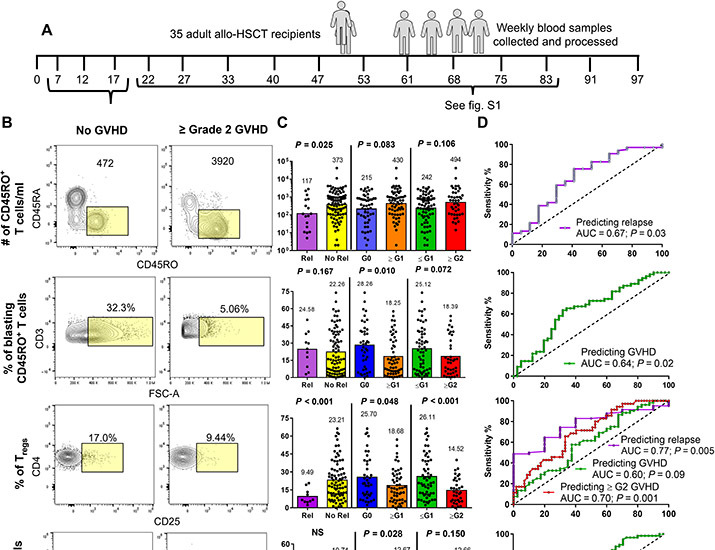
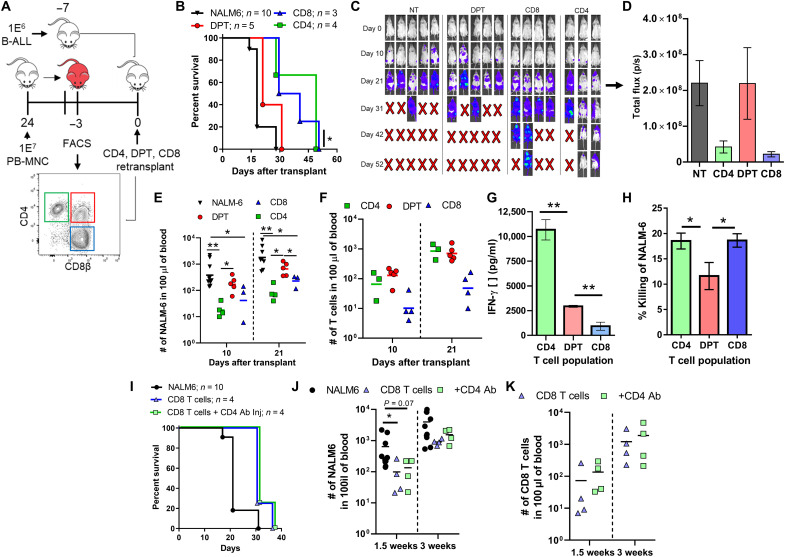
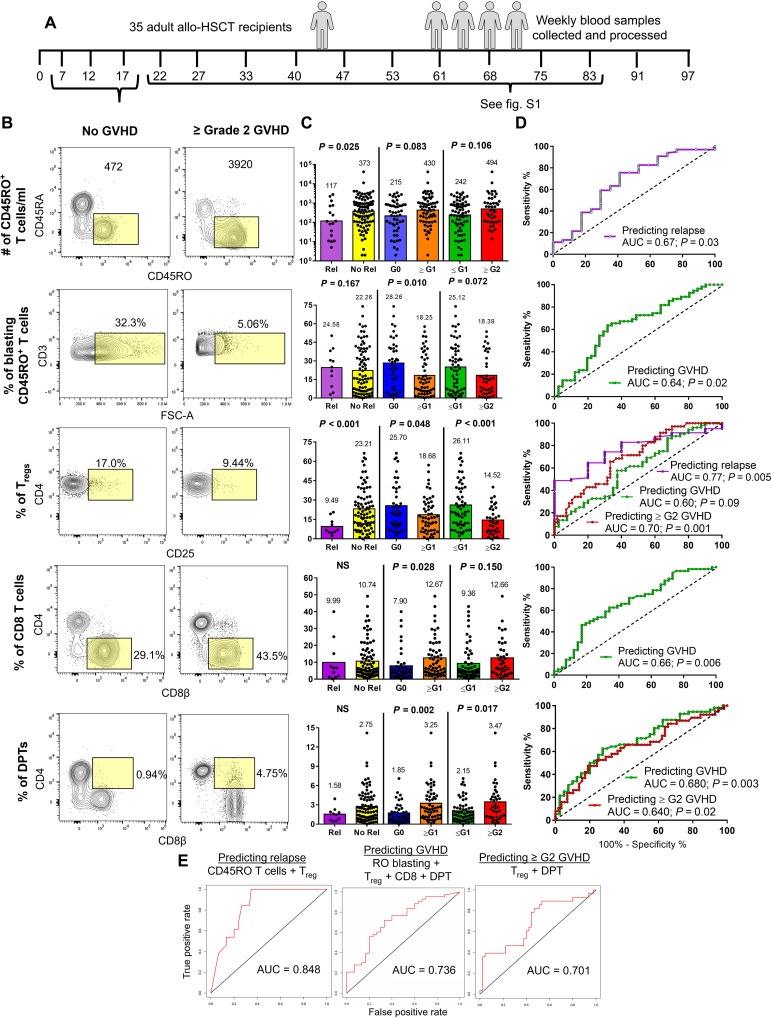
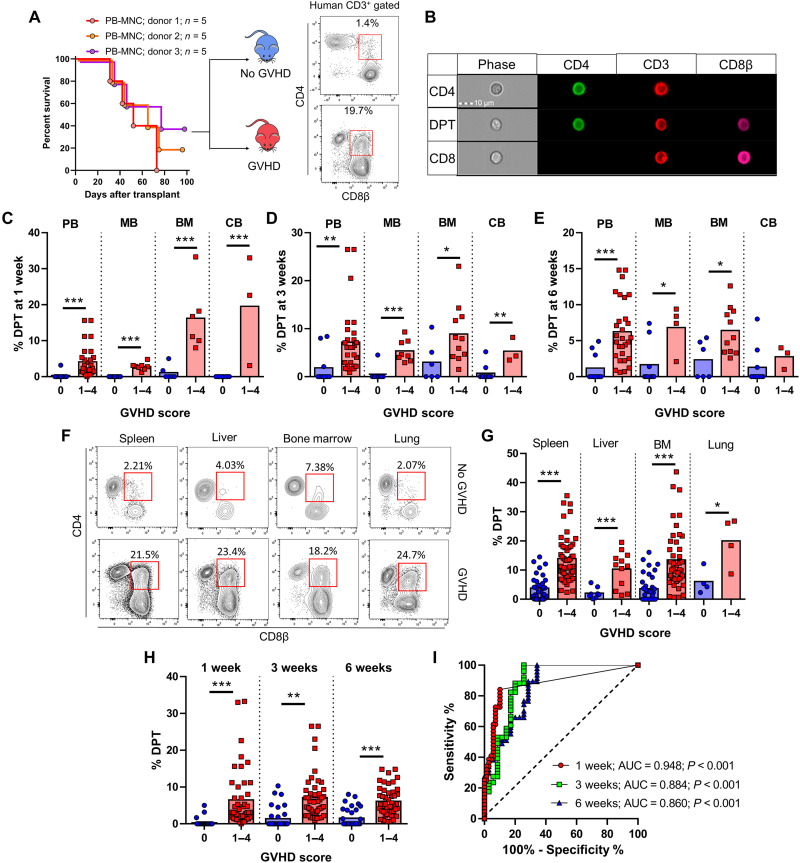
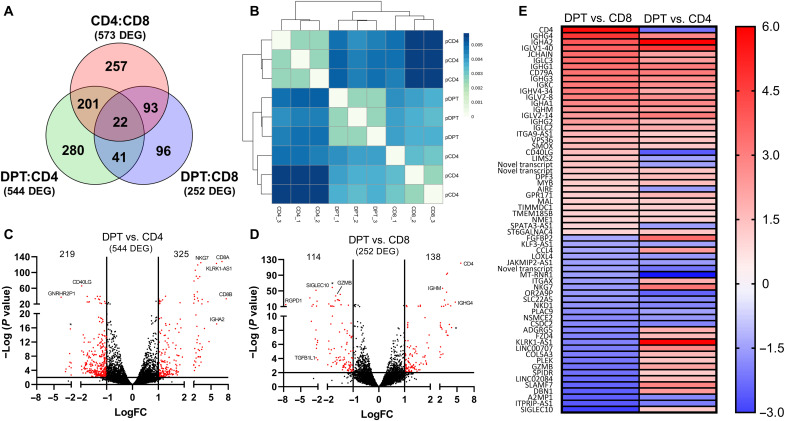
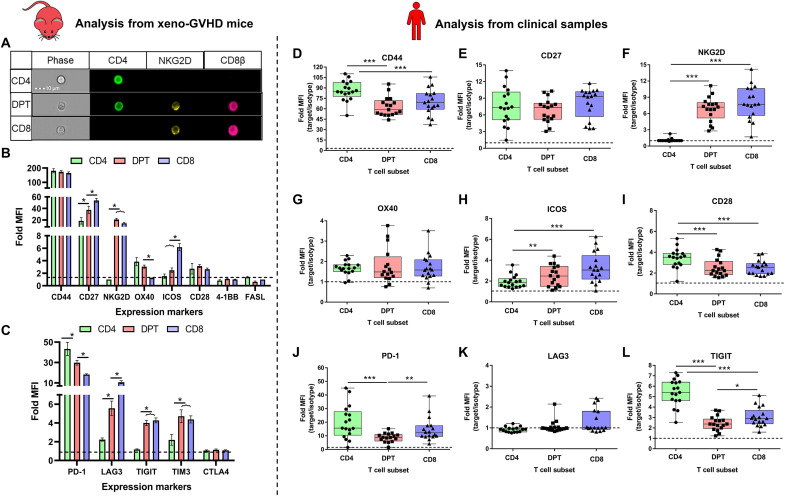
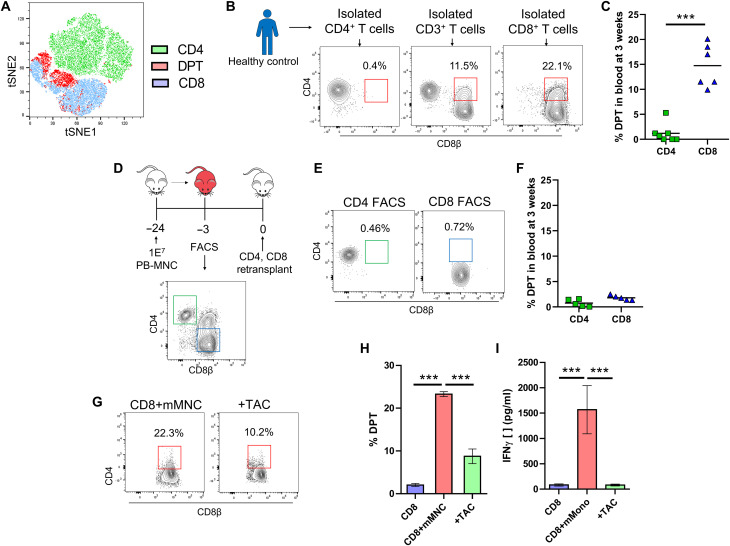
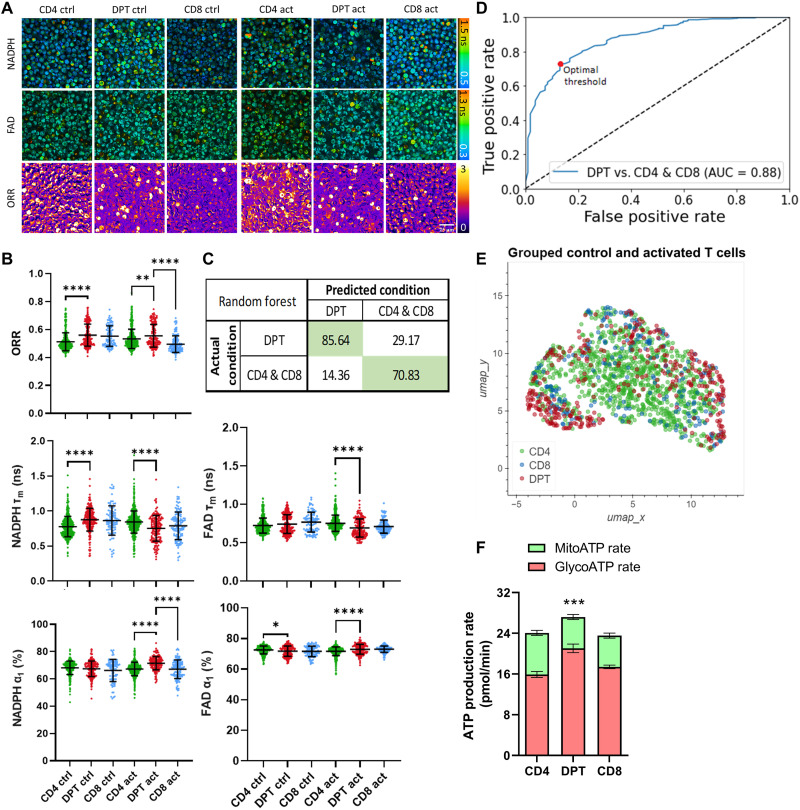
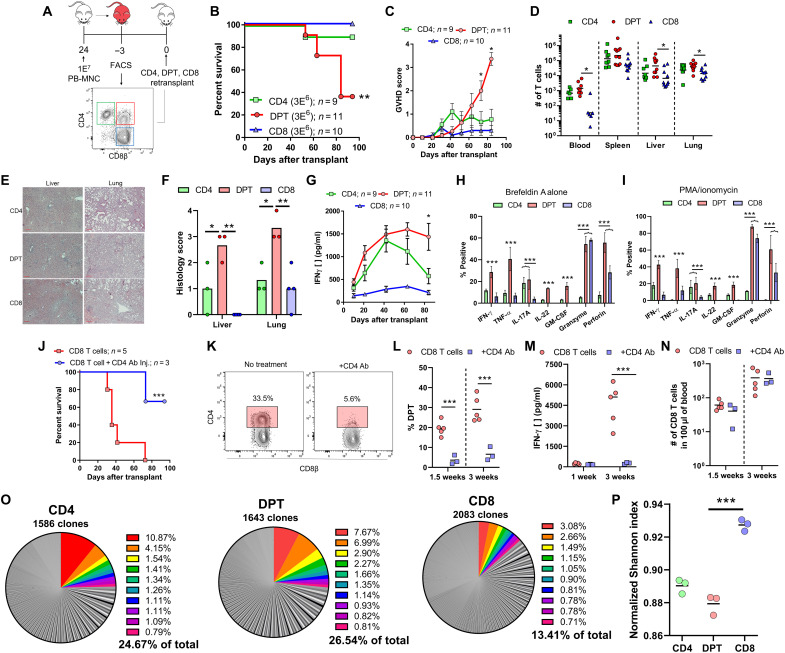
An important paradigm in allogeneic hematopoietic cell transplantations (allo-HCTs) is the prevention of graft-versus-host disease (GVHD) while preserving the graft-versus-leukemia (GVL) activity of donor T cells. From an observational clinical study of adult allo-HCT recipients, we identified a CD4/CD8 double-positive T cell (DPT) population, not present in starting grafts, whose presence was predictive of ≥ grade 2 GVHD. Using an established xenogeneic transplant model, we reveal that the DPT population develops from antigen-stimulated CD8 T cells, which become transcriptionally, metabolically, and phenotypically distinct from single-positive CD4 and CD8 T cells. Isolated DPTs were sufficient to mediate xeno-GVHD pathology when retransplanted into naïve mice but provided no survival benefit when mice were challenged with a human B-ALL cell line. Overall, this study reveals human DPTs as a T cell population directly involved with GVHD pathology.
同种异体造血细胞移植(allo-HCT)中的一个重要模式是预防移植物抗宿主病(GVHD),同时保留供体 T 细胞的移植物抗白血病(GVL)活性。从一项成人 allo-HCT 受者的观察性临床研究中,我们发现了一种不在起始移植物中存在的 CD4/CD8 双阳性 T 细胞(DPT)群体,其存在可预测≥2 级 GVHD。我们使用已建立的异种移植模型揭示,DPT 群体由抗原刺激的 CD8 T 细胞发展而来,这些细胞在转录、代谢和表型上与单阳性 CD4 和 CD8 T 细胞明显不同。当重新移植到幼稚小鼠中时,分离的 DPT 足以介导异种 GVHD 病理学,但当小鼠受到人 B-ALL 细胞系的挑战时,并没有提供生存获益。总的来说,这项研究揭示了人类 DPT 作为一种直接参与 GVHD 病理学的 T 细胞群体。