Ridde Valéry, Kane Babacar, Gaye Ibrahima, Ba Mouhamadou Faly, Diallo Amadou, Bonnet Emmanuel, Traoré Zoumana, Faye Adama
CEPED, IRD-Université de Paris, ERL INSERM SAGESUD, Paris, France.
Institut de Santé et Développement (ISED), Université Cheikh Anta Diop, Dakar, Senegal.
PLOS Glob Public Health. 2022 Apr 25;2(4):e0000041. doi: 10.1371/journal.pgph.0000041. eCollection 2022.
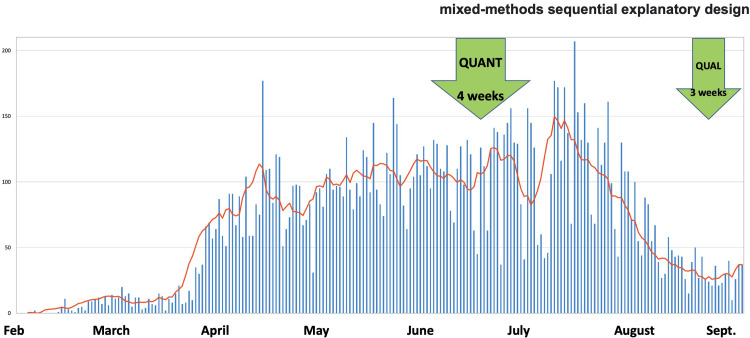
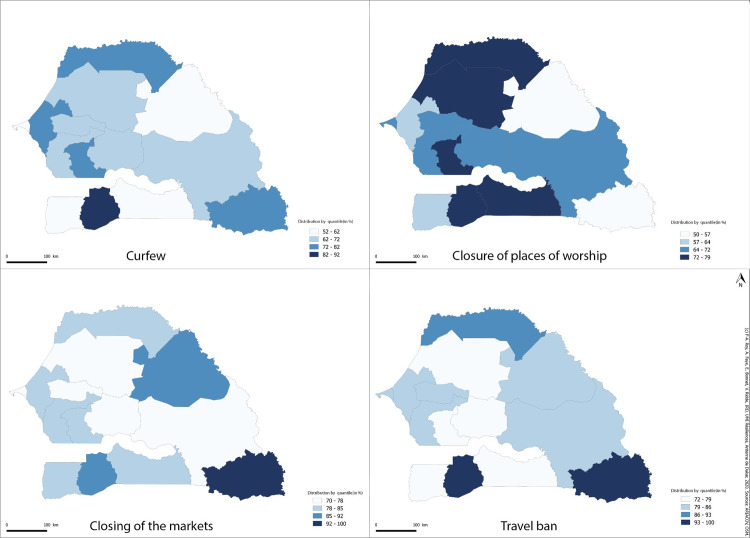
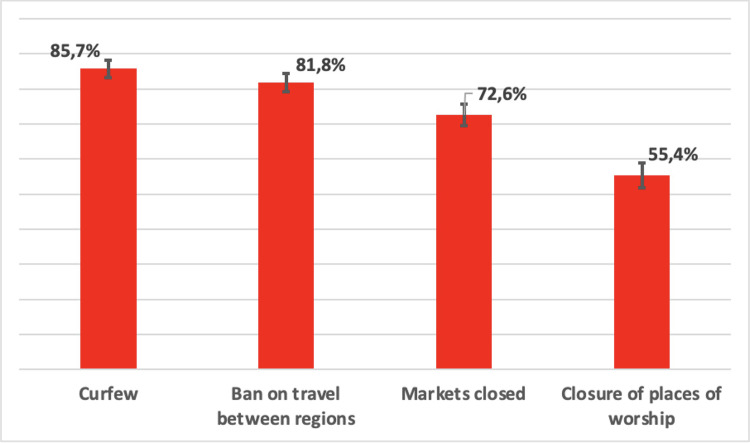
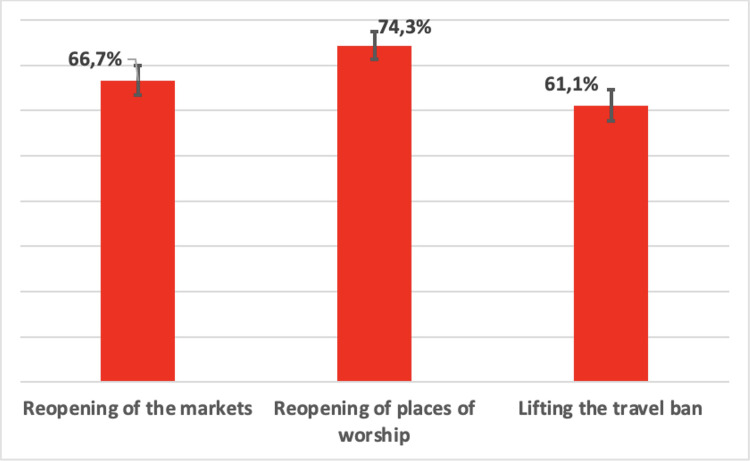
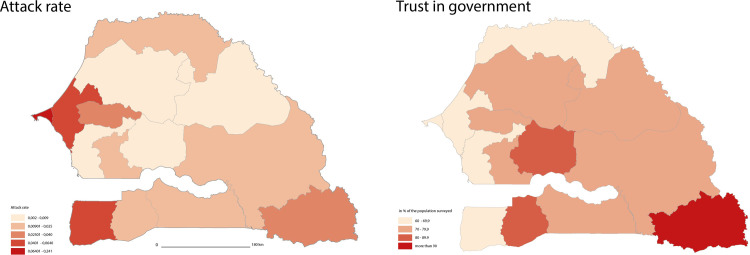
While the first case of COVID-19 was declared on March 2 2020 in Senegal, the government banned the attendance of places of worship on 14 March, as a first measure. On March 23, it introduced a curfew, a ban on movement between regions, and the closure of markets. The objective of this study is to measure and understand the acceptability of these four governmental measures as well as the level of public trust in the state to fight the pandemic. We carried out a mixed-method research. The acceptability variables were defined using the theoretical framework of acceptability (TFA). At the quantitative level, we carried out a telephone survey (June/July 2020) at the national level (n = 813) with a sampling strategy by marginal quotas. We conducted a qualitative survey (August/September 2020) with a nested sample (n = 30). The results show a relatively high acceptability of the measures but a heterogeneity of responses. People considered curfews to be much more important (85.7% [83.2%; 88.0%]) than the closure of places of worship (55.4%; [51.9%; 58.7%]), which is least in line with the values and positive affective attitude. Several positive unintended effects of the curfew were stated (security and social/family cohesion). People over the age of 60 have more confidence in the government to fight the pandemic than people under the age of 25, although not significant (7.72 ± 3.12 vs. 7.07 ± 3.11, p = 0.1); and they are more in favour of the closure of places of worship. The more regions are affected by the pandemic, the less confidence respondents report in the government and the less they perceive the measures as effective. The results confirm the importance of government communication and trust in the state to strengthen the acceptability of pandemic measures. Important differences in acceptability show the need to adapt measures and their explanations, instead of unqualified universal action.
虽然2020年3月2日塞内加尔宣布出现首例新冠肺炎病例,但政府于3月14日作为首要措施禁止人们前往宗教场所。3月23日,政府实施了宵禁,禁止跨地区流动,并关闭了市场。本研究的目的是衡量和了解这四项政府措施的可接受性以及公众对国家抗击疫情的信任程度。我们开展了一项混合方法研究。可接受性变量是使用可接受性理论框架(TFA)来定义的。在定量层面,我们于2020年6月/7月在全国范围内通过边际配额抽样策略进行了电话调查(n = 813)。我们于2020年8月/9月对一个嵌套样本(n = 30)进行了定性调查。结果显示这些措施的可接受性相对较高,但回答存在异质性。人们认为宵禁比关闭宗教场所重要得多(85.7% [83.2%;88.0%]),而关闭宗教场所最不符合价值观和积极情感态度(55.4%;[51.9%;58.7%])。人们提到了宵禁的一些积极意外效果(安全以及社会/家庭凝聚力)。60岁以上的人比25岁以下的人对政府抗击疫情更有信心,尽管不显著(7.72 ± 3.12对7.07 ± 3.11,p = 0.1);而且他们更支持关闭宗教场所。受疫情影响的地区越多,受访者对政府的信心就越低,他们也越不认为这些措施有效。结果证实了政府沟通和对国家的信任对于增强疫情措施可接受性的重要性。可接受性方面的重要差异表明需要调整措施及其解释,而不是采取不加区分的普遍行动。