• 文献检索
  • 文档翻译
  • 深度研究
  • 学术资讯
  • Suppr Zotero 插件Zotero 插件
  • 邀请有礼
  • 套餐&价格
  • 历史记录
应用&插件
Suppr Zotero 插件Zotero 插件浏览器插件Mac 客户端Windows 客户端微信小程序
定价
高级版会员购买积分包购买API积分包
服务
文献检索文档翻译深度研究API 文档MCP 服务
关于我们
关于 Suppr公司介绍联系我们用户协议隐私条款
关注我们

Suppr 超能文献

核心技术专利:CN118964589B侵权必究
粤ICP备2023148730 号-1Suppr @ 2026

文献检索

告别复杂PubMed语法,用中文像聊天一样搜索,搜遍4000万医学文献。AI智能推荐,让科研检索更轻松。

立即免费搜索

文件翻译

保留排版,准确专业,支持PDF/Word/PPT等文件格式,支持 12+语言互译。

免费翻译文档

深度研究

AI帮你快速写综述,25分钟生成高质量综述,智能提取关键信息,辅助科研写作。

立即免费体验

遵守行为性新冠病毒(Covid-19)缓解措施可强力预测死亡率。

Adherence to behavioral Covid-19 mitigation measures strongly predicts mortality.

机构信息

Department of Clinical Psychology and Psychotherapy, Mental Health Research and Treatment Center, Ruhr-Universität Bochum, Bochum, Germany.

Department of Clinical Child and Adolescent Psychology, Mental Health Research and Treatment Center, Ruhr-Universität Bochum, Bochum, Germany.

出版信息

PLoS One. 2021 Mar 30;16(3):e0249392. doi: 10.1371/journal.pone.0249392. eCollection 2021.

DOI:10.1371/journal.pone.0249392
PMID:33784361
原文链接:https://pmc.ncbi.nlm.nih.gov/articles/PMC8009358/
Abstract

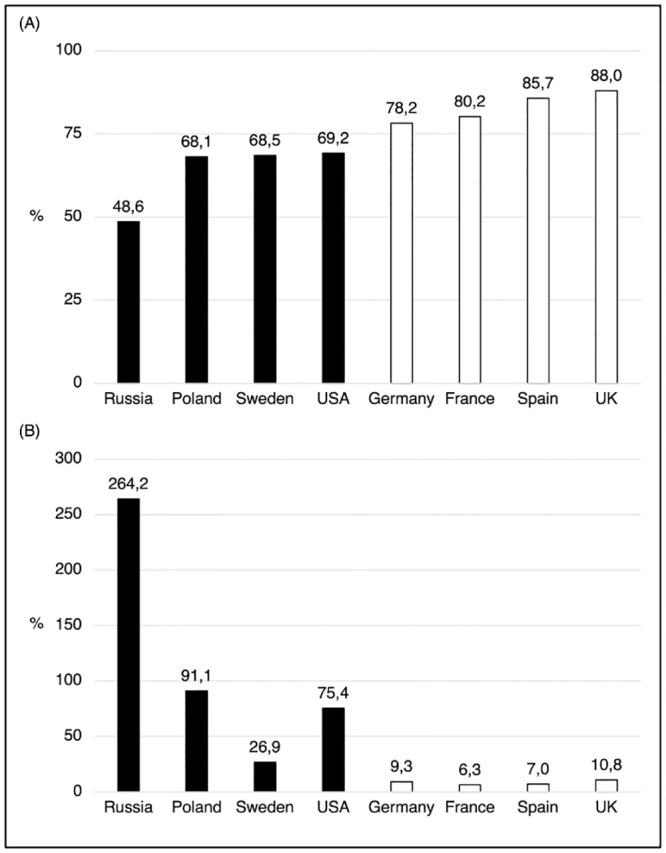
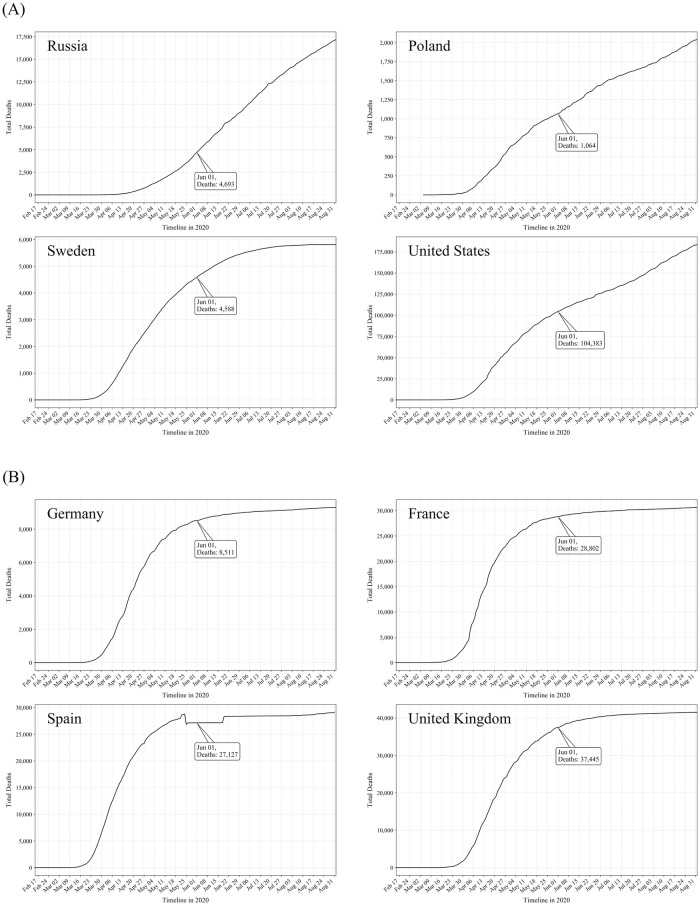
In the absence of vaccines or causal therapies, behavioral measures such as wearing face masks and maintaining social distance are central to fighting Covid-19. Yet, their benefits are often questioned by the population and the level of adherence to the measures is variable. We examined in representative samples across eight countries (N = 7,568) whether adherence reported around June 1, 2020 predicted the increase in Covid-19 mortality by August 31, 2020. Mortality increased 81.3% in low adherence countries (United States, Sweden, Poland, Russia), 8.4% in high adherence countries (Germany, France, Spain, United Kingdom). Across countries adherence and subsequent mortality increases correlated with r = -0.91. No African or South American countries were included in the present study, which limits the generalizability of the findings. While reported Covid-19 mortality is likely to be influenced by other factors, the almost tenfold difference in additional mortality is significant, and may inform decisions when choosing whether to prioritize individual liberty rights or health-protective measures.

摘要

在缺乏疫苗或因果疗法的情况下,行为措施(如佩戴口罩和保持社交距离)是抗击新冠病毒的核心手段。然而,这些措施的效果经常受到民众的质疑,其遵循程度也各不相同。我们在八个国家(N=7568)的代表性样本中进行了研究,以确定 2020 年 6 月 1 日报告的遵守情况是否可以预测 2020 年 8 月 31 日新冠病毒死亡率的增加。在低遵守率国家(美国、瑞典、波兰、俄罗斯),死亡率增加了 81.3%,在高遵守率国家(德国、法国、西班牙、英国),死亡率增加了 8.4%。在各国之间,遵守情况与随后的死亡率增加呈负相关,r=-0.91。本研究未包括非洲和南美洲的国家,这限制了研究结果的普遍性。虽然报告的新冠病毒死亡率可能受到其他因素的影响,但额外死亡率的近十倍差异是显著的,这可能有助于在决定是优先考虑个人自由权利还是健康保护措施时做出决策。
https://cdn.ncbi.nlm.nih.gov/pmc/blobs/03d7/8009358/b2dac31eeec9/pone.0249392.g002.jpg
https://cdn.ncbi.nlm.nih.gov/pmc/blobs/03d7/8009358/1c31a368f3ff/pone.0249392.g001.jpg
https://cdn.ncbi.nlm.nih.gov/pmc/blobs/03d7/8009358/b2dac31eeec9/pone.0249392.g002.jpg
https://cdn.ncbi.nlm.nih.gov/pmc/blobs/03d7/8009358/1c31a368f3ff/pone.0249392.g001.jpg
https://cdn.ncbi.nlm.nih.gov/pmc/blobs/03d7/8009358/b2dac31eeec9/pone.0249392.g002.jpg

相似文献

1
Adherence to behavioral Covid-19 mitigation measures strongly predicts mortality.遵守行为性新冠病毒(Covid-19)缓解措施可强力预测死亡率。
PLoS One. 2021 Mar 30;16(3):e0249392. doi: 10.1371/journal.pone.0249392. eCollection 2021.
2
Behavioral measures to fight COVID-19: An 8-country study of perceived usefulness, adherence and their predictors.应对 COVID-19 的行为措施:一项针对 8 个国家的感知有用性、依从性及其预测因素的研究。
PLoS One. 2020 Dec 7;15(12):e0243523. doi: 10.1371/journal.pone.0243523. eCollection 2020.
3
How Do Adherence to COVID-19 Mitigation Measures and Its Predictors Change between 2020 and 2021? An Explorative Investigation in Eight European Union and Non-European Union Countries.2020 年至 2021 年间,遵守 COVID-19 缓解措施及其预测因素的情况如何变化?在 8 个欧盟和非欧盟国家进行的探索性调查。
Psychopathology. 2024;57(2):123-135. doi: 10.1159/000533647. Epub 2023 Oct 11.
4
Application of the protection motivation theory for predicting COVID-19 preventive behaviors in Hormozgan, Iran: a cross-sectional study.应用保护动机理论预测伊朗霍尔木兹甘省的 COVID-19 预防行为:一项横断面研究。
BMC Public Health. 2021 Mar 8;21(1):466. doi: 10.1186/s12889-021-10500-w.
5
Adherence to COVID-19 policy measures: Behavioral insights from The Netherlands and Belgium.遵守 COVID-19 政策措施:来自荷兰和比利时的行为洞察。
PLoS One. 2021 May 28;16(5):e0250302. doi: 10.1371/journal.pone.0250302. eCollection 2021.
6
Factors associated with adherence to COVID-19 prevention measures in the Democratic Republic of the Congo (DRC): results of an online survey.与刚果民主共和国(DRC)COVID-19 预防措施依从性相关的因素:一项在线调查结果。
BMJ Open. 2021 Jan 18;11(1):e043356. doi: 10.1136/bmjopen-2020-043356.
7
Excess deaths associated with covid-19 pandemic in 2020: age and sex disaggregated time series analysis in 29 high income countries.2020 年与新冠大流行相关的超额死亡人数:29 个高收入国家按年龄和性别细分的时间序列分析。
BMJ. 2021 May 19;373:n1137. doi: 10.1136/bmj.n1137.
8
The belief in health in the adoption of COVID-19 prevention and control measures.对健康的信念在采纳新冠防控措施中的作用。
Rev Bras Enferm. 2021 Feb 15;74Suppl 1(Suppl 1):e20200576. doi: 10.1590/0034-7167-2020-0576. eCollection 2021.
9
Assessment of adherence to public health measures and their impact on the COVID-19 outbreak in Benin Republic, West Africa.评估贝宁共和国(西非)民众对公共卫生措施的遵守情况及其对 COVID-19 疫情的影响。
Pan Afr Med J. 2021 Mar 22;38:293. doi: 10.11604/pamj.2021.38.293.26843. eCollection 2021.
10
Mask adherence and rate of COVID-19 across the United States.美国各地的口罩佩戴率和 COVID-19 感染率。
PLoS One. 2021 Apr 14;16(4):e0249891. doi: 10.1371/journal.pone.0249891. eCollection 2021.

引用本文的文献

1
Compliance with COVID-19 prevention measures during the onset of the pandemic in Australia: investigating the role of trust in federal and state governments and scientists.澳大利亚疫情初期对新冠疫情防控措施的遵守情况:探究信任在联邦和州政府以及科学家方面所起的作用
Aust J Psychol. 2023 Jun 26;75(1):2224453. doi: 10.1080/00049530.2023.2224453. eCollection 2023.
2
Unpacking Digital Dashboards' Influence on Preventive Health Behavior Among Young Adults.剖析数字仪表盘对年轻人预防性健康行为的影响。
Healthcare (Basel). 2025 May 28;13(11):1279. doi: 10.3390/healthcare13111279.
3
Exploring barriers to adherence to COVID-19 infection control measures and advice among immigrants in Norway: A qualitative study.

本文引用的文献

1
The relationship between social media use, stress symptoms and burden caused by coronavirus (Covid-19) in Germany and Italy: A cross-sectional and longitudinal investigation.德国和意大利社交媒体使用、压力症状与冠状病毒(Covid-19)所致负担之间的关系:一项横断面和纵向调查。
J Affect Disord Rep. 2021 Jan;3:100067. doi: 10.1016/j.jadr.2020.100067. Epub 2021 Jan 2.
2
Population preferences for inclusive COVID-19 policy responses.民众对包容性新冠疫情政策应对措施的偏好。
Lancet Public Health. 2021 Jan;6(1):e9. doi: 10.1016/S2468-2667(20)30285-1. Epub 2020 Dec 7.
3
A cross-country database of COVID-19 testing.
探索挪威移民遵守新冠病毒感染控制措施和建议的障碍:一项定性研究。
J Migr Health. 2024 Dec 25;11:100292. doi: 10.1016/j.jmh.2024.100292. eCollection 2025.
4
Association Between Risk Perceptions of COVID-19, Political Ideology, and Mask-Wearing Behavior After the Outbreak: A Cross-Sectional Survey in South Korea.新冠疫情爆发后,对新冠病毒的风险认知、政治意识形态与戴口罩行为之间的关联:韩国的一项横断面调查
Risk Manag Healthc Policy. 2024 Jun 20;17:1659-1668. doi: 10.2147/RMHP.S463739. eCollection 2024.
5
Companion animal adoption and relinquishment during the COVID-19 pandemic: Households with children at greatest risk of relinquishing a cat or dog.新冠疫情期间伴侣动物的领养与遗弃情况:有孩子的家庭遗弃猫或狗的风险最高。
Anim Welf. 2023 Aug 18;32:e56. doi: 10.1017/awf.2023.77. eCollection 2023.
6
How Do Adherence to COVID-19 Mitigation Measures and Its Predictors Change between 2020 and 2021? An Explorative Investigation in Eight European Union and Non-European Union Countries.2020 年至 2021 年间,遵守 COVID-19 缓解措施及其预测因素的情况如何变化?在 8 个欧盟和非欧盟国家进行的探索性调查。
Psychopathology. 2024;57(2):123-135. doi: 10.1159/000533647. Epub 2023 Oct 11.
7
The added effect of non-pharmaceutical interventions and lifestyle behaviors on vaccine effectiveness against severe COVID-19 in Chile: A matched case-double control study.非药物干预和生活方式行为对智利 COVID-19 重症疫苗效力的额外影响:一项匹配病例双对照研究。
Vaccine. 2023 May 2;41(18):2947-2955. doi: 10.1016/j.vaccine.2023.03.060. Epub 2023 Apr 3.
8
Acceptability of government measures against COVID-19 pandemic in Senegal: A mixed methods study.塞内加尔政府应对新冠疫情措施的可接受性:一项混合方法研究。
PLOS Glob Public Health. 2022 Apr 25;2(4):e0000041. doi: 10.1371/journal.pgph.0000041. eCollection 2022.
9
Association of sociodemographic characteristics with self-perceived access to COVID-19 information and adherence to preventive measures among migrant origin and general populations in Finland: a cross-sectional study.社会人口特征与自我感知获取 COVID-19 信息及遵守预防措施之间的关联:芬兰移民和普通人群的横断面研究。
BMJ Open. 2023 Mar 13;13(3):e069192. doi: 10.1136/bmjopen-2022-069192.
10
No magic bullet: Limiting in-school transmission in the face of variable SARS-CoV-2 viral loads.没有灵丹妙药:面对 SARS-CoV-2 病毒载量的变化,限制校内传播。
Front Public Health. 2022 Dec 1;10:941773. doi: 10.3389/fpubh.2022.941773. eCollection 2022.
一个跨越国界的 COVID-19 检测数据库。
Sci Data. 2020 Oct 8;7(1):345. doi: 10.1038/s41597-020-00688-8.
4
COVID-19 Pandemic: from Molecular Biology, Pathogenesis, Detection, and Treatment to Global Societal Impact.新冠疫情:从分子生物学、发病机制、检测与治疗到对全球社会的影响
Curr Pharmacol Rep. 2020;6(5):212-227. doi: 10.1007/s40495-020-00229-2. Epub 2020 Jul 27.
5
The Perfect Moral Storm: Diverse Ethical Considerations in the COVID-19 Pandemic.《完美的道德风暴:新冠疫情中的多元伦理考量》
Asian Bioeth Rev. 2020 May 28;12(2):65-83. doi: 10.1007/s41649-020-00125-3. eCollection 2020 Jun.
6
Predicting adaptive and maladaptive responses to the Coronavirus (COVID-19) outbreak: A prospective longitudinal study.预测对冠状病毒(COVID-19)疫情的适应性和适应不良反应:一项前瞻性纵向研究。
Int J Clin Health Psychol. 2020 Sep-Dec;20(3):183-191. doi: 10.1016/j.ijchp.2020.06.002. Epub 2020 Jun 28.
7
Covid-19 mortality is negatively associated with test number and government effectiveness.新冠死亡率与检测数量和政府效能呈负相关。
Sci Rep. 2020 Jul 24;10(1):12567. doi: 10.1038/s41598-020-68862-x.
8
Serial interval of SARS-CoV-2 was shortened over time by nonpharmaceutical interventions.非药物干预措施使 SARS-CoV-2 的病毒潜伏期随时间缩短。
Science. 2020 Aug 28;369(6507):1106-1109. doi: 10.1126/science.abc9004. Epub 2020 Jul 21.
9
Importance of Face Masks for COVID-19: A Call for Effective Public Education.口罩对2019冠状病毒病的重要性:呼吁开展有效的公众教育
Clin Infect Dis. 2020 Nov 19;71(16):2195-2198. doi: 10.1093/cid/ciaa593.
10
Social media can have an impact on how we manage and investigate the COVID-19 pandemic.社交媒体可能会影响我们管理和调查 COVID-19 大流行的方式。
J Clin Epidemiol. 2020 Nov;127:198-201. doi: 10.1016/j.jclinepi.2020.06.028. Epub 2020 Jun 27.