Kelly Maria Ezekiely, Gharpure Radhika, Shivji Sabrina, Matonya Miriam, Moshi Solomon, Mwafulango Ambele, Mwalongo Vumilia, Mghamba Janneth, Simba Azma, Balajee S Arunmozhi, Gatei Wangeci, Mponela Marcelina, Saguti Grace, Whistler Toni, Moremi Nyambura, Mmbaga Vida
Ministry of Health, Dar es Salaam, Tanzania.
U.S. Centers for Disease Control and Prevention, Atlanta, Georgia, United States of America.
PLOS Glob Public Health. 2023 Feb 9;3(2):e0000906. doi: 10.1371/journal.pgph.0000906. eCollection 2023.
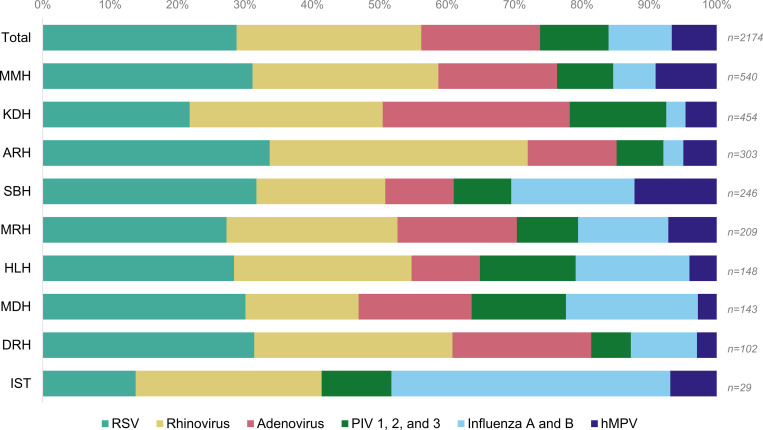
In 2016, Tanzania expanded sentinel surveillance for influenza-like illness (ILI) and severe acute respiratory infection (SARI) to include testing for non-influenza respiratory viruses (NIRVs) and additional respiratory pathogens at 9 sentinel sites. During 2017-2019, respiratory specimens from 2730 cases underwent expanded testing: 2475 specimens (90.7%) were tested using a U.S. Centers for Disease Control and Prevention (CDC)-developed assay covering 7 NIRVs (respiratory syncytial virus [RSV], rhinovirus, adenovirus, human metapneumovirus, parainfluenza virus 1, 2, and 3) and influenza A and B viruses. Additionally, 255 specimens (9.3%) were tested using the Fast-Track Diagnostics Respiratory Pathogens 33 (FTD-33) kit which covered the mentioned viruses and additional viral, bacterial, and fungal pathogens. Influenza viruses were identified in 7.5% of all specimens; however, use of the CDC assay and FTD-33 kit increased the number of specimens with a pathogen identified to 61.8% and 91.5%, respectively. Among the 9 common viruses between the CDC assay and FTD-33 kit, the most identified pathogens were RSV (22.9%), rhinovirus (21.8%), and adenovirus (14.0%); multi-pathogen co-detections were common. Odds of hospitalization (SARI vs. ILI) varied by sex, age, geographic zone, year of diagnosis, and pathogen identified; hospitalized illnesses were most common among children under the age of 5 years. The greatest number of specimens were submitted for testing during December-April, coinciding with rainy seasons in Tanzania, and several viral pathogens demonstrated seasonal variation (RSV, human metapneumovirus, influenza A and B, and parainfluenza viruses). This study demonstrates that expanding an existing influenza platform to include additional respiratory pathogens can provide valuable insight into the etiology, incidence, severity, and geographic/temporal patterns of respiratory illness. Continued respiratory surveillance in Tanzania, and globally, can provide valuable data, particularly in the context of emerging respiratory pathogens such as SARS-CoV-2, and guide public health interventions to reduce the burden of respiratory illnesses.
2016年,坦桑尼亚扩大了对流感样疾病(ILI)和严重急性呼吸道感染(SARI)的哨点监测,将9个哨点的非流感呼吸道病毒(NIRV)及其他呼吸道病原体检测纳入其中。在2017 - 2019年期间,对2730例病例的呼吸道标本进行了扩大检测:2475份标本(90.7%)使用美国疾病控制与预防中心(CDC)开发的检测方法进行检测,该方法可检测7种NIRV(呼吸道合胞病毒[RSV]、鼻病毒、腺病毒、人偏肺病毒、副流感病毒1、2和3)以及甲型和乙型流感病毒。此外,255份标本(9.3%)使用快速诊断呼吸道病原体33(FTD - 33)试剂盒进行检测,该试剂盒可检测上述病毒以及其他病毒、细菌和真菌病原体。在所有标本中,7.5%检测出流感病毒;然而,使用CDC检测方法和FTD - 33试剂盒后,检测出病原体的标本数量分别增加到61.8%和91.5%。在CDC检测方法和FTD - 33试剂盒共有的9种常见病毒中,检测出最多的病原体是RSV(22.9%)、鼻病毒(21.8%)和腺病毒(14.0%);多重病原体共检测很常见。住院几率(SARI与ILI相比)因性别、年龄、地理区域、诊断年份和检测出的病原体而异;5岁以下儿童中住院疾病最为常见。12月至4月期间提交检测的标本数量最多,这与坦桑尼亚的雨季相符,并且几种病毒病原体呈现出季节性变化(RSV、人偏肺病毒、甲型和乙型流感病毒以及副流感病毒)。这项研究表明,将现有的流感监测平台扩展到包括其他呼吸道病原体,可以为呼吸道疾病的病因、发病率、严重程度以及地理/时间模式提供有价值的见解。在坦桑尼亚以及全球范围内持续进行呼吸道监测,可以提供有价值的数据,特别是在诸如SARS-CoV-2等新兴呼吸道病原体的背景下,并指导公共卫生干预措施以减轻呼吸道疾病负担。