Emergency and Critical Care Center, Intensive Care Unit, Zhejiang Provincial People's Hospital(Affiliated People's Hospital), Hangzhou Medical College, 310014, Hangzhou, Zhejiang, China.
Emergency Department, The First Affiliated Hospital of Zhengzhou University, 450001, Zhengzhou, Henan, China.
BMC Infect Dis. 2024 Apr 22;24(1):426. doi: 10.1186/s12879-024-09297-x.
Severe acute respiratory infection (SARI), a significant global health concern, imposes a substantial disease burden. In China, there is inadequate data concerning the monitoring of respiratory pathogens, particularly bacteria, among patients with SARI. Therefore, this study aims to delineate the demographic, epidemiological, and aetiological characteristics of hospitalised SARI patients in Central China between 2018 and 2020.
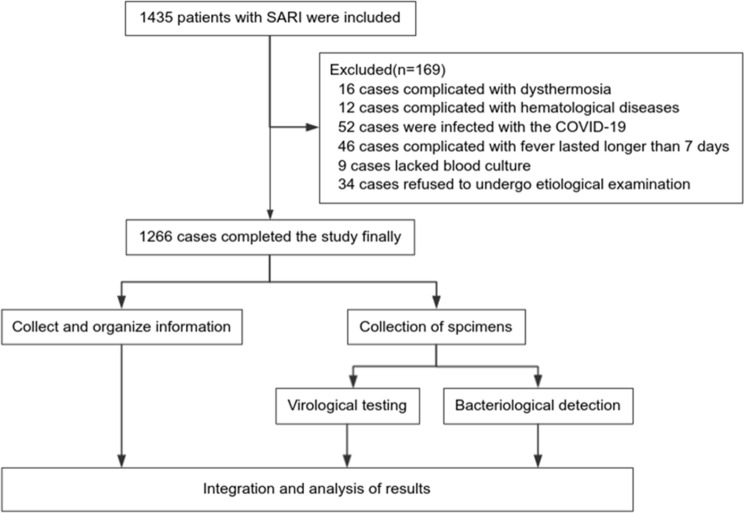
Eligible patients with SARI admitted to the First Affiliated Hospital of Zhengzhou University between 1 January 2018 and 31 December 2020 were included in this retrospective study. Within the first 24 h of admission, respiratory (including sputum, nasal/throat swabs, bronchoalveolar lavage fluid, thoracocentesis fluid, etc.), urine, and peripheral blood specimens were collected for viral and bacterial testing. A multiplex real-time polymerase chain reaction (PCR) diagnostic approach was used to identify human influenza virus, respiratory syncytial virus, parainfluenza virus, adenovirus, human bocavirus, human coronavirus, human metapneumovirus, and rhinovirus. Bacterial cultures of respiratory specimens were performed with a particular focus on pathogenic microorganisms, including S. pneumoniae, S. aureus, K. pneumoniae, P. aeruginosa, Strep A, H. influenzae, A. baumannii, and E. coli. In cases where bacterial culture results were negative, nucleic acid extraction was performed for PCR to assay for the above-mentioned eight bacteria, as well as L. pneumophila and M. pneumoniae. Additionally, urine specimens were exclusively used to detect Legionella antigens. Furthermore, epidemiological, demographic, and clinical data were obtained from electronic medical records.
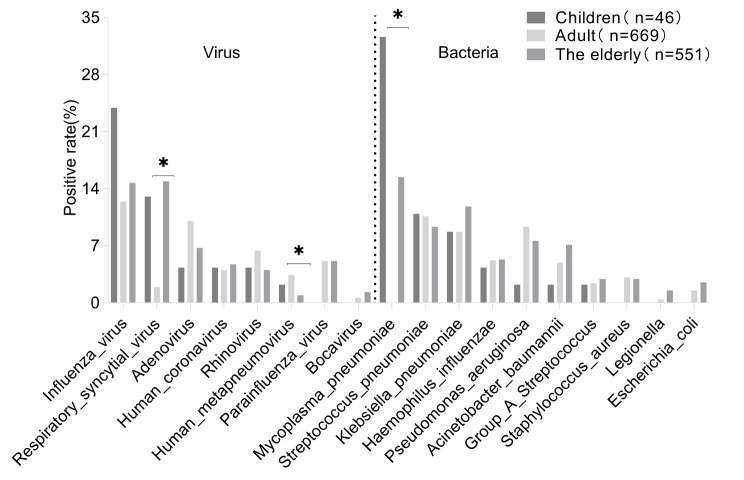
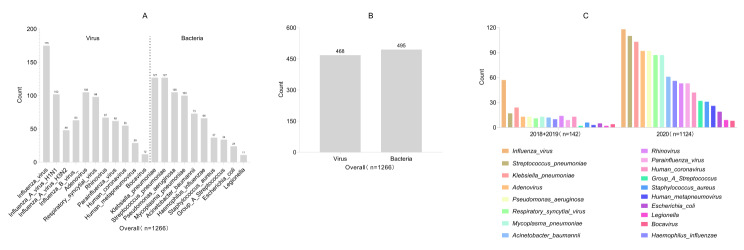
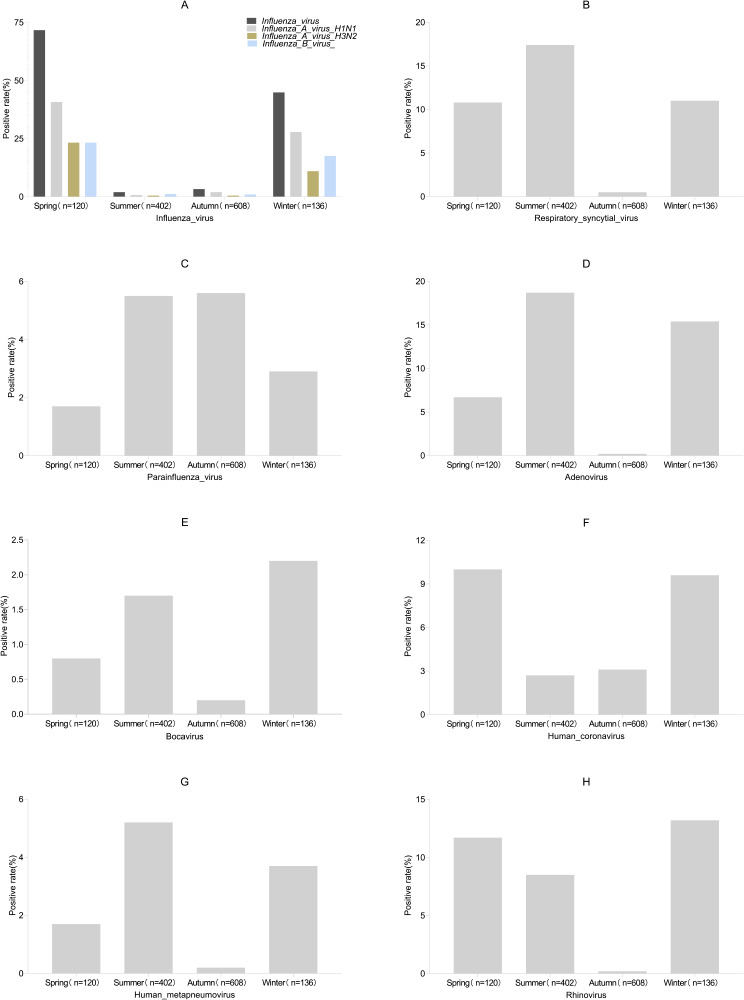
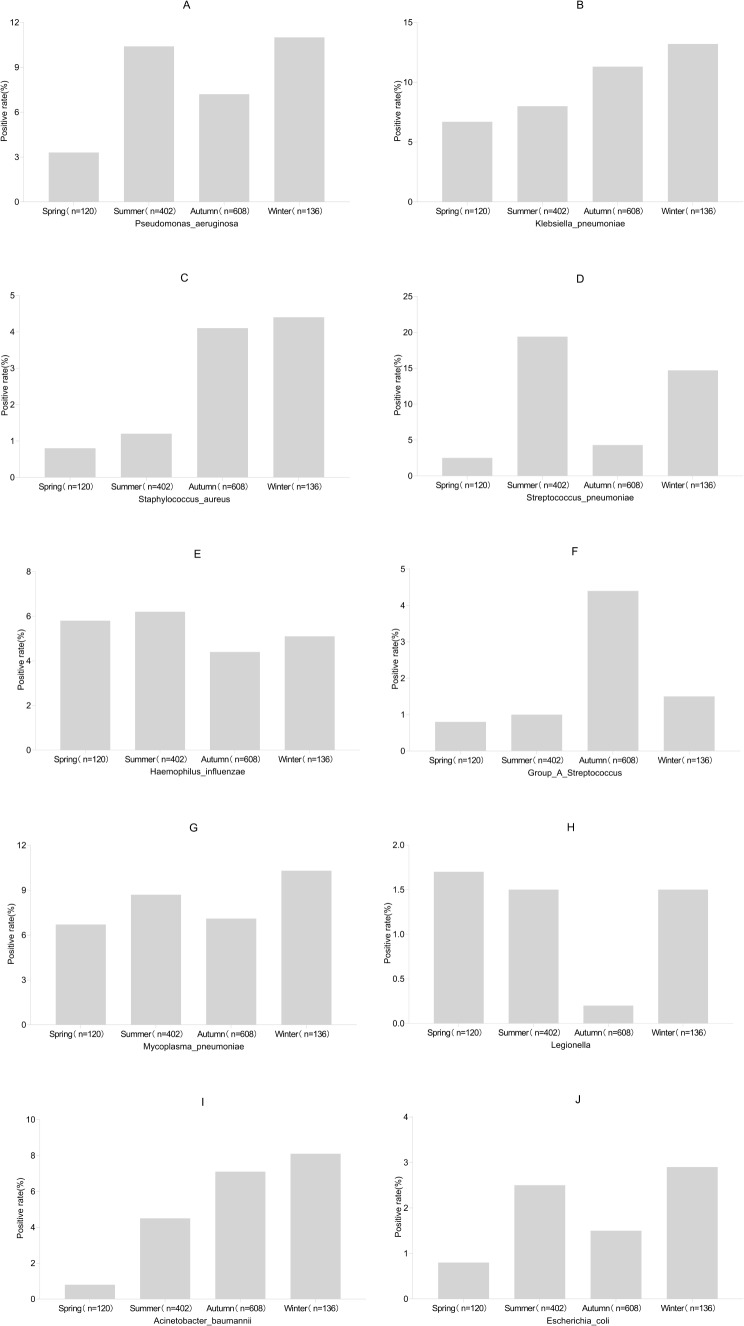
The study encompassed 1266 patients, with a mean age of 54 years, among whom 61.6% (780/1266) were males, 61.4% (778/1266) were farmers, and 88.8% (1124/1266) sought medical treatment in 2020. Moreover, 80.3% (1017/1266) were housed in general wards. The most common respiratory symptoms included fever (86.8%, 1122/1266) and cough (77.8%, 986/1266). Chest imaging anomalies were detected in 62.6% (792/1266) of cases, and 58.1% (736/1266) exhibited at least one respiratory pathogen, with 28.5% (361/1266) having multiple infections. Additionally, 95.7% (1212/1266) of the patients were from Henan Province, with the highest proportion (38.3%, 486/1266) falling in the 61-80 years age bracket, predominantly (79.8%, 1010/1266) seeking medical aid in summer and autumn. Bacterial detection rate (39.0%, 495/1266) was higher than viral detection rate (36.9%, 468/1266), with the primary pathogens being influenza virus (13.8%, 175/1266), K. pneumoniae (10.0%, 127/1266), S. pneumoniae (10.0%, 127/1266), adenovirus (8.2%, 105/1266), P. aeruginosa (8.2%, 105/1266), M. pneumoniae (7.8%, 100/1266), and respiratory syncytial virus (7.7%, 98/1266). During spring and winter, there was a significant prevalence of influenza virus and human coronavirus, contrasting with the dominance of parainfluenza viruses in summer and autumn. Respiratory syncytial virus and rhinovirus exhibited higher prevalence across spring, summer, and winter. P. aeruginosa, K. pneumoniae, and M. pneumoniae were identified at similar rates throughout all seasons without distinct spikes in prevalence. However, S. pneumoniae showed a distinctive pattern with a prevalence that doubled during summer and winter. Moreover, the positive detection rates of various other viruses and bacteria were lower, displaying a comparatively erratic prevalence trend. Among patients admitted to the intensive care unit, the predominant nosocomial bacteria were K. pneumoniae (17.2%, 43/249), A. baumannii (13.6%, 34/249), and P. aeruginosa (12.4%, 31/249). Conversely, in patients from general wards, predominant pathogens included influenza virus (14.8%, 151/1017), S. pneumoniae (10.4%, 106/1017), and adenovirus (9.3%, 95/1017). Additionally, paediatric patients exhibited significantly higher positive detection rates for influenza virus (23.9%, 11/46) and M. pneumoniae (32.6%, 15/46) compared to adults and the elderly. Furthermore, adenovirus (10.0%, 67/669) and rhinovirus (6.4%, 43/669) were the primary pathogens in adults, while K. pneumoniae (11.8%, 65/551) and A. baumannii (7.1%, 39/551) prevailed among the elderly, indicating significant differences among the three age groups.
In Central China, among patients with SARI, the prevailing viruses included influenza virus, adenovirus, and respiratory syncytial virus. Among bacteria, K. pneumoniae, S. pneumoniae, P. aeruginosa, and M. pneumoniae were frequently identified, with multiple infections being very common. Additionally, there were substantial variations in the pathogen spectrum compositions concerning wards and age groups among patients. Consequently, this study holds promise in offering insights to the government for developing strategies aimed at preventing and managing respiratory infectious diseases effectively.
严重急性呼吸道感染(SARI)是一个重大的全球健康问题,给人们带来了巨大的疾病负担。在中国,有关 SARI 患者呼吸道病原体(尤其是细菌)监测的数据不足。因此,本研究旨在描述 2018 年至 2020 年期间中国中部地区住院 SARI 患者的人口统计学、流行病学和病因学特征。
本回顾性研究纳入了 2018 年 1 月 1 日至 2020 年 12 月 31 日期间入住郑州大学第一附属医院的符合条件的 SARI 患者。在入院后的 24 小时内,采集呼吸道(包括痰、鼻咽/咽拭子、肺泡灌洗液、胸液等)、尿液和外周血标本进行病毒和细菌检测。采用多重实时聚合酶链反应(PCR)诊断方法检测人类流感病毒、呼吸道合胞病毒、副流感病毒、腺病毒、人博卡病毒、人类冠状病毒、人偏肺病毒和鼻病毒。对呼吸道标本进行细菌培养,特别关注肺炎链球菌、金黄色葡萄球菌、肺炎克雷伯菌、铜绿假单胞菌、A 组链球菌、流感嗜血杆菌、鲍曼不动杆菌和大肠埃希菌等致病微生物。如果细菌培养结果为阴性,则提取核酸进行 PCR 检测上述八种细菌以及嗜肺军团菌和肺炎支原体。此外,仅使用尿液标本检测军团菌抗原。此外,从电子病历中获取流行病学、人口统计学和临床数据。
本研究共纳入 1266 例患者,平均年龄为 54 岁,其中 61.6%(780/1266)为男性,61.4%(778/1266)为农民,88.8%(1124/1266)于 2020 年就诊。此外,80.3%(1017/1266)的患者住在普通病房。最常见的呼吸道症状包括发热(86.8%,1122/1266)和咳嗽(77.8%,986/1266)。62.6%(792/1266)的病例存在胸部影像学异常,58.1%(736/1266)至少有一种呼吸道病原体,28.5%(361/1266)有多种感染。此外,95.7%(1212/1266)的患者来自河南省,最高比例(38.3%,486/1266)出现在 61-80 岁年龄段,主要(79.8%,1010/1266)在夏秋季就医。细菌检测率(39.0%,495/1266)高于病毒检测率(36.9%,468/1266),主要病原体为流感病毒(13.8%,175/1266)、肺炎克雷伯菌(10.0%,127/1266)、肺炎链球菌(10.0%,127/1266)、腺病毒(8.2%,105/1266)、铜绿假单胞菌(8.2%,105/1266)、肺炎支原体(7.8%,100/1266)和呼吸道合胞病毒(7.7%,98/1266)。在春季和冬季,流感病毒和人类冠状病毒的流行率较高,而在夏季和秋季,副流感病毒则占主导地位。呼吸道合胞病毒和鼻病毒在春、夏、冬三季的流行率均较高。铜绿假单胞菌、肺炎克雷伯菌和肺炎支原体的流行率在各季节相似,没有明显的流行高峰。然而,肺炎链球菌在夏季和冬季的流行率增加了一倍。此外,其他各种病毒和细菌的阳性检出率较低,流行趋势较为不稳定。入住重症监护病房的患者中,主要的医院获得性细菌是肺炎克雷伯菌(17.2%,43/249)、鲍曼不动杆菌(13.6%,34/249)和铜绿假单胞菌(12.4%,31/249)。相比之下,普通病房患者的主要病原体包括流感病毒(14.8%,151/1017)、肺炎链球菌(10.4%,106/1017)和腺病毒(9.3%,95/1017)。此外,与成年人和老年人相比,儿童患者流感病毒(23.9%,11/46)和肺炎支原体(32.6%,15/46)的阳性检出率明显更高。此外,腺病毒(10.0%,67/669)和鼻病毒(6.4%,43/669)是成年人的主要病原体,而肺炎克雷伯菌(11.8%,65/551)和鲍曼不动杆菌(7.1%,39/551)则是老年人的主要病原体,这表明三个年龄组之间存在显著差异。
在中国中部地区,SARI 患者中主要的病毒包括流感病毒、腺病毒和呼吸道合胞病毒。细菌方面,肺炎克雷伯菌、肺炎链球菌、铜绿假单胞菌和肺炎支原体较为常见,且常发生多重感染。此外,不同病房和年龄组患者的病原体谱组成存在显著差异。因此,本研究有望为政府提供有价值的信息,以制定有效的预防和管理呼吸道传染病的策略。