Balagtas Jan Paolo M, Tolomeo Serenella, Ragunath Bindiya L, Rigo Paola, Bornstein Marc H, Esposito Gianluca
Psychology Program, School of Social Sciences, Nanyang Technological University, Singapore.
Institute of High Performance Computing, AStar, Singapore.
R Soc Open Sci. 2023 Mar 22;10(3):230196. doi: 10.1098/rsos.230196. eCollection 2023 Mar.
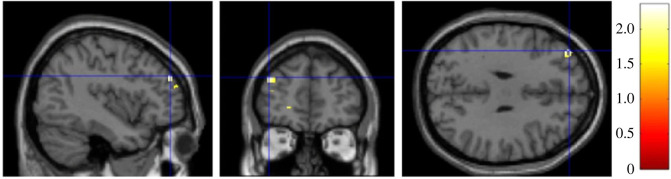
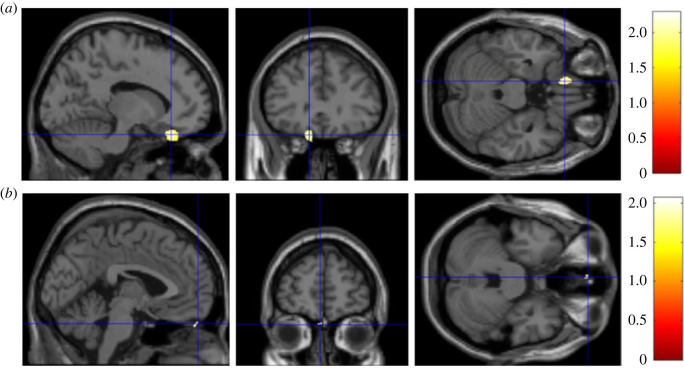
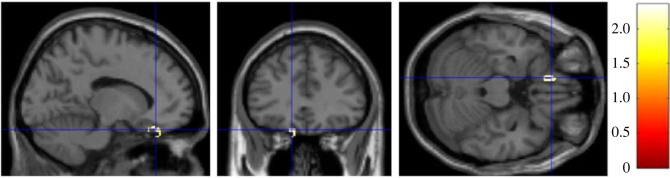
System-justifying ideologies are a cluster of ideals that perpetuate a hierarchical social system despite being fraught with inequalities. Right-wing authoritarianism (RWA) and social dominance orientation (SDO) are two ideologies that have received much attention in the literature separately and together. Given that these ideologies are considered to be stable individual differences that are likely to have an evolutionary basis, there has yet to be any examination for volumetric brain structures associated with these variables. Here, we proposed an investigation of overlapping and non-overlapping brain regions associated with RWA and SDO in a sample recruited in Singapore. Indeed, it will be interesting to determine how RWA and SDO correlate in a country that proactively promotes institutionalized multi-culturalism such as Singapore. RWA and SDO scores were collected via self-report measures from healthy individuals (39 males and 43 females; age 25.89 ± 5.68 years). Consequently, voxel-based morphometry (VBM) whole brain and region of interest (ROI) analyses were employed to identify neuroanatomical correlates of these system-justifying ideologies. RWA and SDO scores were strongly correlated despite the low ideological contrast in Singapore's sociopolitical context. The whole brain analysis did not reveal any significant clusters associated with either RWA or SDO. The ROI analyses revealed clusters in the bilateral amygdala and ventromedial prefrontal cortex (vmPFC) that were associated with both RWA and SDO scores, whereas two clusters in the left anterior insula were negatively associated with only SDO scores. The study corroborates the claim of RWA and SDO as stable individual differences with identifiable neuroanatomical correlates, but our exploratory analysis suggests evidence that precludes any definitive conclusion based on the present evidence.
系统正当化意识形态是一组尽管充满不平等却使等级社会制度永久化的理想观念。右翼威权主义(RWA)和社会支配取向(SDO)是两种在文献中分别及共同受到诸多关注的意识形态。鉴于这些意识形态被认为是可能具有进化基础的稳定个体差异,尚未有对与这些变量相关的脑容量结构进行的任何研究。在此,我们提议对在新加坡招募的样本中与RWA和SDO相关的重叠及非重叠脑区进行调查。的确,在像新加坡这样积极推行制度化多元文化主义的国家,确定RWA和SDO如何相互关联将会很有趣。通过自我报告测量收集了健康个体(39名男性和43名女性;年龄25.89±5.68岁)的RWA和SDO分数。随后,采用基于体素的形态计量学(VBM)全脑和感兴趣区域(ROI)分析来识别这些系统正当化意识形态的神经解剖学关联。尽管新加坡社会政治背景下意识形态差异较小,但RWA和SDO分数呈强相关。全脑分析未发现与RWA或SDO相关的任何显著簇。ROI分析揭示了双侧杏仁核和腹内侧前额叶皮层(vmPFC)中与RWA和SDO分数均相关的簇,而左侧前岛叶中的两个簇仅与SDO分数呈负相关。该研究证实了RWA和SDO作为具有可识别神经解剖学关联的稳定个体差异的说法,但我们的探索性分析表明,基于现有证据无法得出任何确定性结论。