Jost-Mousseau Timothé, Chalabi Max, Shulz Daniel E, Férézou Isabelle
Université Paris-Saclay, Centre National de la Recherche Scientifique, Institut des Neurosciences Paris-Saclay (NeuroPSI), Saclay, France.
Neurophotonics. 2023 Jan;10(1):015009. doi: 10.1117/1.NPh.10.1.015009. Epub 2023 Mar 24.
The study of neuronal processes governing behavior in awake behaving mice is constantly boosted by the development of technological strategies, such as miniaturized microscopes and closed-loop virtual reality systems. However, the former limits the quality of recorded signals due to constrains in size and weight and the latter suffers from the restriction of the movement repertoire of the animal, therefore, hardly reproducing the complexity of natural multisensory scenes.
Another strategy that takes advantage of both approaches consists of the use of a fiber-bundle interface to carry optical signals from a moving animal to a conventional imaging system. However, as the bundle is usually fixed below the optics, its torsion resulting from rotations of the animal inevitably constrains the behavior over long recordings. Our aim was to overcome this major limitation of fibroscopic imaging.
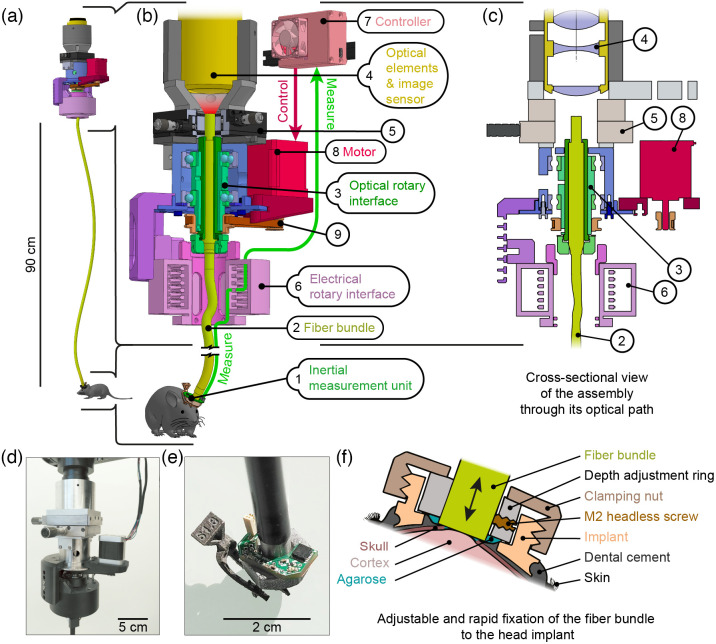
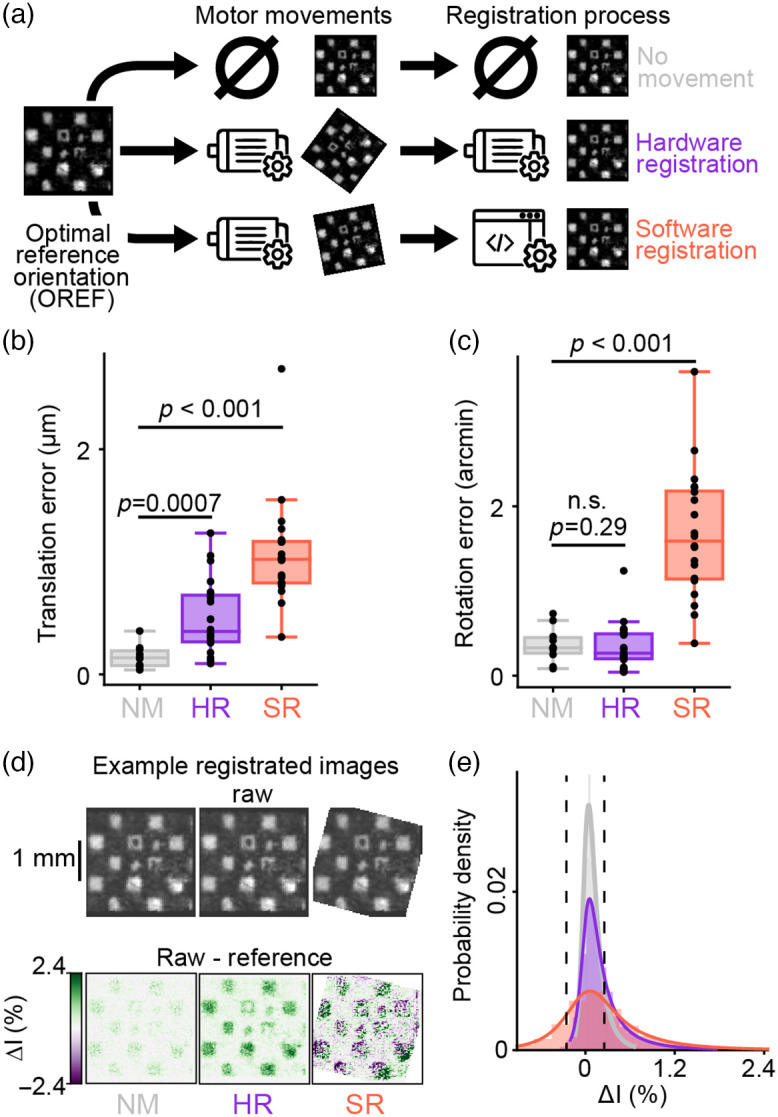
We developed a motorized optical rotary joint controlled by an inertial measurement unit at the animal's head.
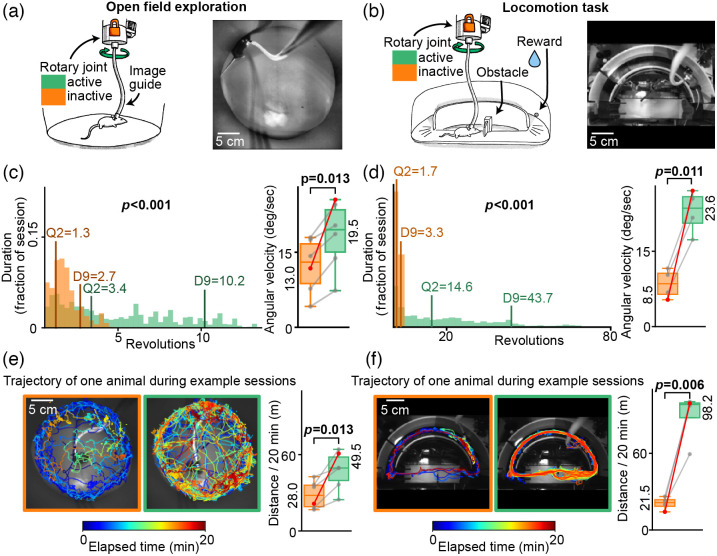
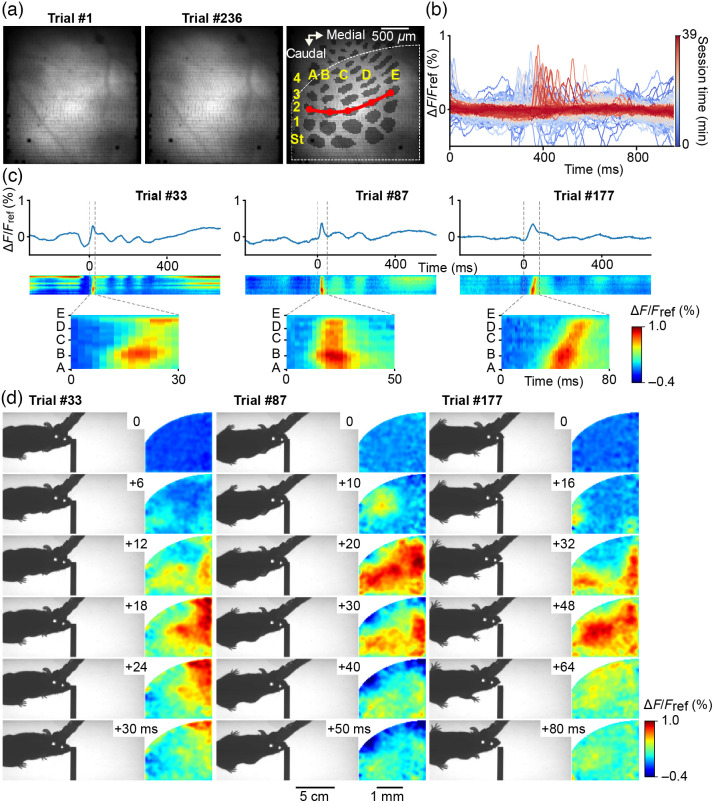
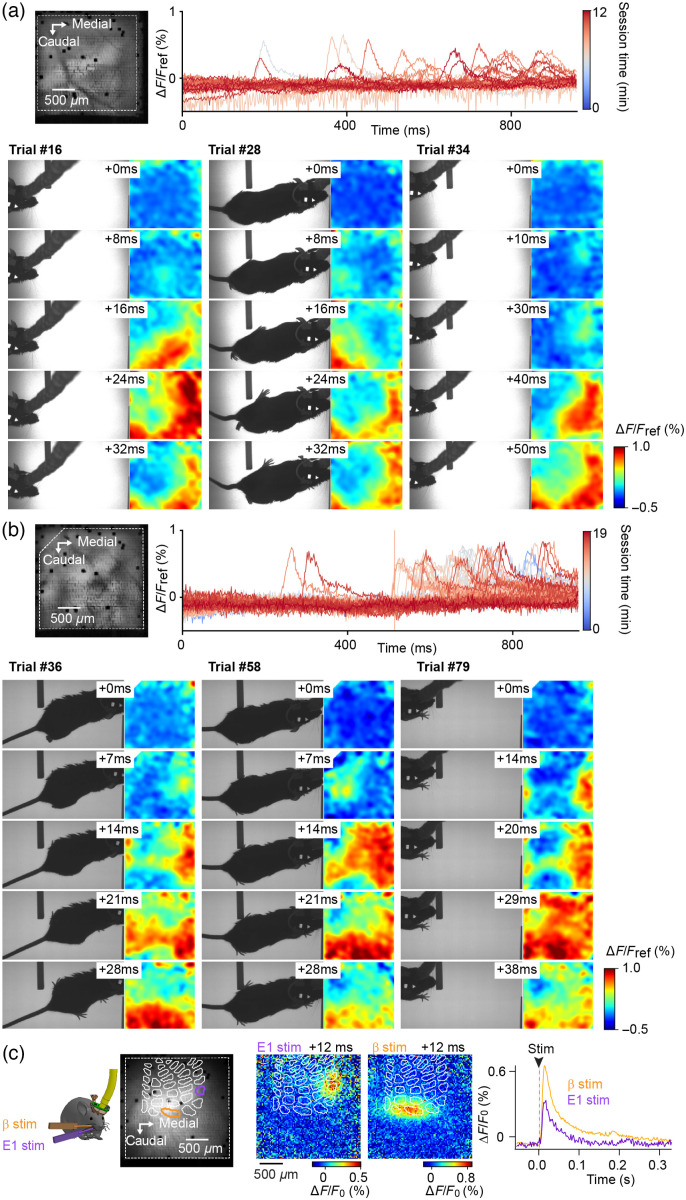
We show its principle of operation, demonstrate its efficacy in a locomotion task, and propose several modes of operation for a wide range of experimental designs.
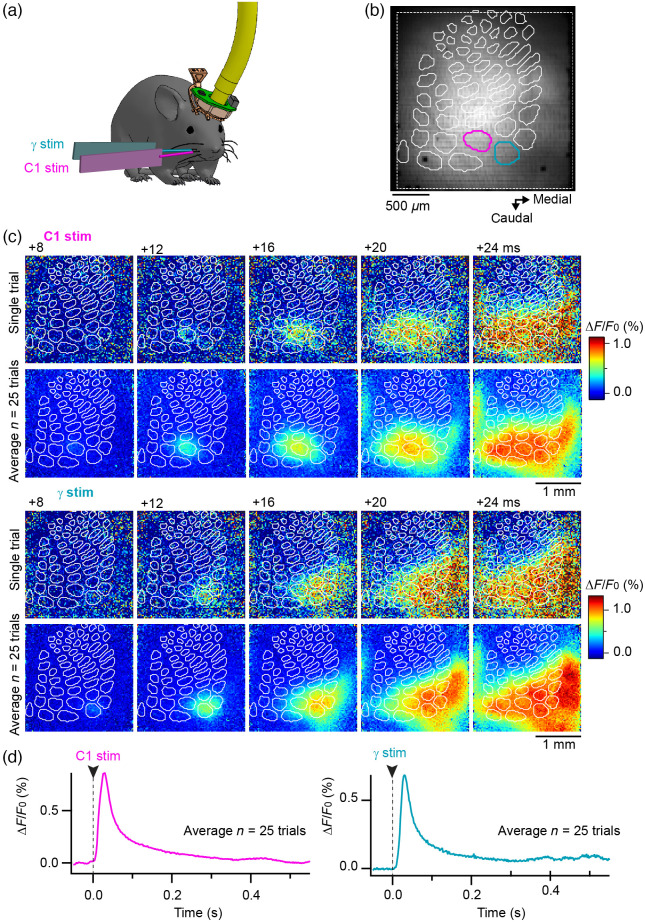
Combined with an optical rotary joint, fibroscopic approaches represent an outstanding tool to link neuronal activity with behavior in mice at the millisecond timescale.
诸如小型显微镜和闭环虚拟现实系统等技术策略的发展不断推动着对清醒行为小鼠中控制行为的神经元过程的研究。然而,前者由于尺寸和重量的限制而限制了记录信号的质量,后者则受到动物运动范围的限制,因此很难再现自然多感官场景的复杂性。
另一种结合了这两种方法的策略是使用纤维束接口将来自运动动物的光信号传输到传统成像系统。然而,由于纤维束通常固定在光学器件下方,动物旋转导致的其扭转不可避免地会在长时间记录中限制行为。我们的目的是克服纤维镜成像的这一主要限制。
我们开发了一种由动物头部的惯性测量单元控制的电动光学旋转接头。
我们展示了其工作原理,在运动任务中证明了其有效性,并为广泛的实验设计提出了几种操作模式。
与光学旋转接头相结合,纤维镜方法是在毫秒时间尺度上将小鼠的神经元活动与行为联系起来的杰出工具。