Wei Xiaoli, Yin Fan, Wu Miaomiao, Xie Qianqian, Zhao Xueqin, Zhu Cheng, Xie Ruiqian, Chen Chongqing, Liu Menghua, Wang Xueying, Ren Ruixue, Kang Guijie, Zhu Chenwen, Cong Jingjing, Wang Hua, Wang Xuefu
Department of Oncology, the First Affiliated Hospital of Anhui Medical University, Hefei 230036, China.
Department of Pharmacy, Huainan First People's Hospital, the First Affiliated Hospital of Anhui University of Science and Technology, Huainan 232001, China.
Acta Pharm Sin B. 2023 Mar;13(3):1128-1144. doi: 10.1016/j.apsb.2022.10.011. Epub 2022 Oct 13.
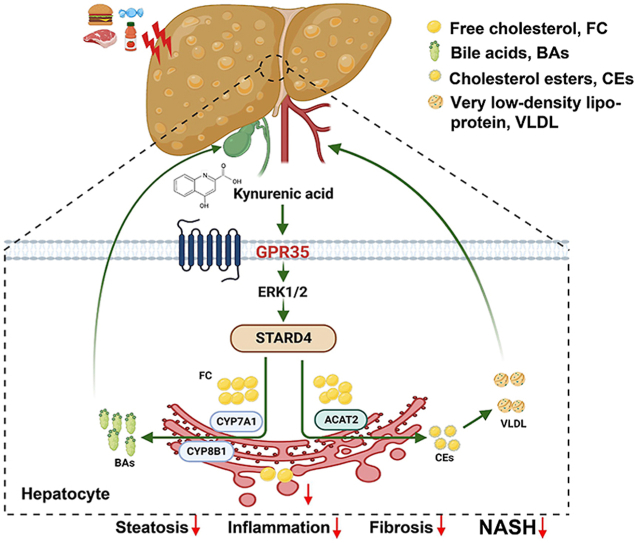
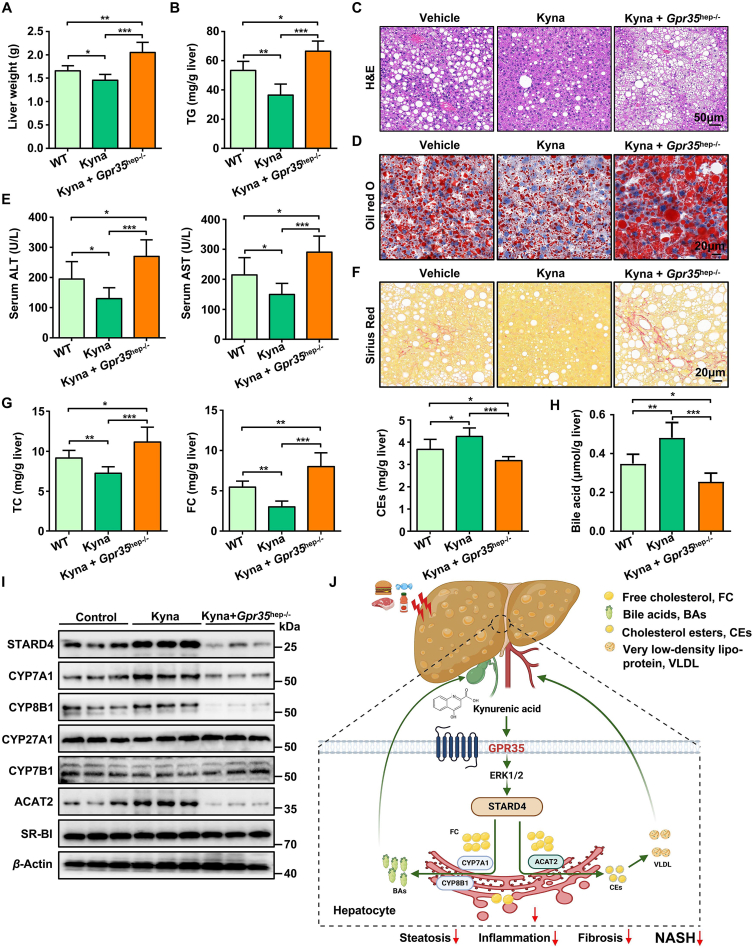
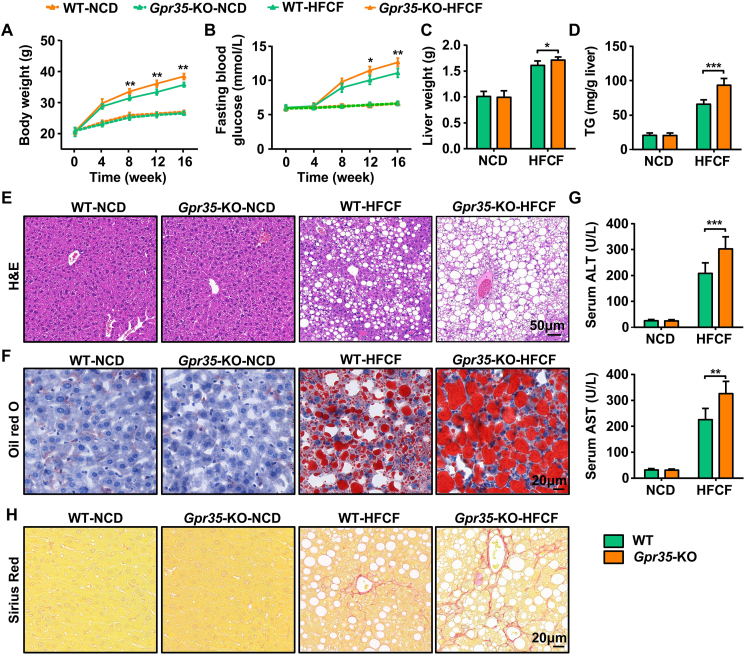
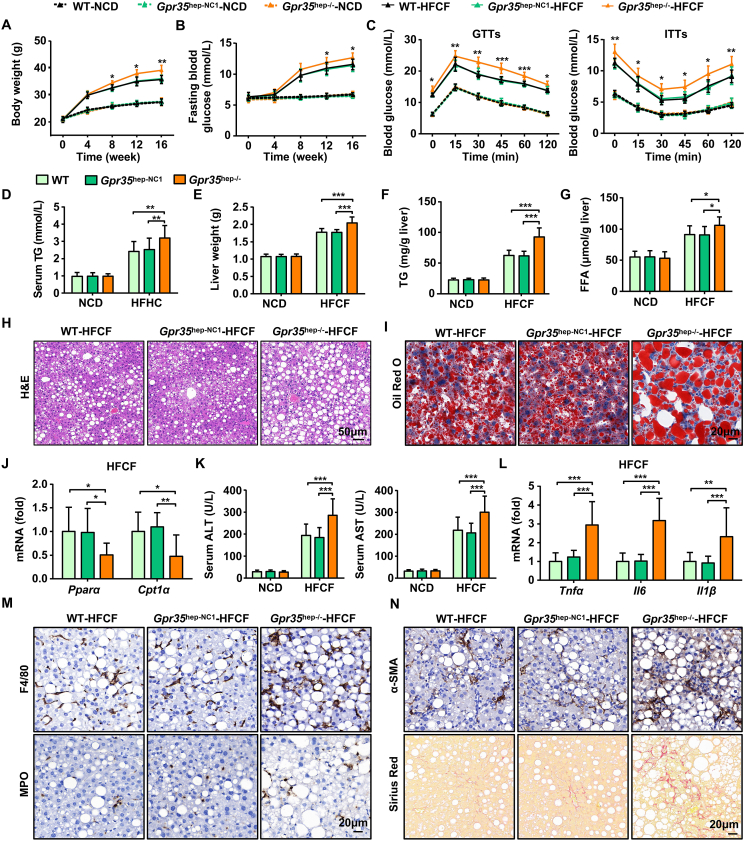
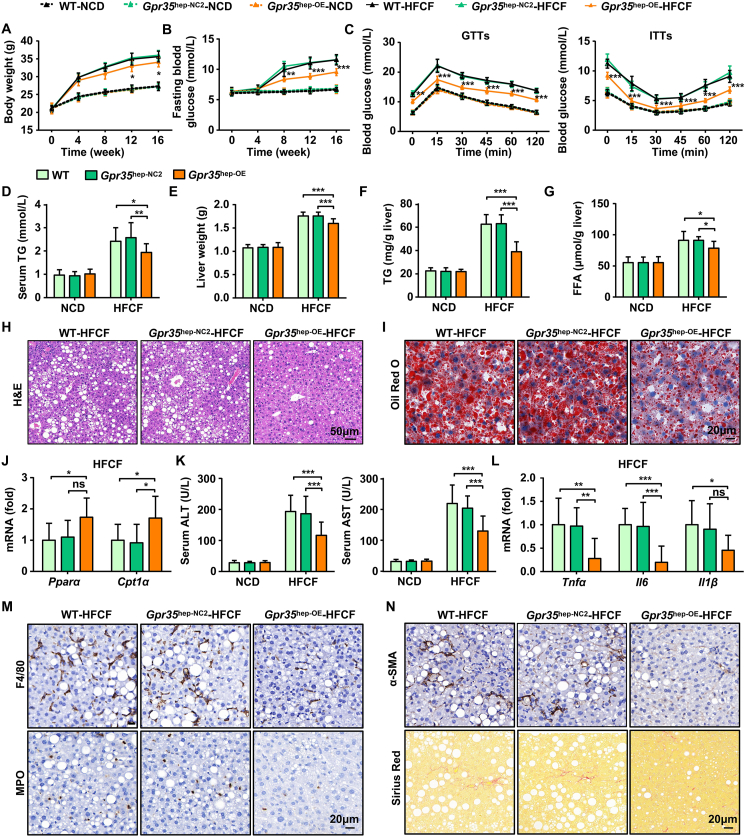
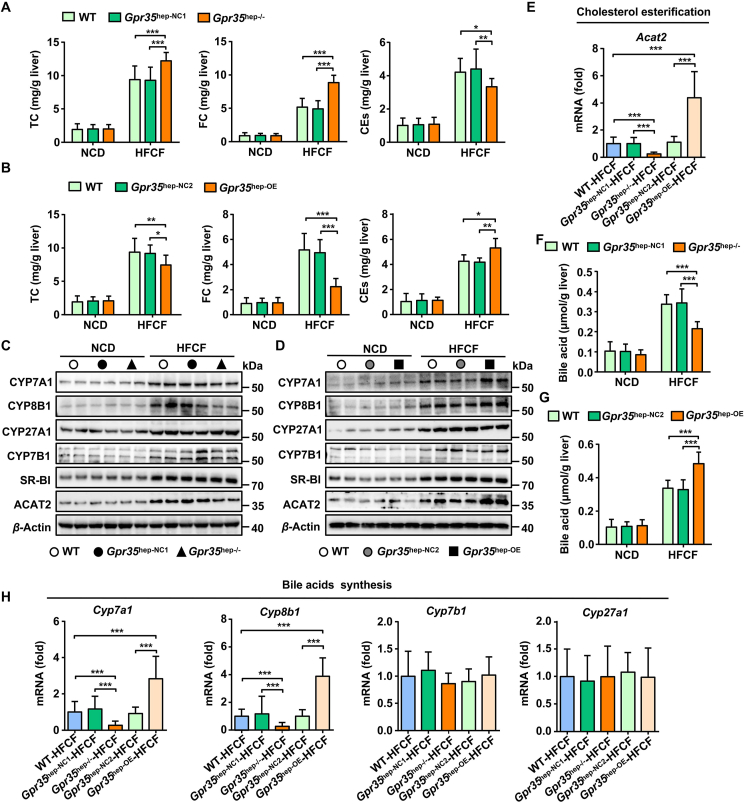
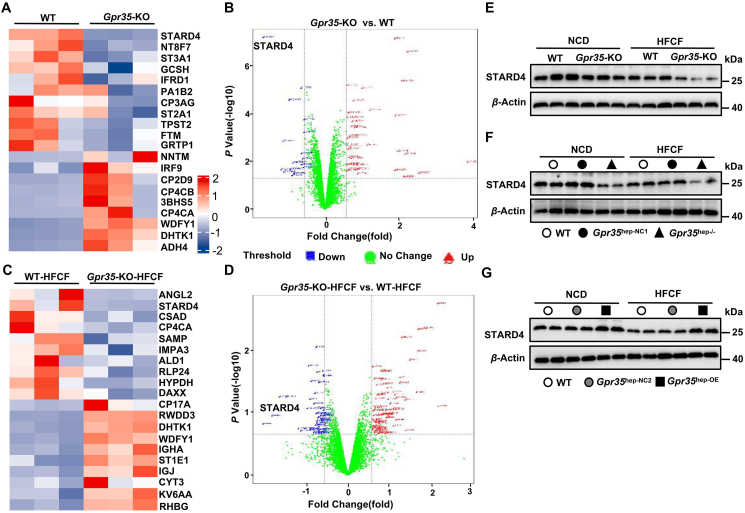
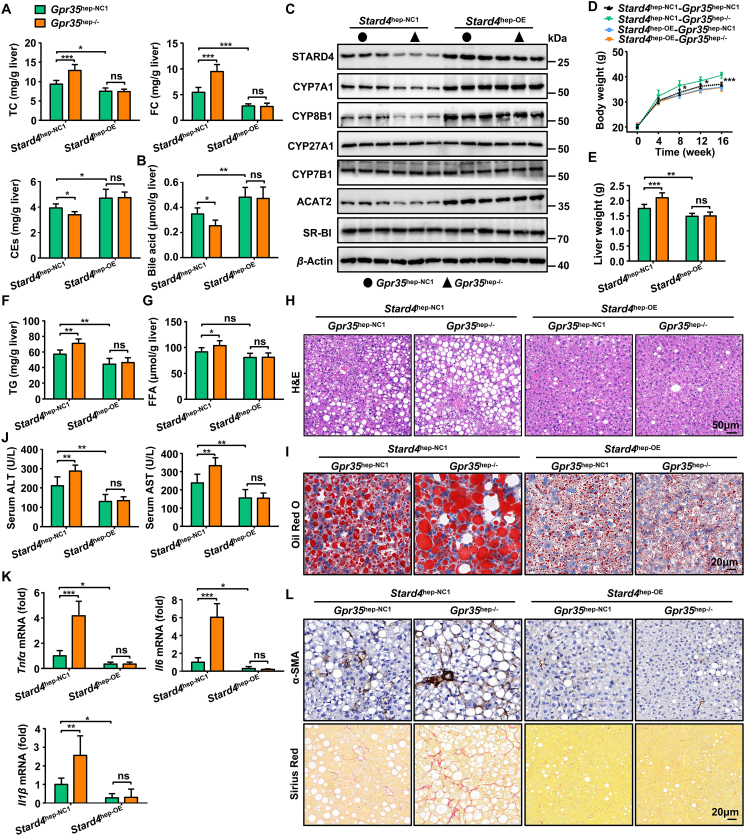
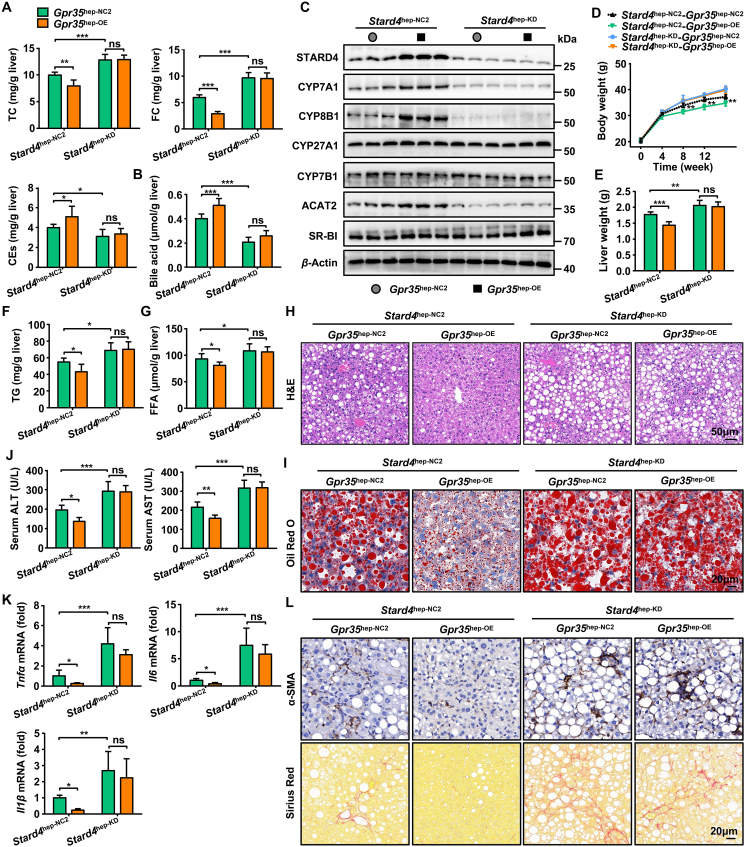
Nonalcoholic fatty liver disease (NAFLD) is the most common chronic liver disease worldwide. Fat accumulation "sensitizes" the liver to insult and leads to nonalcoholic steatohepatitis (NASH). G protein-coupled receptor 35 (GPR35) is involved in metabolic stresses, but its role in NAFLD is unknown. We report that hepatocyte GPR35 mitigates NASH by regulating hepatic cholesterol homeostasis. Specifically, we found that GPR35 overexpression in hepatocytes protected against high-fat/cholesterol/fructose (HFCF) diet-induced steatohepatitis, whereas loss of GPR35 had the opposite effect. Administration of the GPR35 agonist kynurenic acid (Kyna) suppressed HFCF diet-induced steatohepatitis in mice. Kyna/GPR35 induced expression of StAR-related lipid transfer protein 4 (STARD4) through the ERK1/2 signaling pathway, ultimately resulting in hepatic cholesterol esterification and bile acid synthesis (BAS). The overexpression of STARD4 increased the expression of the BAS rate-limiting enzymes cytochrome P450 family 7 subfamily A member 1 (CYP7A1) and CYP8B1, promoting the conversion of cholesterol to bile acid. The protective effect induced by GPR35 overexpression in hepatocytes disappeared in hepatocyte STARD4-knockdown mice. STARD4 overexpression in hepatocytes reversed the aggravation of HFCF diet-induced steatohepatitis caused by the loss of GPR35 expression in hepatocytes in mice. Our findings indicate that the GPR35-STARD4 axis is a promising therapeutic target for NAFLD.
非酒精性脂肪性肝病(NAFLD)是全球最常见的慢性肝病。脂肪堆积使肝脏对损伤“敏感”,并导致非酒精性脂肪性肝炎(NASH)。G蛋白偶联受体35(GPR35)参与代谢应激,但其在NAFLD中的作用尚不清楚。我们报告称,肝细胞GPR35通过调节肝脏胆固醇稳态减轻NASH。具体而言,我们发现肝细胞中GPR35的过表达可预防高脂/胆固醇/果糖(HFCF)饮食诱导的脂肪性肝炎,而GPR35缺失则产生相反的效果。给予GPR35激动剂犬尿喹啉酸(Kyna)可抑制小鼠HFCF饮食诱导的脂肪性肝炎。Kyna/GPR35通过ERK1/2信号通路诱导StAR相关脂质转运蛋白4(STARD4)的表达,最终导致肝脏胆固醇酯化和胆汁酸合成(BAS)。STARD4的过表达增加了BAS限速酶细胞色素P450家族7亚家族A成员1(CYP7A1)和CYP8B1的表达,促进胆固醇向胆汁酸的转化。在肝细胞STARD4基因敲除小鼠中,肝细胞中GPR35过表达所诱导的保护作用消失。肝细胞中STARD4的过表达逆转了小鼠肝细胞中GPR35表达缺失所导致的HFCF饮食诱导的脂肪性肝炎的加重。我们的研究结果表明,GPR35-STARD4轴是NAFLD一个有前景的治疗靶点。