Barachini Serena, Ghelardoni Sandra, Madonna Rosalinda
Laboratory for Cell Therapy, Department of Clinical and Experimental Medicine, University of Pisa, 56126 Pisa, Italy.
Laboratory of Biochemistry, Department of Pathology, University of Pisa, 56126 Pisa, Italy.
J Clin Med. 2023 Mar 20;12(6):2399. doi: 10.3390/jcm12062399.
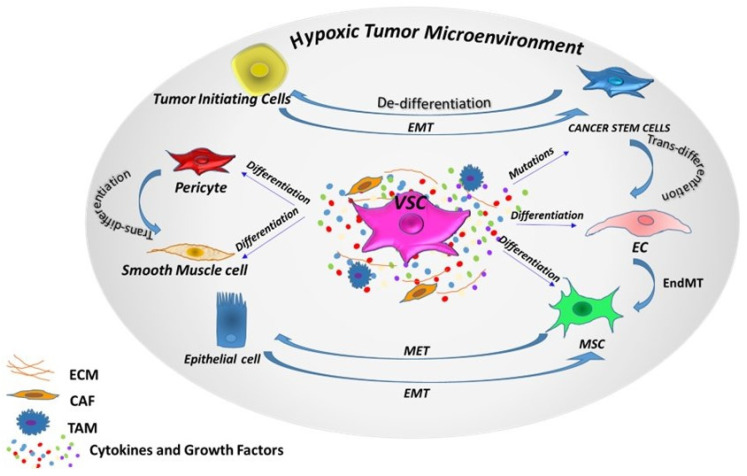
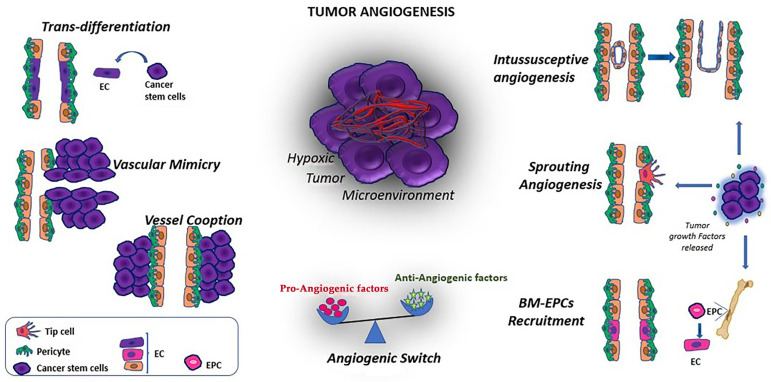
Vascular progenitor cells are activated to repair and form a neointima following vascular damage such as hypertension, atherosclerosis, diabetes, trauma, hypoxia, primary cancerous lesions and metastases as well as catheter interventions. They play a key role not only in the resolution of the vascular lesion but also in the adult neovascularization and angiogenesis sprouting (i.e., the growth of new capillaries from pre-existing ones), often associated with carcinogenesis, favoring the formation of metastases, survival and progression of tumors. In this review, we discuss the biology, cellular plasticity and pathophysiology of different vascular progenitor cells, including their origins (sources), stimuli and activated pathways that induce differentiation, isolation and characterization. We focus on their role in tumor-induced vascular injury and discuss their implications in promoting tumor angiogenesis during cancer proliferation and migration.
血管祖细胞在诸如高血压、动脉粥样硬化、糖尿病、创伤、缺氧、原发性癌灶和转移灶以及导管介入等血管损伤后被激活,以修复并形成新内膜。它们不仅在血管病变的消退中起关键作用,还在成人新血管形成和血管生成芽生(即从已有的毛细血管生长出新的毛细血管)过程中发挥关键作用,这一过程常与致癌作用相关,有利于转移灶的形成、肿瘤的存活和进展。在本综述中,我们讨论了不同血管祖细胞的生物学、细胞可塑性和病理生理学,包括它们的起源(来源)、诱导分化的刺激因素和激活途径、分离和特性。我们重点关注它们在肿瘤诱导的血管损伤中的作用,并讨论它们在癌症增殖和迁移过程中促进肿瘤血管生成的意义。