Institute for Global Nutrition and Department of Nutrition, University of California Davis, Davis, California, USA.
Micronutrient Forum, Washington, DC, USA.
Ann N Y Acad Sci. 2023 May;1523(1):11-23. doi: 10.1111/nyas.14985. Epub 2023 Mar 29.
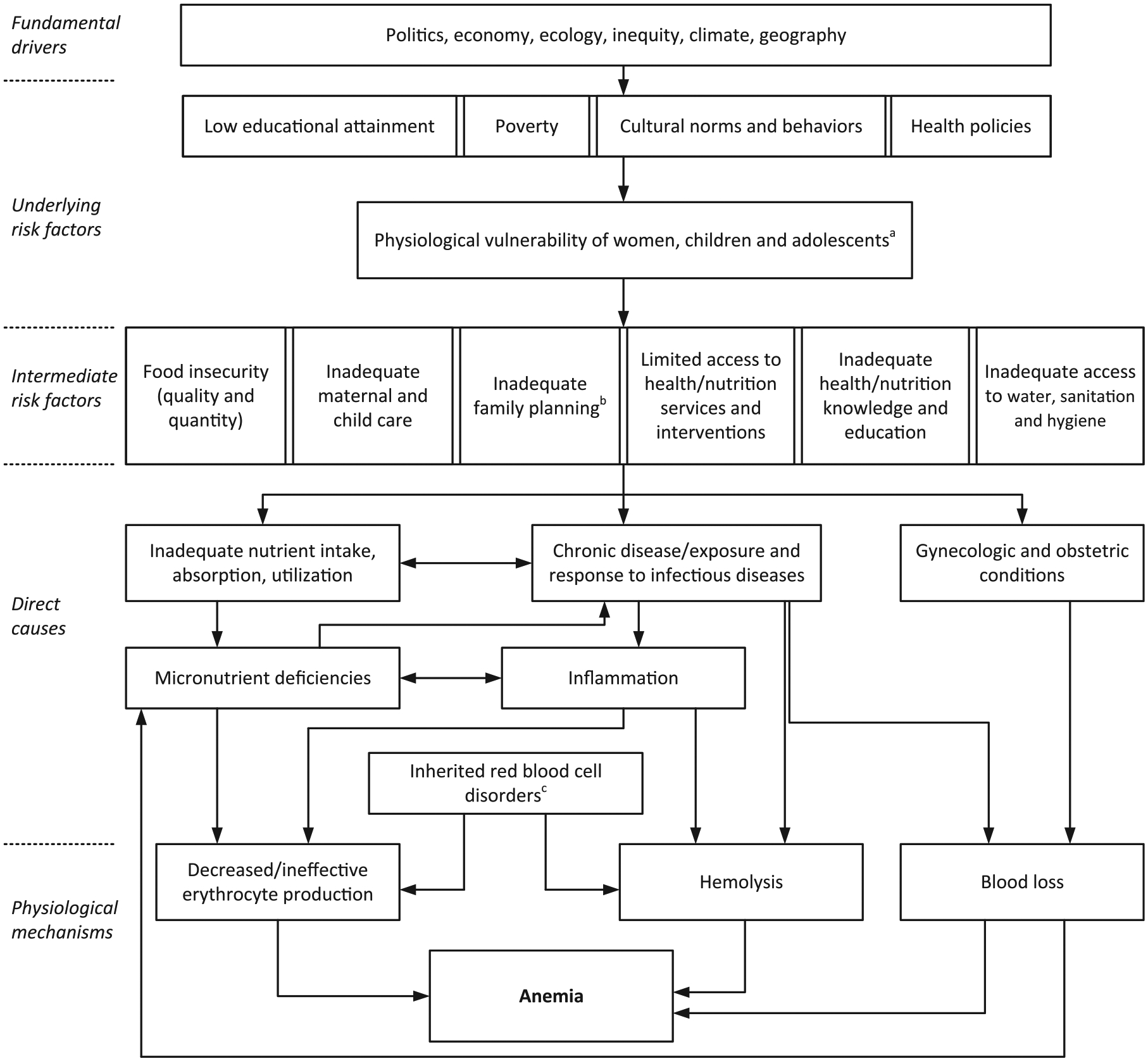
Anemia is a major public health concern. Young children, menstruating adolescent girls and women, and pregnant women are among the most vulnerable. Anemia is the consequence of a wide range of causes, including biological, socioeconomic, and ecological risk factors. Primary causes include: iron deficiency; inherited red blood cell disorders; infections, such as soil-transmitted helminthiasis, schistosomiasis, and malaria; gynecological and obstetric conditions; and other chronic diseases that lead to blood loss, decreased erythropoiesis, or destruction of erythrocytes. The most vulnerable population groups in low- and middle-income countries are often at the greatest risk to suffer from several of these causes simultaneously as low socioeconomic status is linked with an increased risk of anemia through multiple pathways. Targeted and effective action is needed to prevent anemia. Understanding the causes and risk factors of anemia for different population subgroups within a country guides the design and implementation of effective strategies to prevent and treat anemia. A coordinated approach across various expert groups and programs could make the best use of existing data or could help to determine when newer and more relevant data may need to be collected, especially in countries with a high anemia burden and limited information on the etiology of anemia.
贫血是一个主要的公共卫生关注点。婴幼儿、经期少女和育龄妇女以及孕妇属于最易受影响的人群。贫血是多种原因造成的,包括生物、社会经济和生态风险因素。主要原因包括:缺铁;遗传性红细胞疾病;感染,如土壤传播的蠕虫感染、血吸虫病和疟疾;妇科和产科疾病;以及其他导致失血、红细胞生成减少或红细胞破坏的慢性疾病。在中低收入国家,最脆弱的人群往往面临着多种原因同时发生的最大风险,因为社会经济地位低通过多种途径增加了贫血的风险。需要采取有针对性和有效的行动来预防贫血。了解不同国家亚人群贫血的原因和风险因素,为预防和治疗贫血制定有效的策略提供指导。各个专家组和项目之间的协调方法可以充分利用现有数据,或者有助于确定何时需要收集更新和更相关的数据,特别是在贫血负担高且贫血病因信息有限的国家。