Yang Jenny, Soltan Andrew A S, Eyre David W, Yang Yang, Clifton David A
Institute of Biomedical Engineering, Department of Engineering Science, University of Oxford, Oxford, England.
John Radcliffe Hospital, Oxford University Hospitals NHS Foundation Trust, Oxford, England.
NPJ Digit Med. 2023 Mar 29;6(1):55. doi: 10.1038/s41746-023-00805-y.
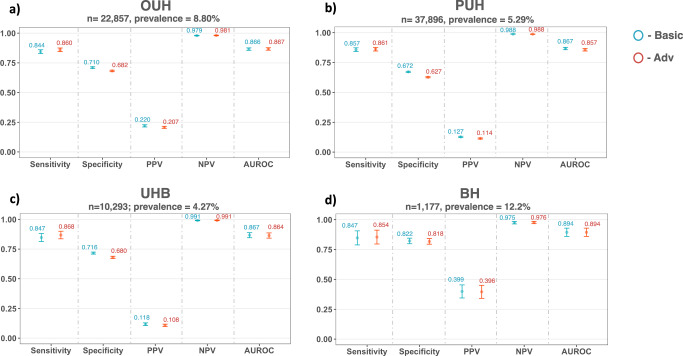
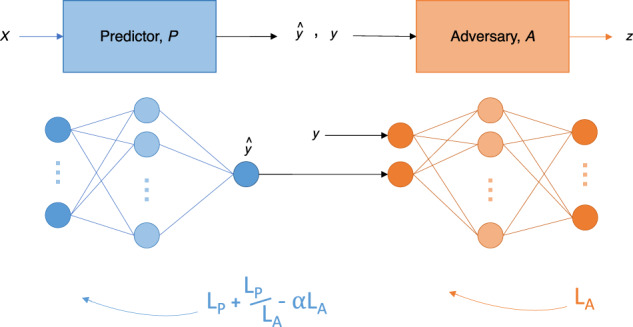
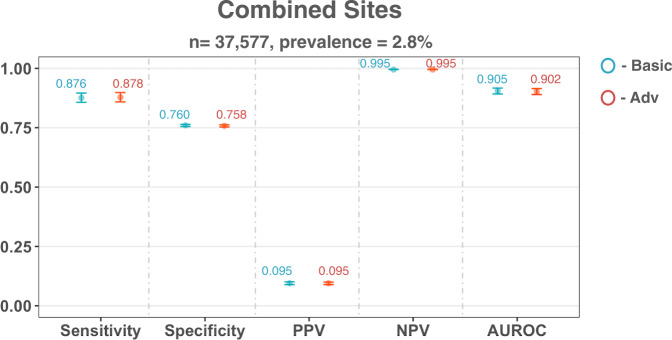
Machine learning is becoming increasingly prominent in healthcare. Although its benefits are clear, growing attention is being given to how these tools may exacerbate existing biases and disparities. In this study, we introduce an adversarial training framework that is capable of mitigating biases that may have been acquired through data collection. We demonstrate this proposed framework on the real-world task of rapidly predicting COVID-19, and focus on mitigating site-specific (hospital) and demographic (ethnicity) biases. Using the statistical definition of equalized odds, we show that adversarial training improves outcome fairness, while still achieving clinically-effective screening performances (negative predictive values >0.98). We compare our method to previous benchmarks, and perform prospective and external validation across four independent hospital cohorts. Our method can be generalized to any outcomes, models, and definitions of fairness.
机器学习在医疗保健领域正变得越来越突出。尽管其好处显而易见,但人们越来越关注这些工具可能如何加剧现有的偏见和差异。在本研究中,我们引入了一个对抗训练框架,该框架能够减轻在数据收集过程中可能产生的偏见。我们在快速预测新冠肺炎这一现实任务中展示了该框架,并着重减轻特定地点(医院)和人口统计学(种族)方面的偏见。使用均等赔率的统计定义,我们表明对抗训练提高了结果公平性,同时仍能实现临床有效的筛查性能(阴性预测值>0.98)。我们将我们的方法与之前的基准进行比较,并在四个独立的医院队列中进行前瞻性和外部验证。我们的方法可以推广到任何结果、模型和公平性定义。