López-Muñoz Alberto Domingo, Santos Jefferson J S, Yewdell Jonathan W
Cellular Biology Section, Laboratory of Viral Diseases, NIAID (NIH), Bethesda, Maryland, United States.
bioRxiv. 2023 Feb 27:2023.02.24.529952. doi: 10.1101/2023.02.24.529952.
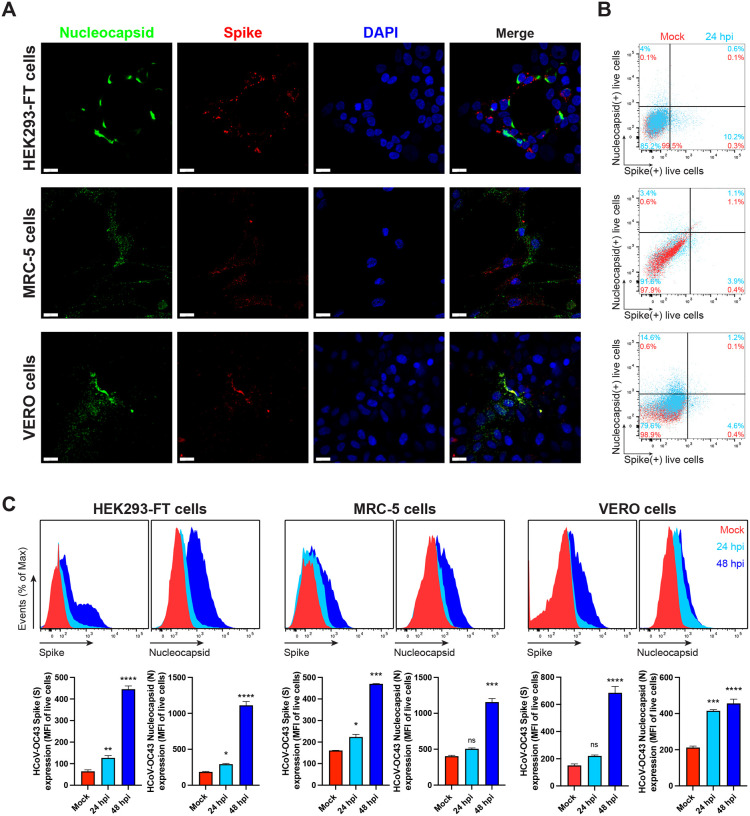
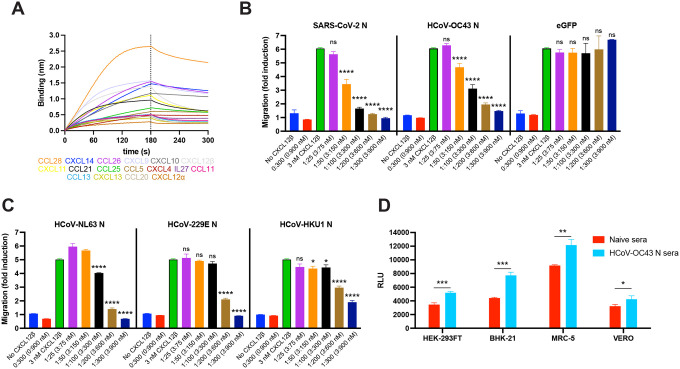
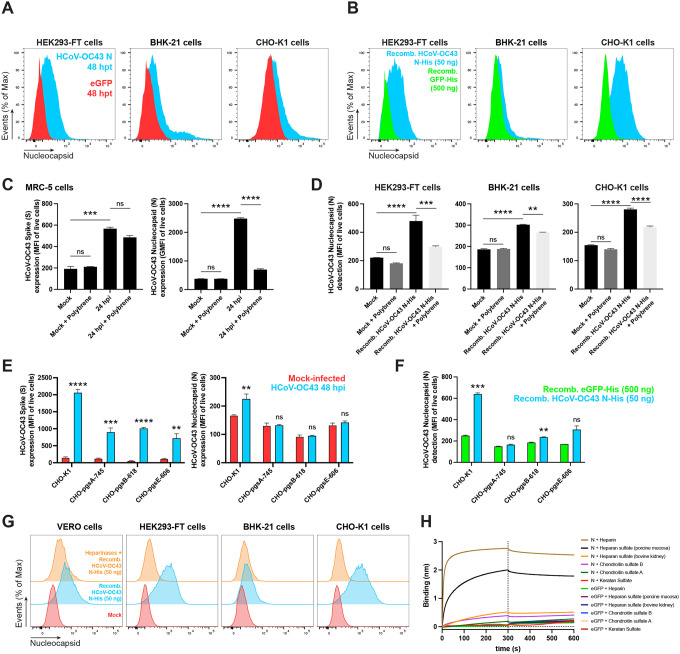
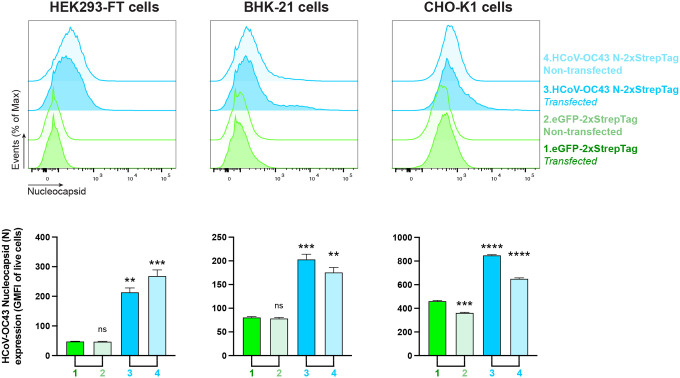
We recently reported that SARS-CoV-2 Nucleocapsid (N) protein is abundantly expressed on the surface of both infected and neighboring uninfected cells, where it enables activation of Fc receptor-bearing immune cells with anti-N antibodies (Abs) and inhibits leukocyte chemotaxis by binding chemokines (CHKs). Here, we extend these findings to N from the seasonal human coronavirus (HCoV)-OC43, which is also robustly expressed on the surface of infected and non-infected cells by binding heparan-sulfate/heparin (HS/H). HCoV-OC43 N binds with high affinity to the same set of 11 human CHKs as SARS-CoV-2 N, but also to a non-overlapping set of 6 cytokines (CKs). As with SARS-CoV-2 N, HCoV-OC43 N inhibits CXCL12β-mediated leukocyte migration in chemotaxis assays, as do all highly pathogenic and endemic HCoV N proteins. Together, our findings indicate that cell surface HCoV N plays important evolutionary conserved roles in manipulating host innate immunity and as a target for adaptive immunity.
我们最近报道,严重急性呼吸综合征冠状病毒2(SARS-CoV-2)核衣壳(N)蛋白在受感染细胞和邻近未受感染细胞的表面均大量表达,在那里它能够通过抗N抗体(Abs)激活携带Fc受体的免疫细胞,并通过结合趋化因子(CHKs)抑制白细胞趋化性。在此,我们将这些发现扩展至季节性人类冠状病毒(HCoV)-OC43的N蛋白,该蛋白通过结合硫酸乙酰肝素/肝素(HS/H)也在受感染和未受感染细胞的表面大量表达。HCoV-OC43 N与SARS-CoV-2 N一样,以高亲和力结合同一组11种人类CHKs,但也结合一组不重叠的6种细胞因子(CKs)。与SARS-CoV-2 N一样,在趋化性试验中,HCoV-OC43 N抑制CXCL12β介导的白细胞迁移,所有高致病性和地方性HCoV N蛋白均如此。总之,我们的研究结果表明,细胞表面的HCoV N在操纵宿主固有免疫以及作为适应性免疫的靶点方面发挥着重要的进化保守作用。