Huang-Hobbs Emmet, Cheng Yi-Ting, Ko Yeunjung, Luna-Figueroa Estefania, Lozzi Brittney, Taylor Kathryn R, McDonald Malcolm, He Peihao, Chen Hsiao-Chi, Yang Yuhui, Maleki Ehson, Lee Zhung-Fu, Murali Sanjana, Williamson Michael, Choi Dongjoo, Curry Rachel, Bayley James, Woo Junsung, Jalali Ali, Monje Michelle, Noebels Jeffrey L, Harmanci Akdes Serin, Rao Ganesh, Deneen Benjamin
The Integrative Molecular and Biomedical Sciences Graduate Program (IMBS), Baylor College of Medicine, Houston TX 77030.
Center for Cell and Gene Therapy, Baylor College of Medicine, Houston TX 77030.
bioRxiv. 2023 Mar 16:2023.03.15.532832. doi: 10.1101/2023.03.15.532832.
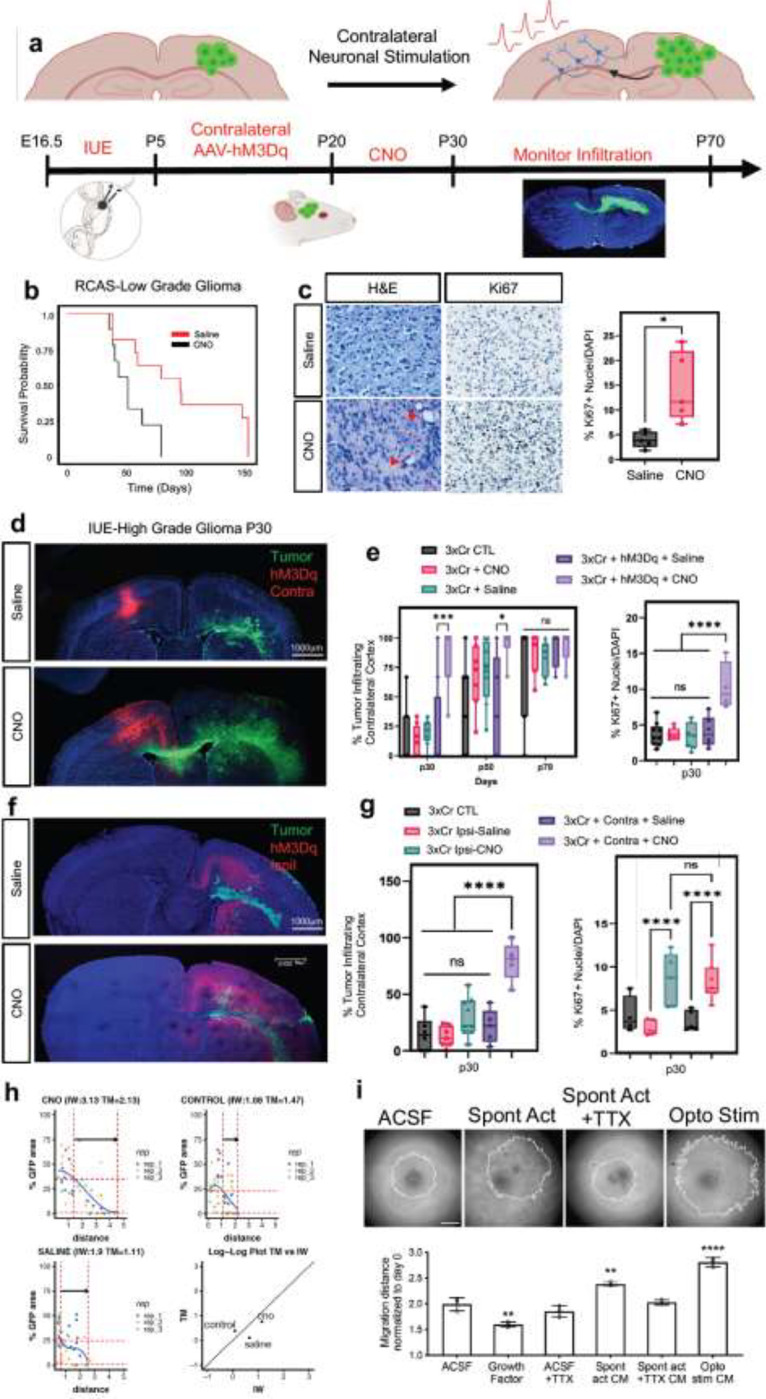
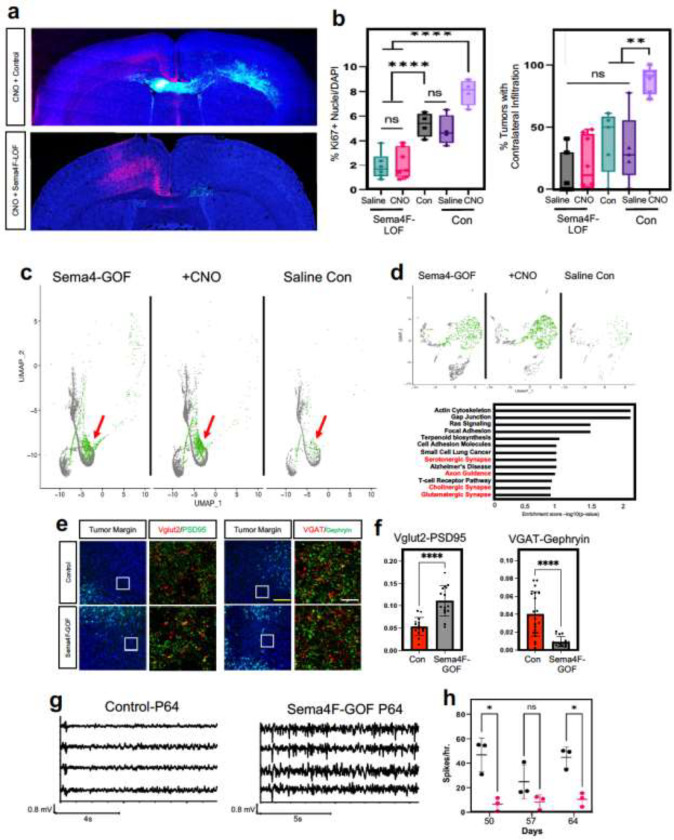
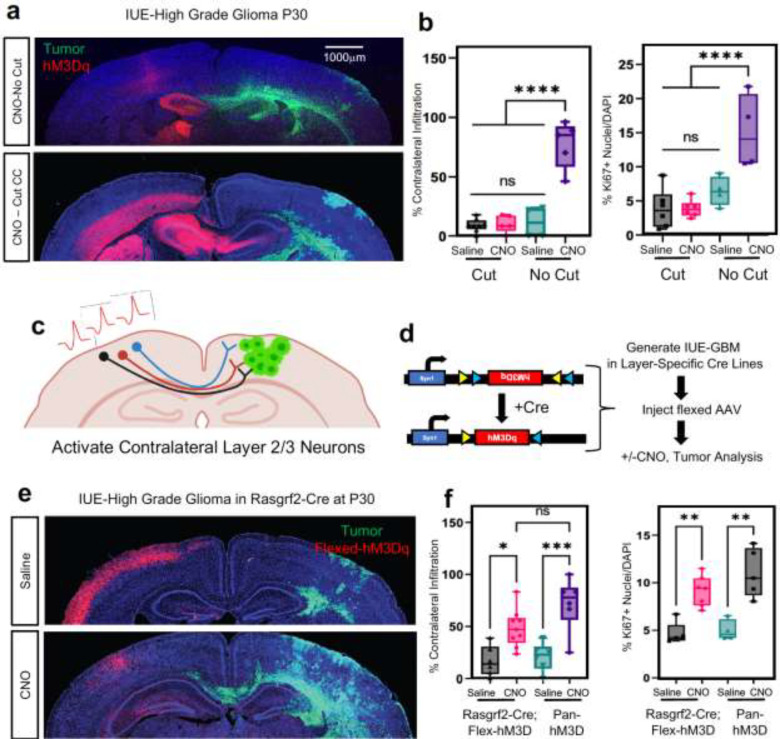
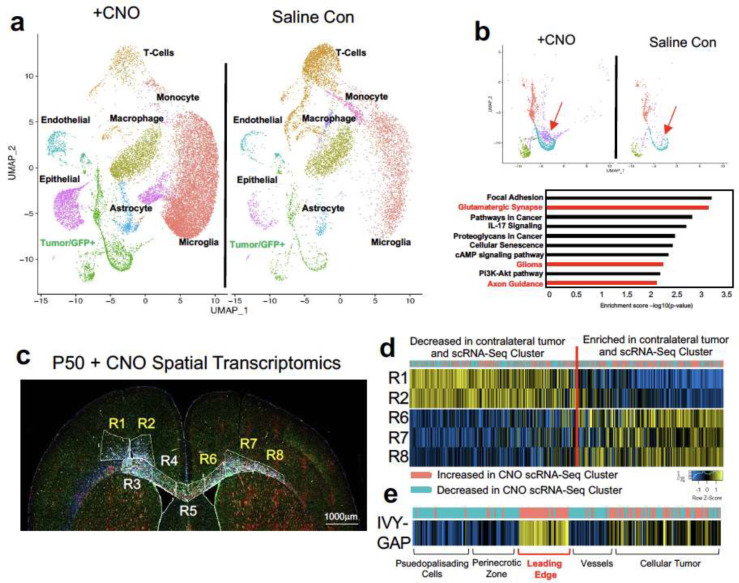
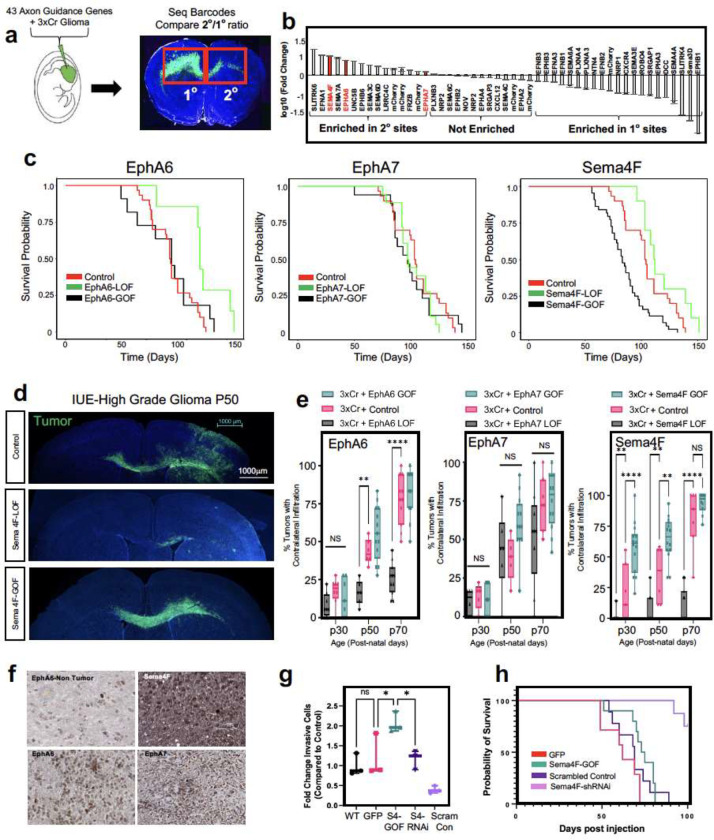
The tumor microenvironment (TME) plays an essential role in malignancy and neurons have emerged as a key component of the TME that promotes tumorigenesis across a host of cancers. Recent studies on glioblastoma (GBM) highlight bi-directional signaling between tumors and neurons that propagates a vicious cycle of proliferation, synaptic integration, and brain hyperactivity; however, the identity of neuronal subtypes and tumor subpopulations driving this phenomenon are incompletely understood. Here we show that callosal projection neurons located in the hemisphere contralateral to primary GBM tumors promote progression and widespread infiltration. Using this platform to examine GBM infiltration, we identified an activity dependent infiltrating population present at the leading edge of mouse and human tumors that is enriched for axon guidance genes. High-throughput, screening of these genes identified Sema4F as a key regulator of tumorigenesis and activity-dependent infiltration. Furthermore, Sema4F promotes the activity-dependent infiltrating population and propagates bi-directional signaling with neurons by remodeling tumor adjacent synapses towards brain network hyperactivity. Collectively, our studies demonstrate that subsets of neurons in locations remote to primary GBM promote malignant progression, while revealing new mechanisms of tumor infiltration that are regulated by neuronal activity.
肿瘤微环境(TME)在恶性肿瘤中起着至关重要的作用,神经元已成为TME的关键组成部分,可促进多种癌症的肿瘤发生。最近关于胶质母细胞瘤(GBM)的研究强调了肿瘤与神经元之间的双向信号传导,这种信号传导会引发增殖、突触整合和脑功能亢进的恶性循环;然而,驱动这一现象的神经元亚型和肿瘤亚群的身份仍未完全明确。在这里,我们表明位于原发性GBM肿瘤对侧半球的胼胝体投射神经元促进肿瘤进展和广泛浸润。利用这个平台来研究GBM浸润,我们在小鼠和人类肿瘤的前沿发现了一个依赖于活性的浸润群体,该群体富含轴突导向基因。对这些基因进行高通量筛选,确定Sema4F是肿瘤发生和活性依赖性浸润的关键调节因子。此外,Sema4F通过将肿瘤邻近突触重塑为脑网络功能亢进,促进依赖于活性的浸润群体并与神经元进行双向信号传导。总的来说,我们的研究表明,远离原发性GBM的神经元亚群促进恶性进展,同时揭示了受神经元活性调节的肿瘤浸润新机制。