Zhuang Bai-Mei, Cao Dan-Dan, Liu Xiao-Feng, Wang Li, Lin Xiao-Li, Duan Yong-Gang, Lee Cheuk-Lun, Chiu Philip C N, Yeung William S B, Yao Yuan-Qing
Medical School of Chinese People's Liberation Army, Chinese People's Liberation Army General Hospital, Beijing, China.
Shenzhen Key Laboratory of Fertility Regulation, The University of Hong Kong-Shenzhen Hospital, Shenzhen, Shenzhen, Guangdong, China.
Front Immunol. 2023 Mar 15;14:1130308. doi: 10.3389/fimmu.2023.1130308. eCollection 2023.
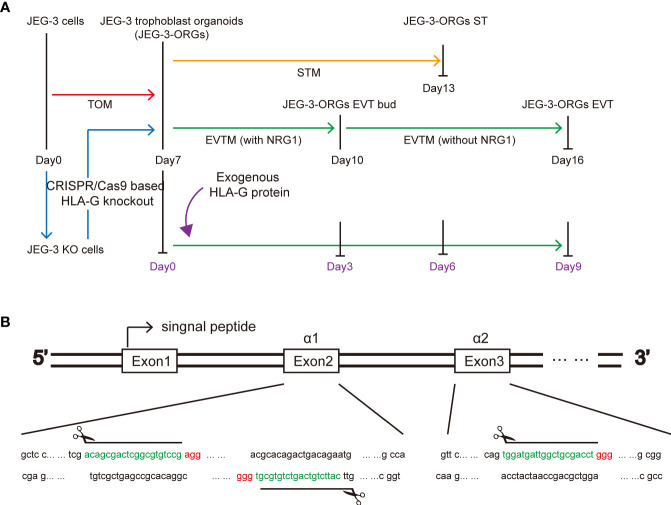
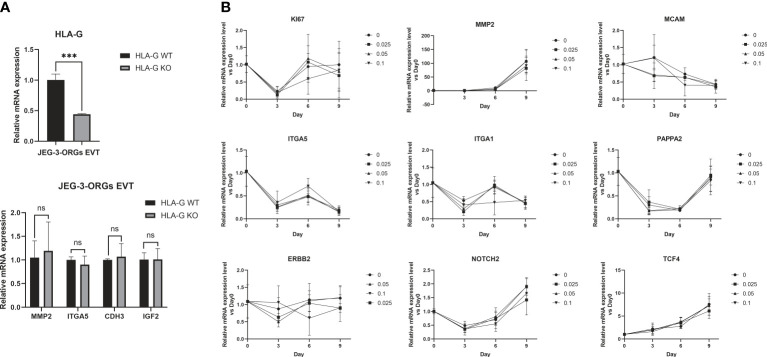
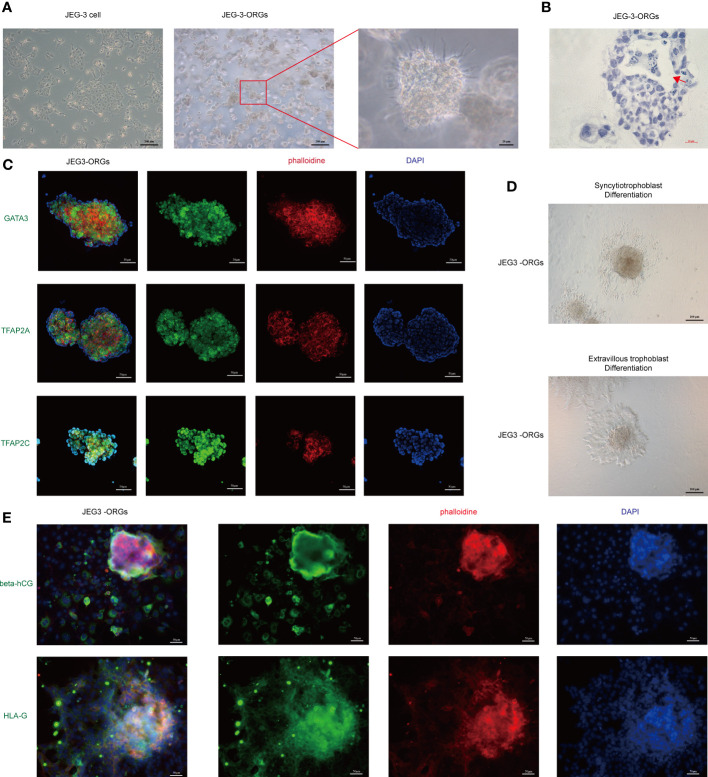
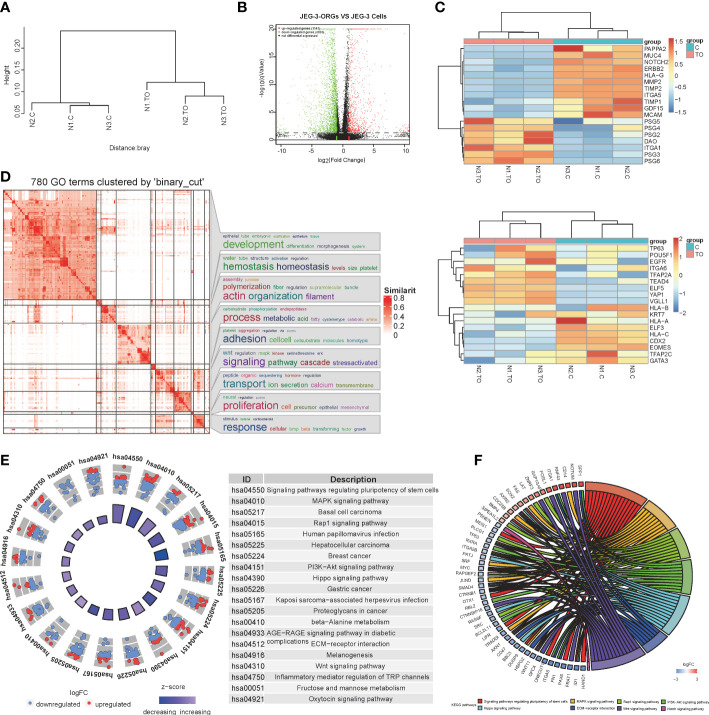
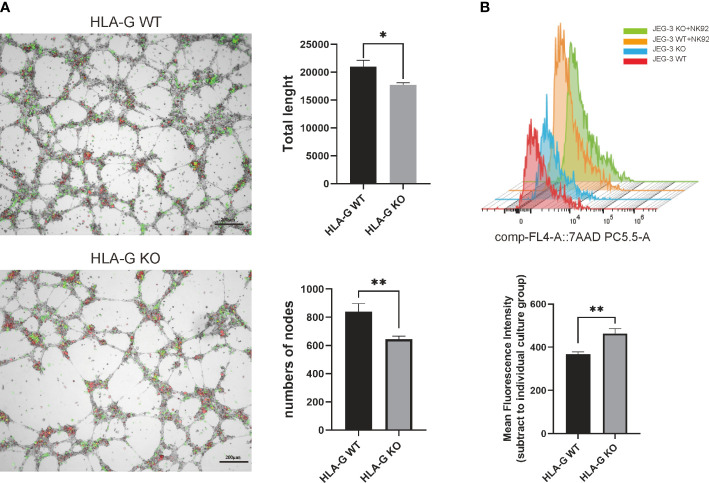
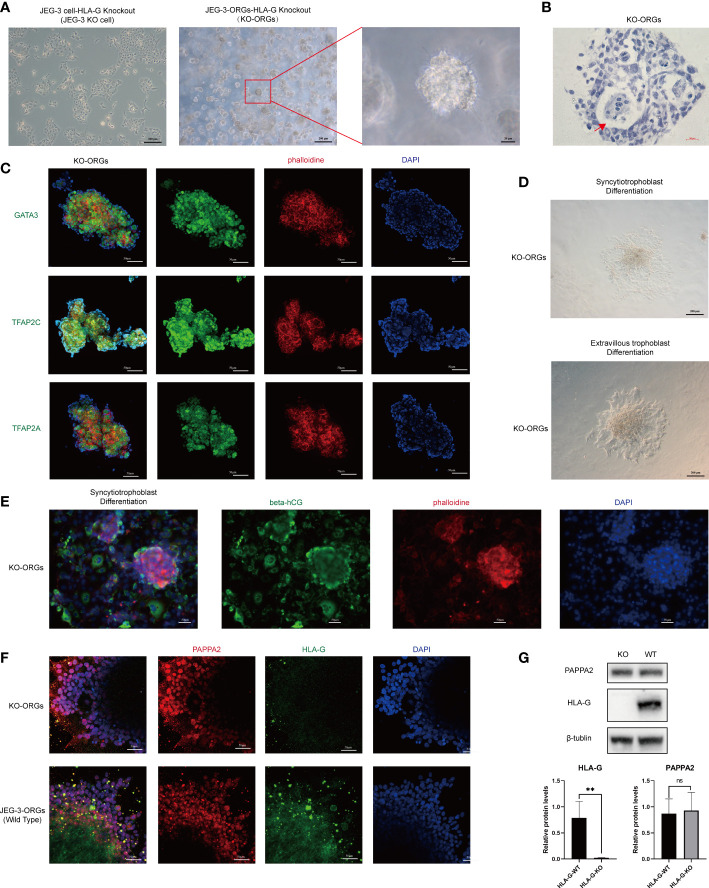
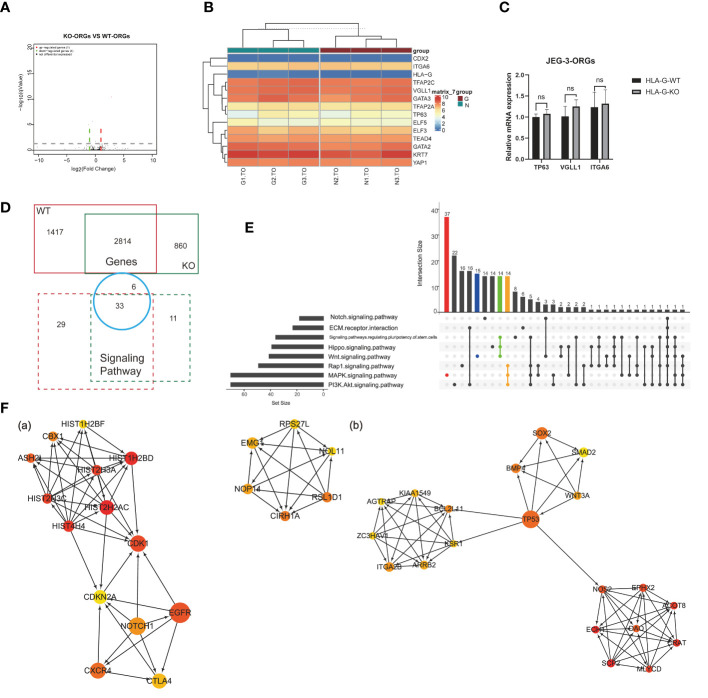
The human placenta is a unique temporary organ with a mysterious immune tolerance. The formation of trophoblast organoids has advanced the study of placental development. HLA-G is uniquely expressed in the extravillous trophoblast (EVT) and has been linked to placental disorders. With older experimental methodologies, the role of HLA-G in trophoblast function beyond immunomodulation is still contested, as is its role during trophoblast differentiation. Organoid models incorporating CRISPR/Cas9 technology were used to examine the role of HLA-G in trophoblast function and differentiation. JEG-3 trophoblast organoids (JEG-3-ORGs) were established that highly expressed trophoblast representative markers and had the capacity to differentiate into EVT. CRISPR/Cas9 based on HLA-G knockout (KO) significantly altered the trophoblast immunomodulatory effect on the cytotoxicity of natural killer cells, as well as the trophoblast regulatory effect on HUVEC angiogenesis, but had no effect on the proliferation and invasion of JEG-3 cells and the formation of TB-ORGs. RNA-sequencing analysis further demonstrated that JEG-3 KO cells followed similar biological pathways as their wild-type counterparts during the formation of TB-ORGs. In addition, neither HLA-G KO nor the exogenous addition of HLA-G protein during EVT differentiation from JEG-3-ORGs altered the temporal expression of the known EVT marker genes. Based on the JEG-3 KO (disruption of exons 2 and 3) cell line and the TB-ORGs model, it was determined that HLA-G has a negligible effect on trophoblast invasion and differentiation. Despite this, JEG-3-ORG remains a valuable model for studying trophoblast differentiation.
人类胎盘是一个具有神秘免疫耐受性的独特临时器官。滋养层类器官的形成推动了胎盘发育的研究。HLA - G在绒毛外滋养层(EVT)中独特表达,并与胎盘疾病有关。使用较旧的实验方法时,HLA - G在滋养层功能中超出免疫调节的作用以及其在滋养层分化过程中的作用仍存在争议。采用结合CRISPR/Cas9技术的类器官模型来研究HLA - G在滋养层功能和分化中的作用。建立了JEG - 3滋养层类器官(JEG - 3 - ORGs),其高度表达滋养层代表性标志物,并具有分化为EVT的能力。基于HLA - G基因敲除(KO)的CRISPR/Cas9显著改变了滋养层对自然杀伤细胞细胞毒性的免疫调节作用,以及滋养层对人脐静脉内皮细胞(HUVEC)血管生成的调节作用,但对JEG - 3细胞的增殖和侵袭以及TB - ORGs的形成没有影响。RNA测序分析进一步表明,在TB - ORGs形成过程中,JEG - 3基因敲除细胞遵循与其野生型对应细胞相似的生物学途径。此外,在JEG - 3 - ORGs向EVT分化过程中,HLA - G基因敲除或外源性添加HLA - G蛋白均未改变已知EVT标志物基因的时间表达。基于JEG - 3基因敲除(外显子2和3缺失)细胞系和TB - ORGs模型,确定HLA - G对滋养层侵袭和分化的影响可忽略不计。尽管如此,JEG - 3 - ORG仍然是研究滋养层分化的有价值模型。