Department of Computer Science, Chemnitz University of Technology, Chemnitz, Germany.
Departamento de Ingeniería Informática, Universidad de Santiago de Chile, Santiago, Chile.
PLoS Comput Biol. 2023 Apr 3;19(4):e1011024. doi: 10.1371/journal.pcbi.1011024. eCollection 2023 Apr.
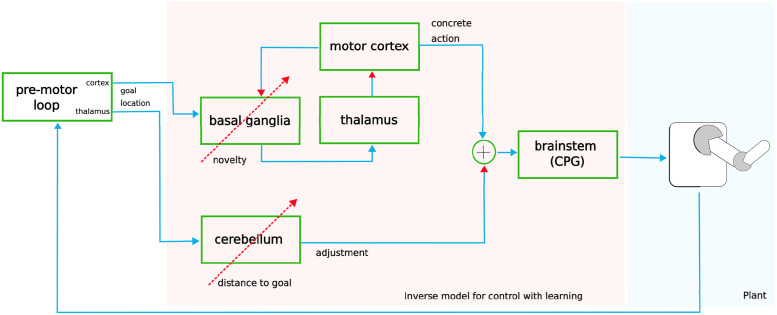
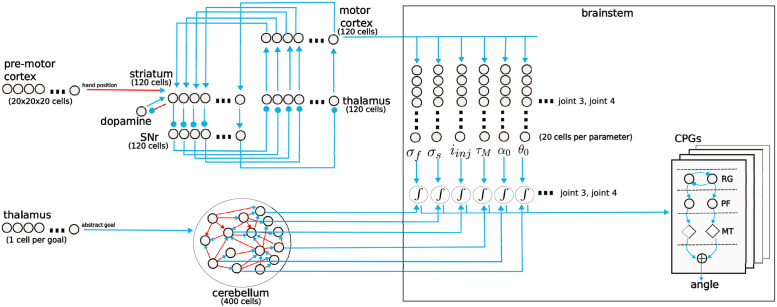
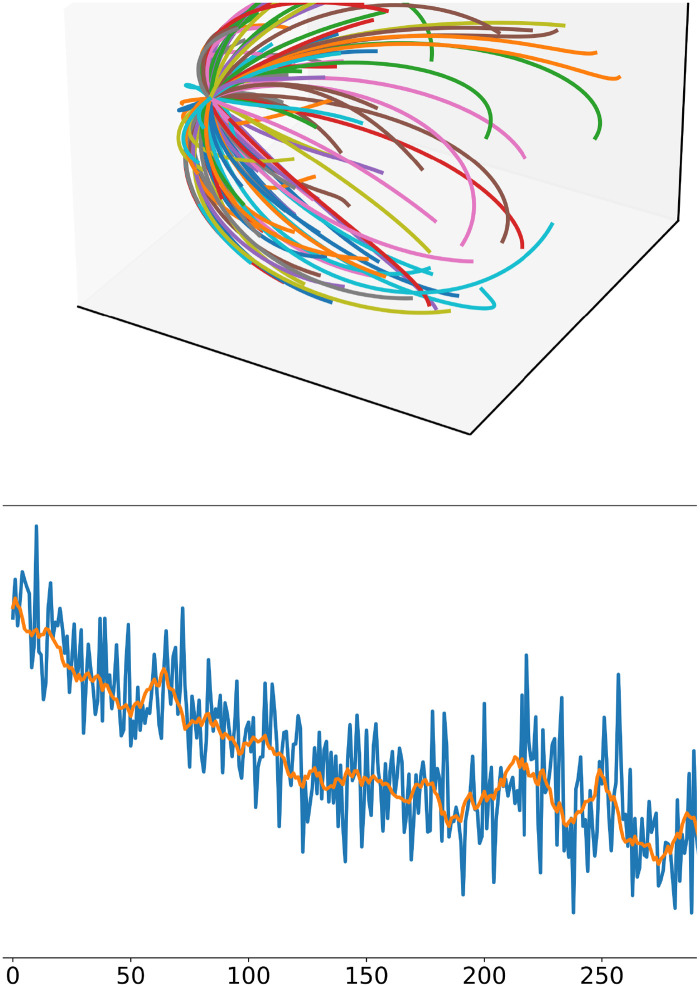
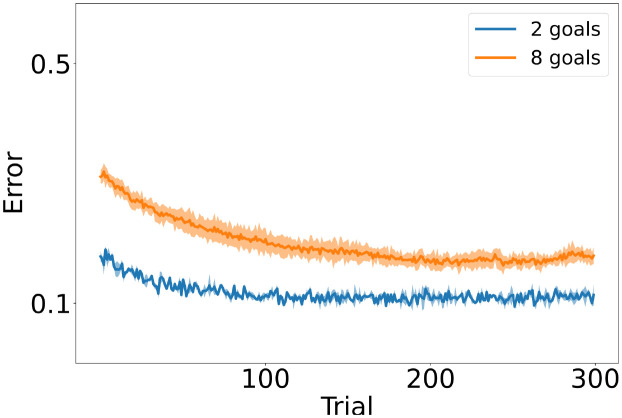
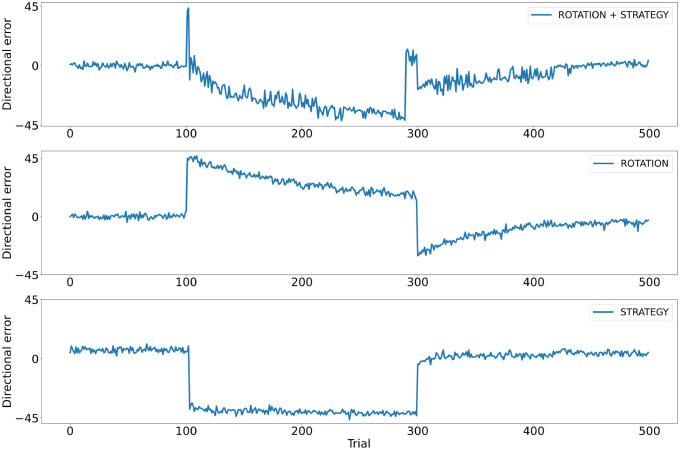
Motor learning involves a widespread brain network including the basal ganglia, cerebellum, motor cortex, and brainstem. Despite its importance, little is known about how this network learns motor tasks and which role different parts of this network take. We designed a systems-level computational model of motor learning, including a cortex-basal ganglia motor loop and the cerebellum that both determine the response of central pattern generators in the brainstem. First, we demonstrate its ability to learn arm movements toward different motor goals. Second, we test the model in a motor adaptation task with cognitive control, where the model replicates human data. We conclude that the cortex-basal ganglia loop learns via a novelty-based motor prediction error to determine concrete actions given a desired outcome, and that the cerebellum minimizes the remaining aiming error.
运动学习涉及广泛的大脑网络,包括基底神经节、小脑、运动皮层和脑干。尽管它很重要,但对于这个网络如何学习运动任务以及这个网络的不同部分扮演什么角色知之甚少。我们设计了一个运动学习的系统级计算模型,包括一个皮层-基底神经节运动回路和小脑,它们都决定了脑干中中枢模式发生器的反应。首先,我们展示了它学习朝向不同运动目标的手臂运动的能力。其次,我们在一个具有认知控制的运动适应任务中测试了该模型,该模型复制了人类数据。我们的结论是,皮层-基底神经节回路通过基于新颖性的运动预测误差来学习,以确定给定期望结果的具体动作,而小脑则最小化剩余的瞄准误差。