Centre for Cancer Drug Discovery and Division of Cancer Therapeutics at The Institute of Cancer Research, London SW7 3RP, United Kingdom.
J Med Chem. 2023 Apr 27;66(8):5907-5936. doi: 10.1021/acs.jmedchem.3c00156. Epub 2023 Apr 5.
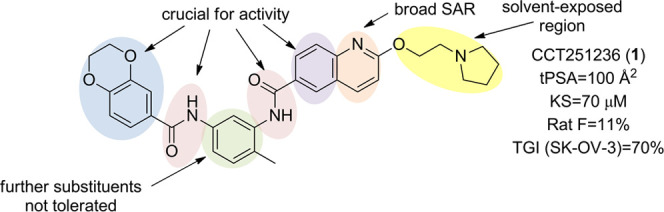
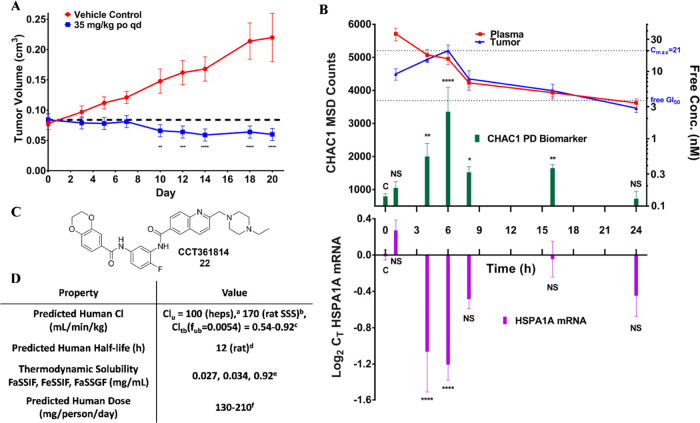
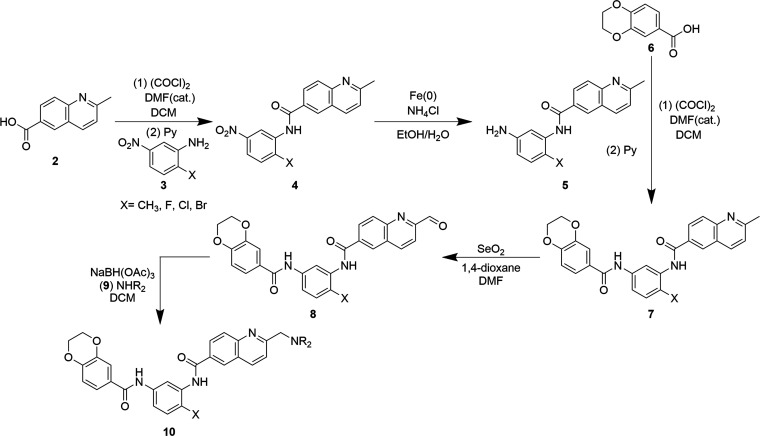
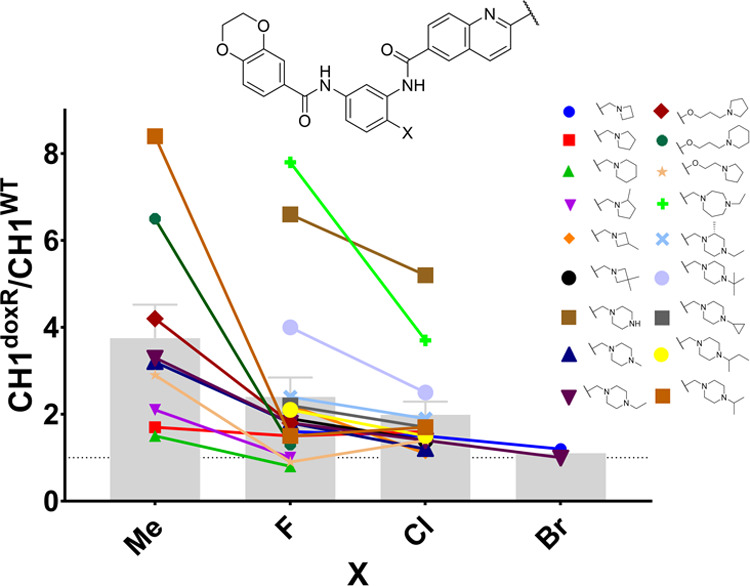
CCT251236 , a potent chemical probe, was previously developed from a cell-based phenotypic high-throughput screen (HTS) to discover inhibitors of transcription mediated by HSF1, a transcription factor that supports malignancy. Owing to its activity against models of refractory human ovarian cancer, was progressed into lead optimization. The reduction of P-glycoprotein efflux became a focus of early compound optimization; central ring halogen substitution was demonstrated by matched molecular pair analysis to be an effective strategy to mitigate this liability. Further multiparameter optimization led to the design of the clinical candidate, CCT361814/NXP800 , a potent and orally bioavailable fluorobisamide, which caused tumor regression in a human ovarian adenocarcinoma xenograft model with on-pathway biomarker modulation and a clean in vitro safety profile. Following its favorable dose prediction to human, has now progressed to phase 1 clinical trial as a potential future treatment for refractory ovarian cancer and other malignancies.
CCT251236 是一种有效的化学探针,最初是从基于细胞的表型高通量筛选(HTS)中开发出来的,用于发现转录因子 HSF1 介导的转录抑制剂,HSF1 是支持恶性肿瘤的转录因子。由于它对难治性人类卵巢癌模型的活性,被推进到了先导优化阶段。减少 P-糖蛋白外排成为早期化合物优化的重点;匹配分子对分析表明,中环卤代取代是减轻这种毒性的有效策略。进一步的多参数优化导致了临床候选药物 CCT361814/NXP800 的设计,这是一种有效的氟双酰胺,具有很强的口服生物利用度,在人卵巢腺癌异种移植模型中引起肿瘤消退,并伴有通路生物标志物的调节和体外安全性。在对人体进行了有利的剂量预测后, 已进入 1 期临床试验,作为治疗难治性卵巢癌和其他恶性肿瘤的潜在未来治疗方法。