College of Materials Science and Engineering, Zhejiang University of Technology, Hangzhou 310014, China.
School of Chemical and Biomedical Engineering, Nanyang Technological University, 62 Nanyang Drive, Singapore 637459, Singapore.
Sci Adv. 2023 Apr 5;9(14):eadf1550. doi: 10.1126/sciadv.adf1550.
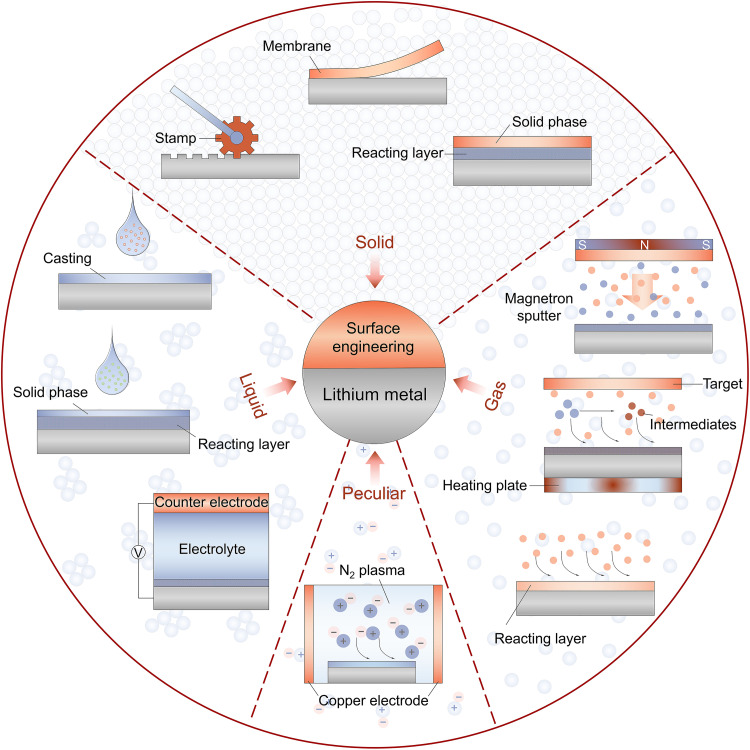
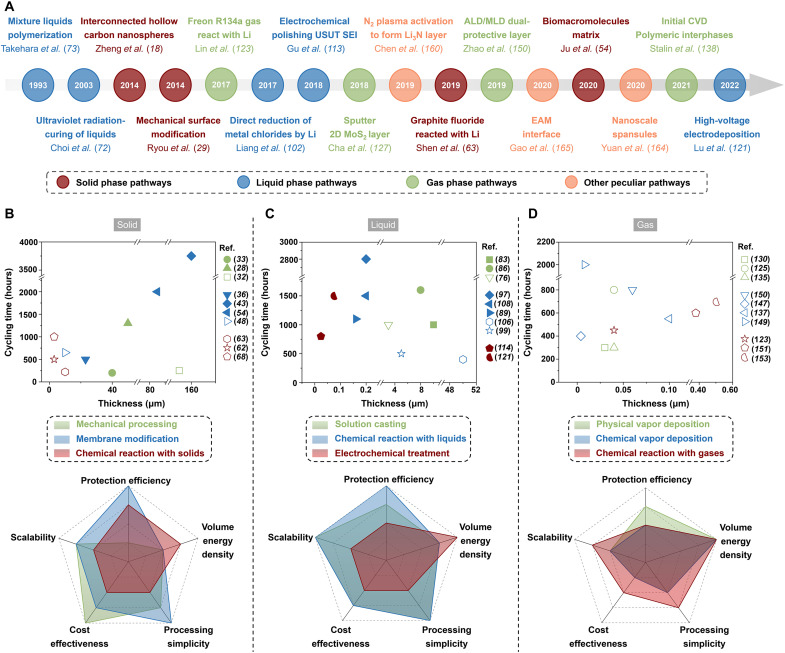
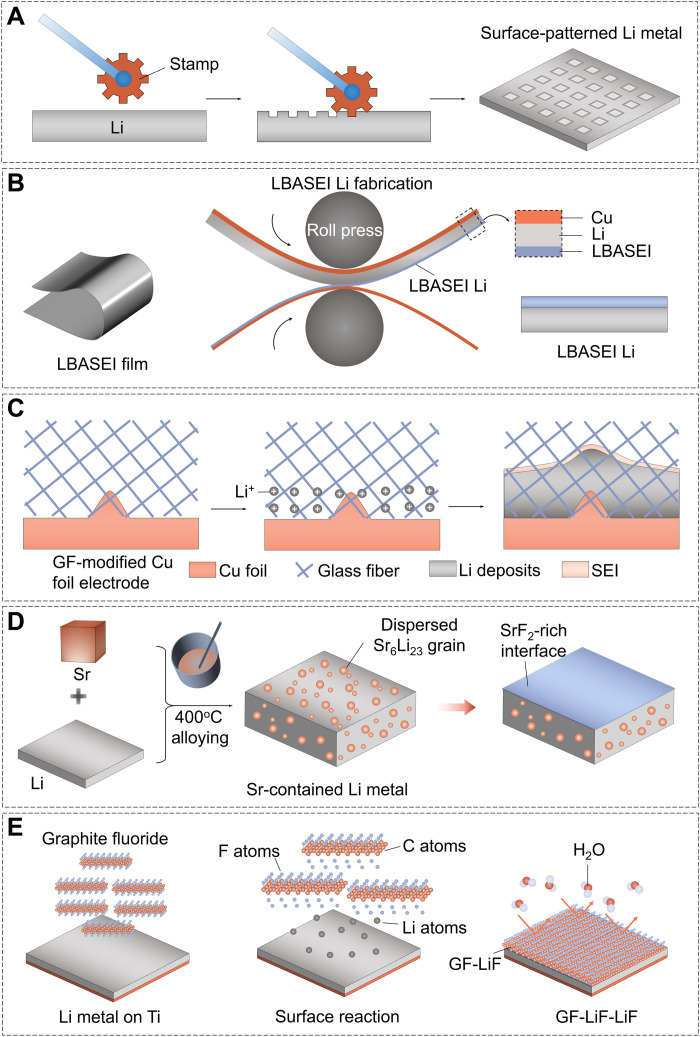
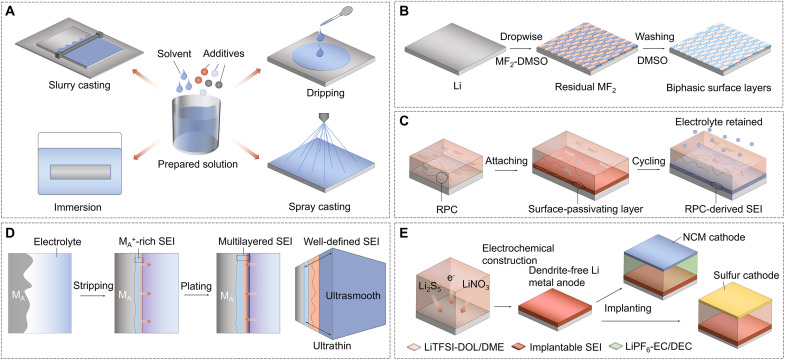
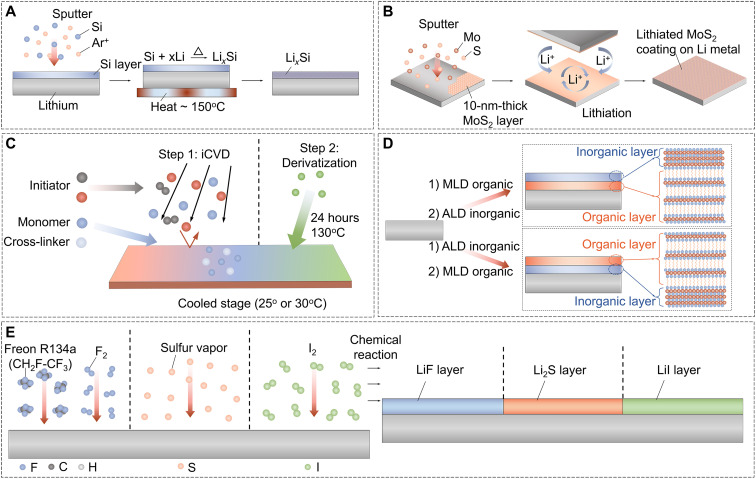
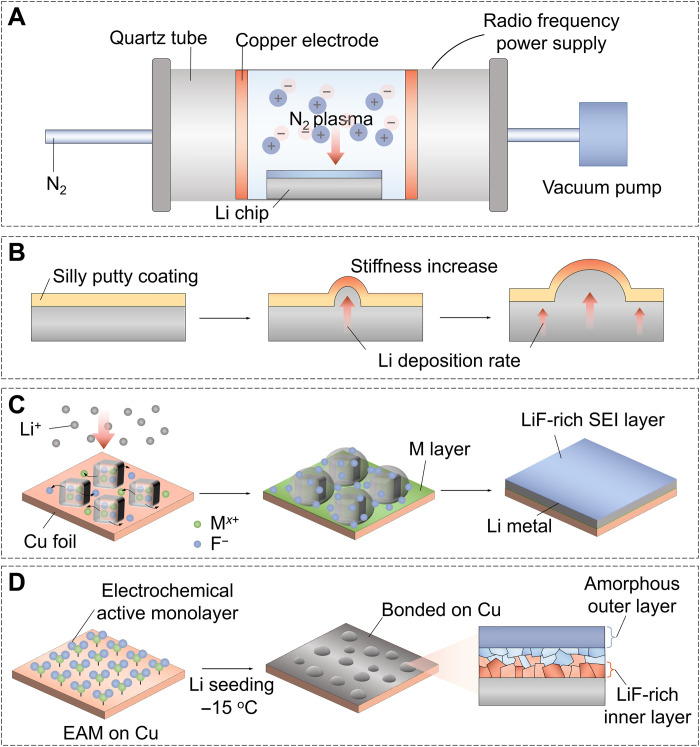
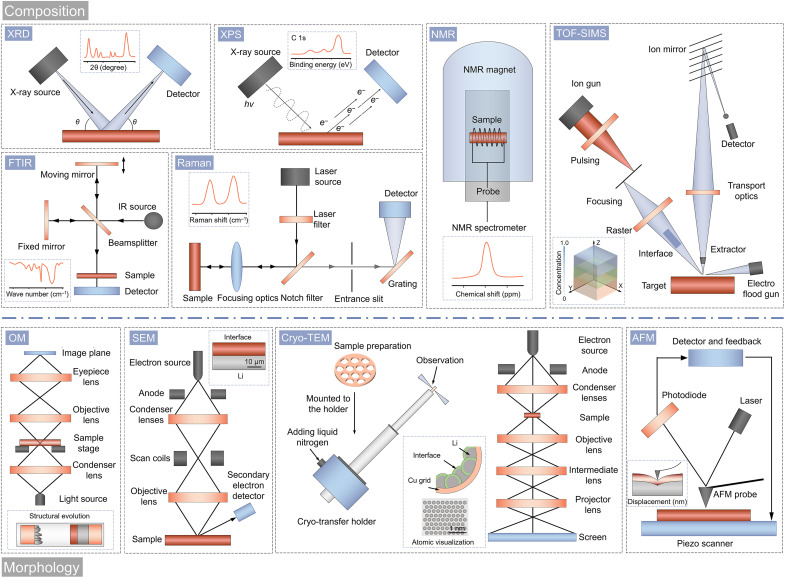
The lithium (Li) metal anode (LMA) is susceptible to failure due to the growth of Li dendrites caused by an unsatisfied solid electrolyte interface (SEI). With this regard, the design of artificial SEIs with improved physicochemical and mechanical properties has been demonstrated to be important to stabilize the LMAs. This review comprehensively summarizes current efficient strategies and key progresses in surface engineering for constructing protective layers to serve as the artificial SEIs, including pretreating the LMAs with the reagents situated in different primary states of matter (solid, liquid, and gas) or using some peculiar pathways (plasma, for example). The fundamental characterization tools for studying the protective layers on the LMAs are also briefly introduced. Last, strategic guidance for the deliberate design of surface engineering is provided, and the current challenges, opportunities, and possible future directions of these strategies for the development of LMAs in practical applications are discussed.
锂(Li)金属阳极(LMA)由于固体电解质界面(SEI)不满足而容易发生枝晶生长导致失效。在这方面,设计具有改善的物理化学和机械性能的人工 SEI 已被证明对于稳定 LMA 很重要。本综述全面总结了用于构建作为人工 SEI 的保护层的表面工程的当前有效策略和关键进展,包括用处于不同物态(固体、液体和气体)的试剂预处理 LMA 或使用一些特殊途径(例如等离子体)。简要介绍了用于研究 LMA 上保护层的基本表征工具。最后,为表面工程的精心设计提供了战略指导,并讨论了这些策略在实际应用中开发 LMA 的当前挑战、机遇和可能的未来方向。