Yang Xue-Feng, Liu Xin, Yan Xiao-Yi, Shang De-Jing
School of Life Science, Liaoning Provincial Key Laboratory of Biotechnology and Drug Discovery, Liaoning Normal University, Dalian, China.
School of Basic Medical Sciences, Department of Physiology, Jinzhou Medical University, Jinzhou, China.
Front Pharmacol. 2023 Mar 20;14:1139532. doi: 10.3389/fphar.2023.1139532. eCollection 2023.
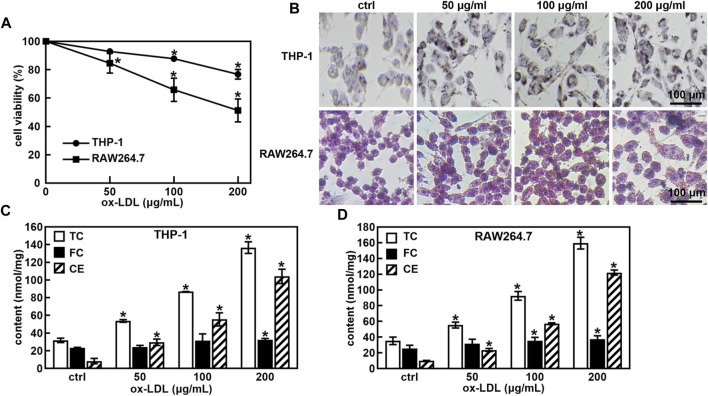
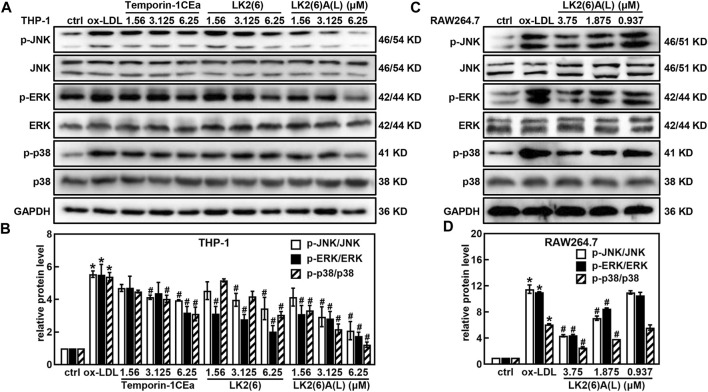
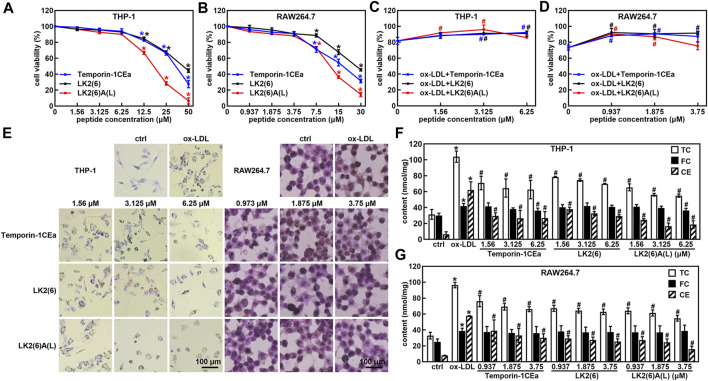
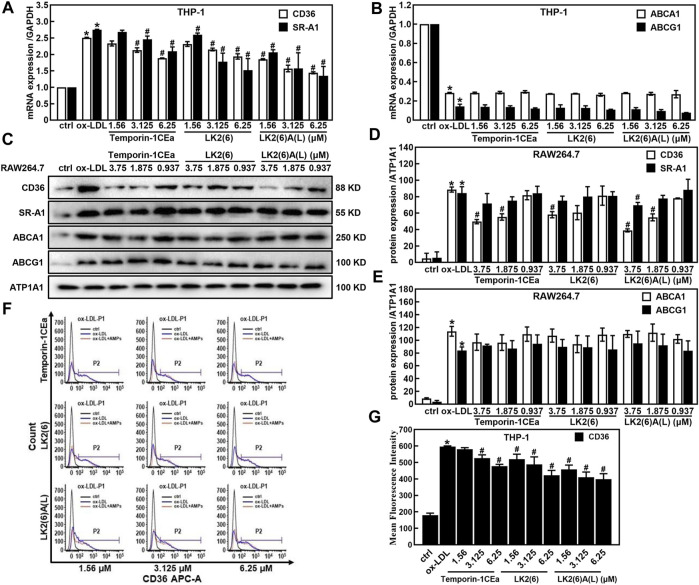
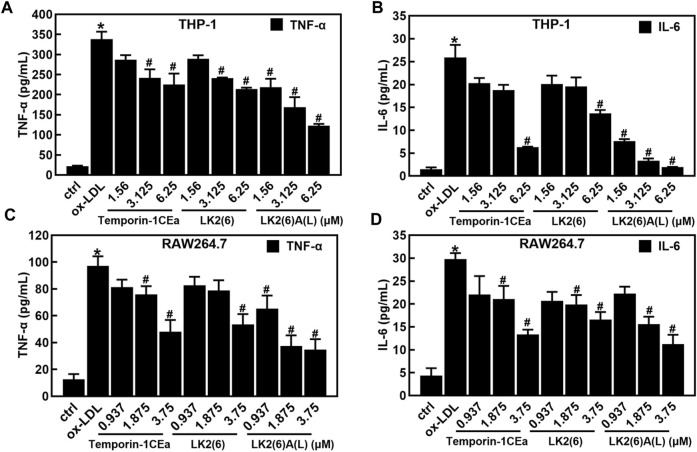
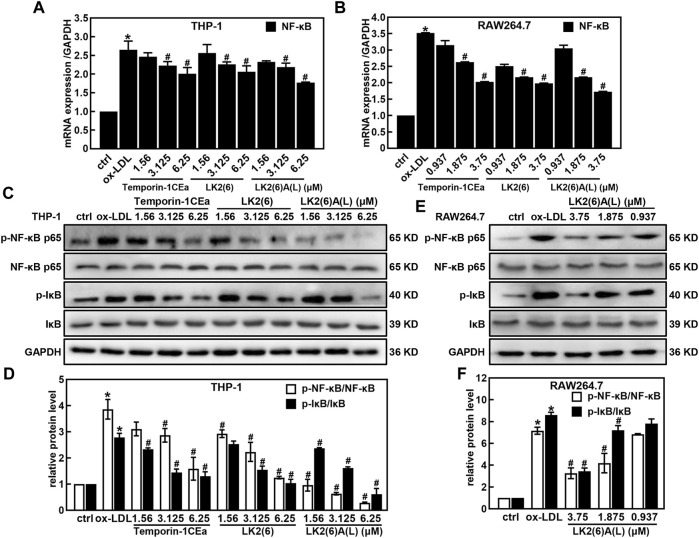
Atherosclerosis is one of the most important pathological foundations of cardiovascular and cerebrovascular diseases with high morbidity and mortality. Studies have shown that macrophages play important roles in lipid accumulation in the vascular wall and thrombosis formation in atherosclerotic plaques. This study aimed to explore the effect of frog skin antimicrobial peptides (AMPs) temporin-1CEa and its analogs on ox-LDL induced macrophage-derived foam cells. CCK-8, ORO staining, and intracellular cholesterol measurements were used to study cellular activity, lipid droplet formation and cholesterol levels, respectively. ELISA, real-time quantitative PCR, Western blotting and flow cytometry analysis were used to study the expression of inflammatory factors, mRNA and proteins associated with ox-LDL uptake and cholesterol efflux in macrophage-derived foam cells, respectively. Furthermore, the effects of AMPs on inflammation signaling pathways were studied. Frog skin AMPs could significantly increase the cell viability of the ox-LDL-induced foaming macrophages and decrease the formation of intracellular lipid droplets and the levels of total cholesterol and cholesterol ester (CE). Frog skin AMPs inhibited foaming formation by reducing the protein expression of CD36, which regulates ox-LDL uptake but had no effect on the expression of efflux proteins ATP binding cassette subfamily A/G member 1 (ABCA1/ABCG1). Then, decreased mRNA expression of NF-κB and protein expression of -NF-κB p65, -IκB, -JNK, -ERK, -p38 and the release of TNF-α and IL-6 occurred after exposure to the three frog skin AMPs. Frog skin peptide temporin-1CEa and its analogs can improve the ox-LDL induced formation of macrophage-derived foam cells, in addition, inhibit inflammatory cytokine release through inhibiting the NF-κB and MAPK signaling pathways, thereby inhibiting inflammatory responses in atherosclerosis.
动脉粥样硬化是心脑血管疾病最重要的病理基础之一,发病率和死亡率都很高。研究表明,巨噬细胞在血管壁脂质蓄积和动脉粥样硬化斑块血栓形成中起重要作用。本研究旨在探讨蛙皮抗菌肽(AMPs)天蚕素-1CEa及其类似物对氧化型低密度脂蛋白(ox-LDL)诱导的巨噬细胞源性泡沫细胞的影响。分别采用CCK-8法、油红O染色法和细胞内胆固醇测定法研究细胞活性、脂滴形成和胆固醇水平。分别采用酶联免疫吸附测定(ELISA)、实时定量聚合酶链反应(real-time quantitative PCR)、蛋白质免疫印迹法(Western blotting)和流式细胞术分析研究巨噬细胞源性泡沫细胞中炎症因子、与ox-LDL摄取和胆固醇流出相关的mRNA和蛋白质的表达。此外,还研究了抗菌肽对炎症信号通路的影响。蛙皮抗菌肽可显著提高ox-LDL诱导的泡沫化巨噬细胞的细胞活力,减少细胞内脂滴的形成以及总胆固醇和胆固醇酯(CE)水平。蛙皮抗菌肽通过降低调节ox-LDL摄取的CD36蛋白表达来抑制泡沫化形成,但对流出蛋白ATP结合盒转运体A/G成员1(ABCA1/ABCG1)的表达没有影响。然后,在暴露于三种蛙皮抗菌肽后,核因子κB(NF-κB)的mRNA表达以及NF-κB p65、IκB、c-Jun氨基末端激酶(JNK)、细胞外信号调节激酶(ERK)、p38的蛋白表达降低,肿瘤坏死因子-α(TNF-α)和白细胞介素-6(IL-6)的释放减少。蛙皮肽天蚕素-1CEa及其类似物可改善ox-LDL诱导的巨噬细胞源性泡沫细胞的形成,此外,通过抑制NF-κB和丝裂原活化蛋白激酶(MAPK)信号通路来抑制炎性细胞因子释放,从而抑制动脉粥样硬化中的炎症反应。