Sun Yue, Li Huiyu, Duan Xingpeng, Ma Xiaoxiao, Liu Chenxi, Shang Dejing
School of Life Science, Liaoning Normal University, Dalian 116081, China.
Liaoning Provincial Key Laboratory of Biotechnology and Drug Discovery, Liaoning Normal University, Dalian 116081, China.
Biomedicines. 2024 Feb 1;12(2):345. doi: 10.3390/biomedicines12020345.
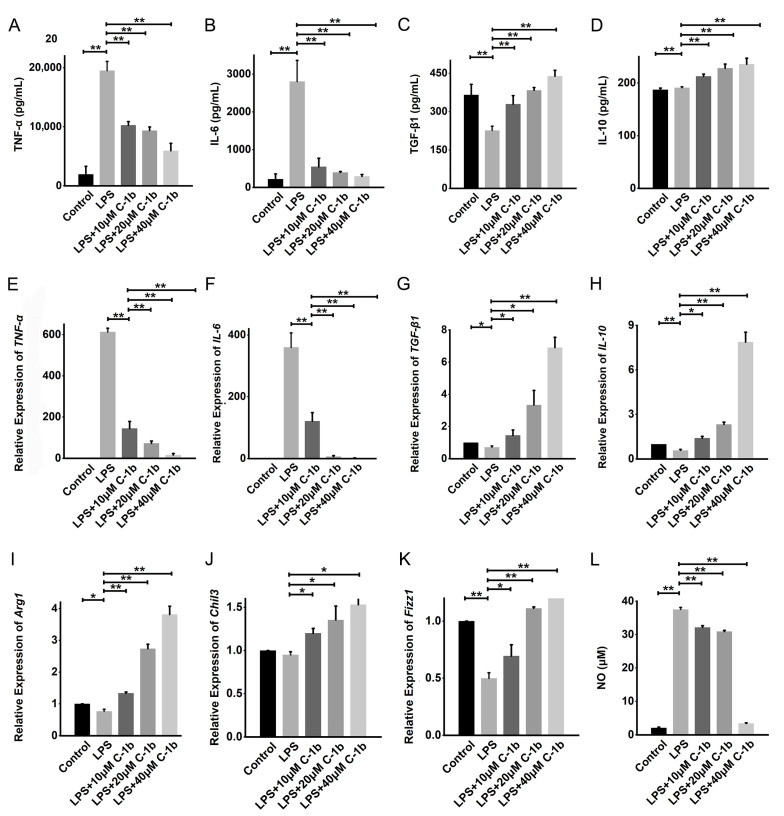
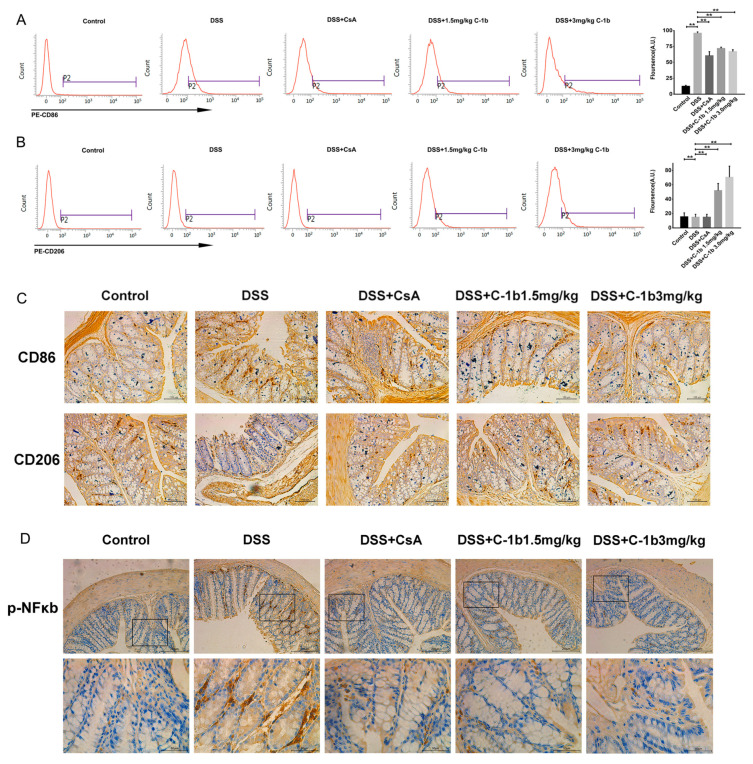
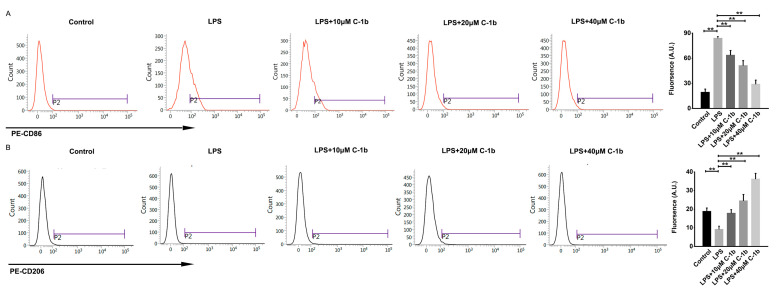
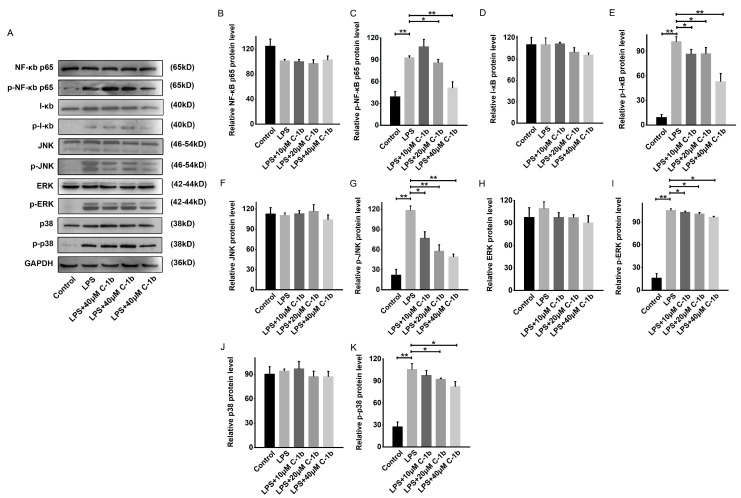
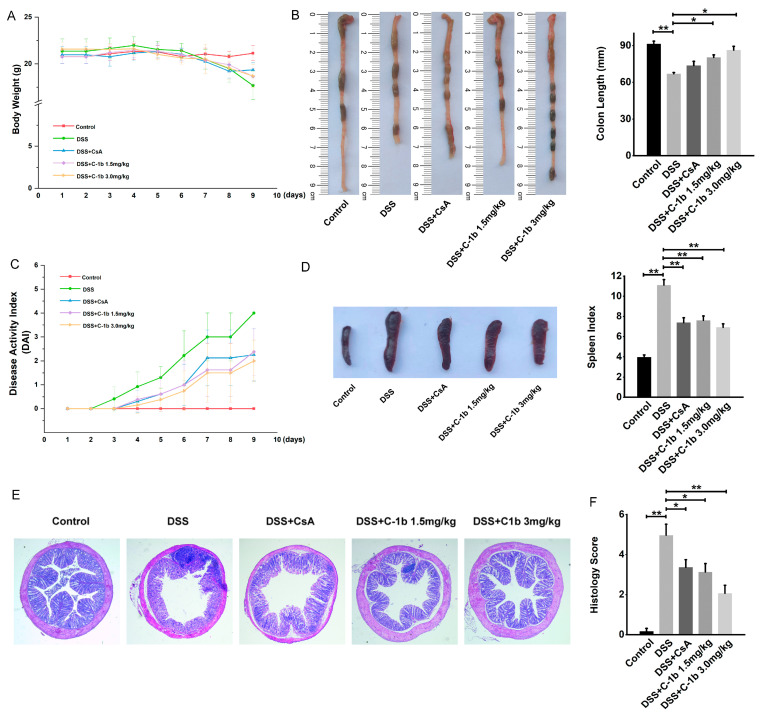
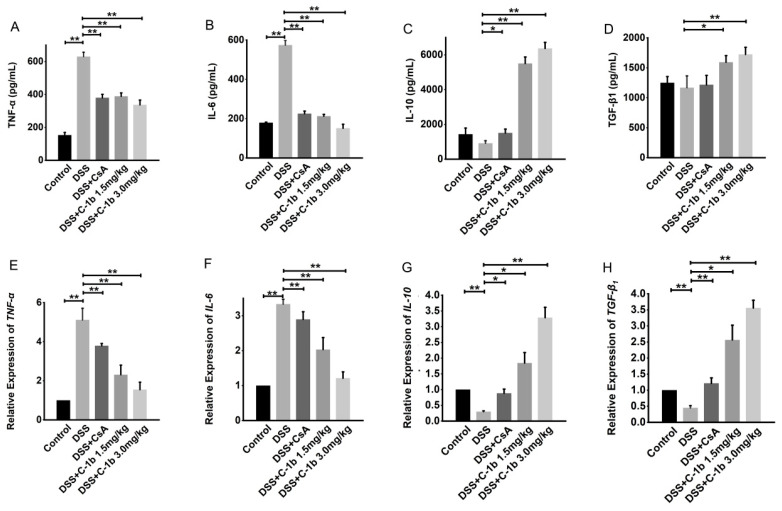
Inflammatory bowel disease (IBD) is a chronic relapsing inflammatory disorder with an increasing prevalence worldwide. Macrophage polarization is involved in the pathogenesis of IBD. Repolarization of macrophage has thus emerged as a novel therapeutic approach for managing IBD. Chensinin-1b, derived from the skin of , is a derivative of a native antimicrobial peptide (AMP). It shows anti-inflammatory effects in sepsis models and can potentially modulate macrophage polarization. The objective of this research was to study the role of chensinin-1b in macrophage polarization and dextran sulfate sodium (DSS)-induced colitis. RAW264.7 macrophages were polarized to the M1 phenotype using lipopolysaccharide (LPS) and simultaneously administered chensinin-1b at various concentrations. The ability of chenisnin-1b to reorient macrophage polarization was assessed by ELISA, qRT-PCR, and flow cytometry analysis. The addition of chensinin-1b significantly restrained the expression of M1-associated proinflammatory cytokines and surface markers, including TNF-α, IL-6, NO, and CD86, and exaggerated the expression of M2-associated anti-inflammatory cytokines and surface markers, including IL-10, TGF-β1, , , , and CD206. Mechanistically, via Western Blotting, we revealed that chensinin-1b induces macrophage polarization from the M1 to the M2 phenotype by inhibiting the phosphorylation of nuclear factor-kappa B (NF-κB) and mitogen-activated protein kinase (MAPK). In mouse models of colitis, intraperitoneal administration of chensinin-1b alleviated symptoms induced by DSS, including weight loss, elevated disease activity index (DAI) scores, colon shortening, colonic tissue damage, and splenomegaly. Consistent with our in vitro data, chensinin-1b induced significant decreases in the expression of M1 phenotype biomarkers and increases in the expression of M2 phenotype biomarkers in the mouse colitis model. Furthermore, chensinin-1b treatment repressesed NF-κB phosphorylation in vivo. Overall, our data showed that chensinin-1b attenuates IBD by repolarizing macrophages from the M1 to the M2 phenotype, suggesting its potential as a therapeutic candidate for IBD.
炎症性肠病(IBD)是一种慢性复发性炎症性疾病,在全球范围内的患病率呈上升趋势。巨噬细胞极化参与了IBD的发病机制。因此,巨噬细胞的重新极化已成为治疗IBD的一种新的治疗方法。来源于[具体来源未提及]皮肤的陈辛宁-1b是一种天然抗菌肽(AMP)的衍生物。它在脓毒症模型中显示出抗炎作用,并可能调节巨噬细胞极化。本研究的目的是探讨陈辛宁-1b在巨噬细胞极化和葡聚糖硫酸钠(DSS)诱导的结肠炎中的作用。使用脂多糖(LPS)将RAW264.7巨噬细胞极化为M1表型,并同时给予不同浓度的陈辛宁-1b。通过ELISA、qRT-PCR和流式细胞术分析评估陈辛宁-1b重新定向巨噬细胞极化的能力。添加陈辛宁-1b显著抑制了M1相关促炎细胞因子和表面标志物的表达,包括TNF-α、IL-6、NO和CD86,并增强了M2相关抗炎细胞因子和表面标志物的表达,包括IL-10、TGF-β1、[此处原文缺失部分内容]、[此处原文缺失部分内容]、[此处原文缺失部分内容]和CD206。从机制上讲,通过蛋白质印迹法,我们发现陈辛宁-1b通过抑制核因子-κB(NF-κB)和丝裂原活化蛋白激酶(MAPK)的磷酸化,诱导巨噬细胞从M1表型极化为M2表型。在结肠炎小鼠模型中,腹腔注射陈辛宁-1b减轻了DSS诱导的症状,包括体重减轻、疾病活动指数(DAI)评分升高、结肠缩短、结肠组织损伤和脾肿大。与我们的体外数据一致,在小鼠结肠炎模型中,陈辛宁-1b显著降低了M1表型生物标志物的表达,并增加了M2表型生物标志物的表达。此外,陈辛宁-1b治疗在体内抑制了NF-κB磷酸化。总体而言,我们的数据表明,陈辛宁-1b通过将巨噬细胞从M1表型重新极化为M2表型来减轻IBD,表明其作为IBD治疗候选药物的潜力。