Department of Women's and Children's Health, Uppsala University, Uppsala, Sweden
Department of Pediatrics, Region Gävleborg, Gävle, Sweden.
BMJ Paediatr Open. 2023 Apr;7(1). doi: 10.1136/bmjpo-2023-001886.
Stimulating infants to elicit a cry at birth is common but could result in unnecessary handling. We evaluated heart rate in infants who were crying versus non-crying but breathing immediately after birth.
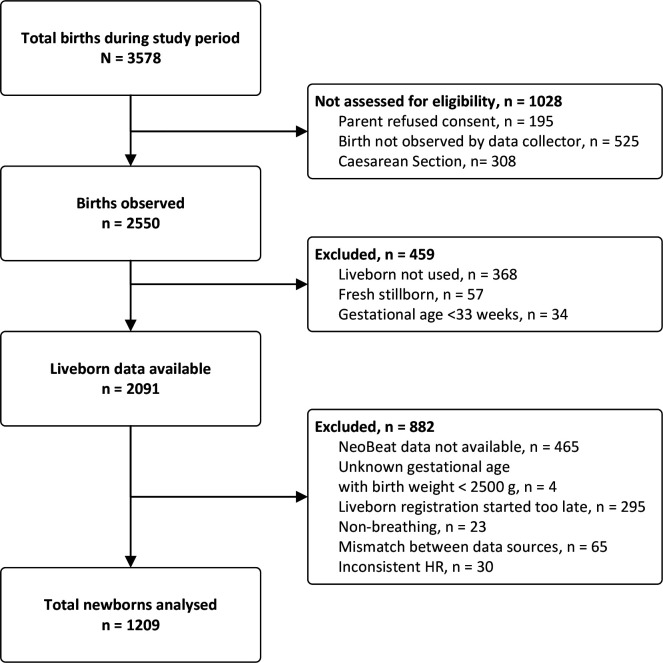
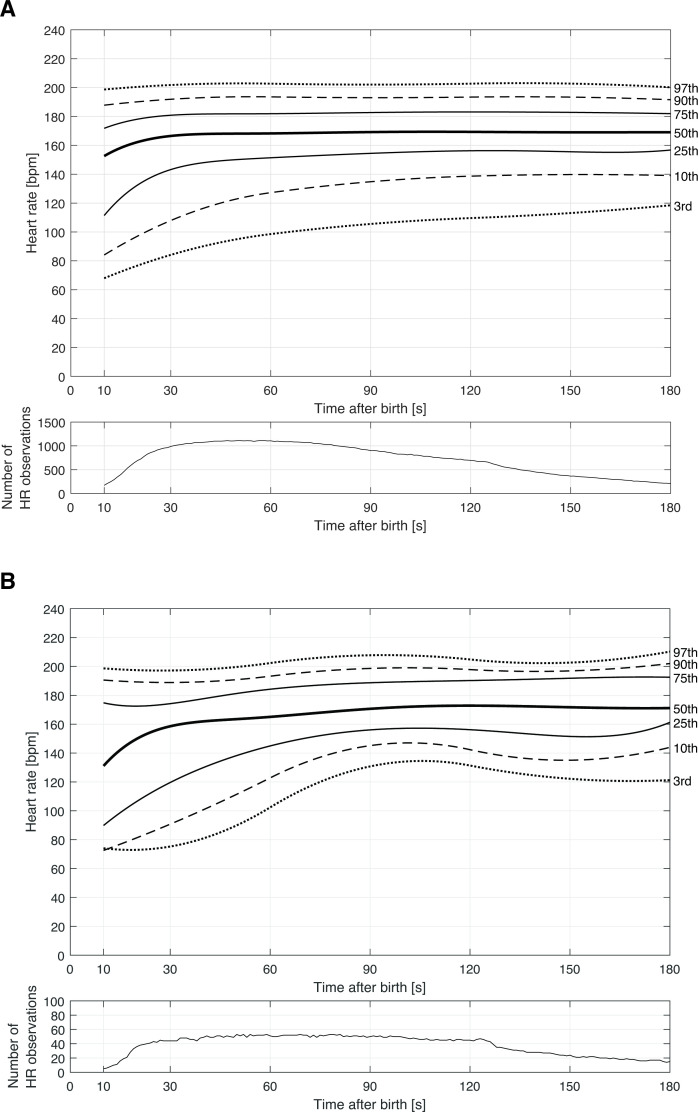
This was single-centre observational study of singleton, vaginally born infants at ≥33 weeks of gestation. Infants who were or within 30 s after birth were included. Background demographic data and delivery room events were recorded using tablet-based applications and synchronised with continuous heart rate data recorded by a dry-electrode electrocardiographic monitor. Heart rate centile curves for the first 3 min of life were generated with piecewise regression analysis. Odds of bradycardia and tachycardia were compared using multiple logistic regression.
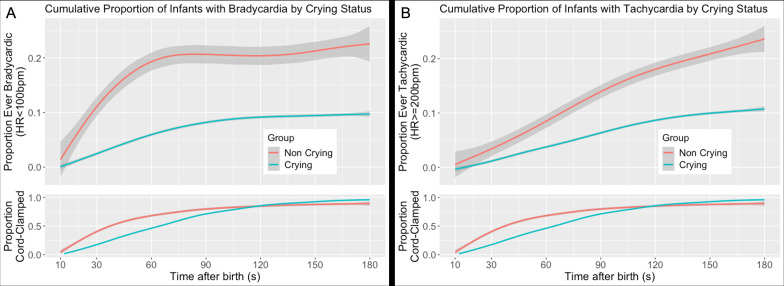
1155 crying and 54 non-crying but breathing neonates were included in the final analyses. There were no significant differences in the demographic and obstetric factors between the cohorts. Non-crying but breathing infants had higher rates of early cord clamping <60 s after birth (75.9% vs 46.5%) and admission to the neonatal intensive care unit (13.0% vs 4.3%). There were no significant differences in median heart rates between the cohorts. Non-crying but breathing infants had higher odds of bradycardia (heart rate <100 beats/min, adjusted OR 2.64, 95% CI 1.34 to 5.17) and tachycardia (heart rate ≥200 beats/min, adjusted OR 2.86, 95% CI 1.50 to 5.47).
Infants who are quietly breathing but do not cry after birth have an increased risk of both bradycardia and tachycardia, and admission to the neonatal intensive care unit.
ISRCTN18148368.
刺激婴儿在出生时啼哭是很常见的,但这可能会导致不必要的处理。我们评估了出生后立即啼哭和呼吸但不哭的婴儿的心率。
这是一项在 33 周以上足月、经阴道分娩的单胎婴儿的单中心观察性研究。纳入出生后 30 秒内或 的婴儿。使用基于平板电脑的应用程序记录背景人口统计学数据和产房事件,并与干式电极心电图监测仪记录的连续心率数据同步。使用分段回归分析生成出生后 3 分钟内的心率百分位数曲线。使用多变量逻辑回归比较心动过缓和心动过速的几率。
最终分析纳入了 1155 名啼哭和 54 名不哭但呼吸的新生儿。两组在人口统计学和产科因素方面无显著差异。不哭但呼吸的婴儿早期脐带夹闭率更高(<60 秒,75.9%比 46.5%),新生儿重症监护病房收治率更高(13.0%比 4.3%)。两组的中位数心率无显著差异。不哭但呼吸的婴儿心动过缓(心率<100 次/分,调整后的比值比 2.64,95%置信区间 1.34 至 5.17)和心动过速(心率≥200 次/分,调整后的比值比 2.86,95%置信区间 1.50 至 5.47)的几率更高。
出生后安静呼吸但不哭的婴儿心动过缓和心动过速以及入住新生儿重症监护病房的风险增加。
ISRCTN8368。