Humboldt-Universität zu Berlin, Berlin, Germany.
Agricultural Research Corporation, Wad Madani, Sudan.
Malar J. 2023 Apr 7;22(1):117. doi: 10.1186/s12936-023-04505-6.
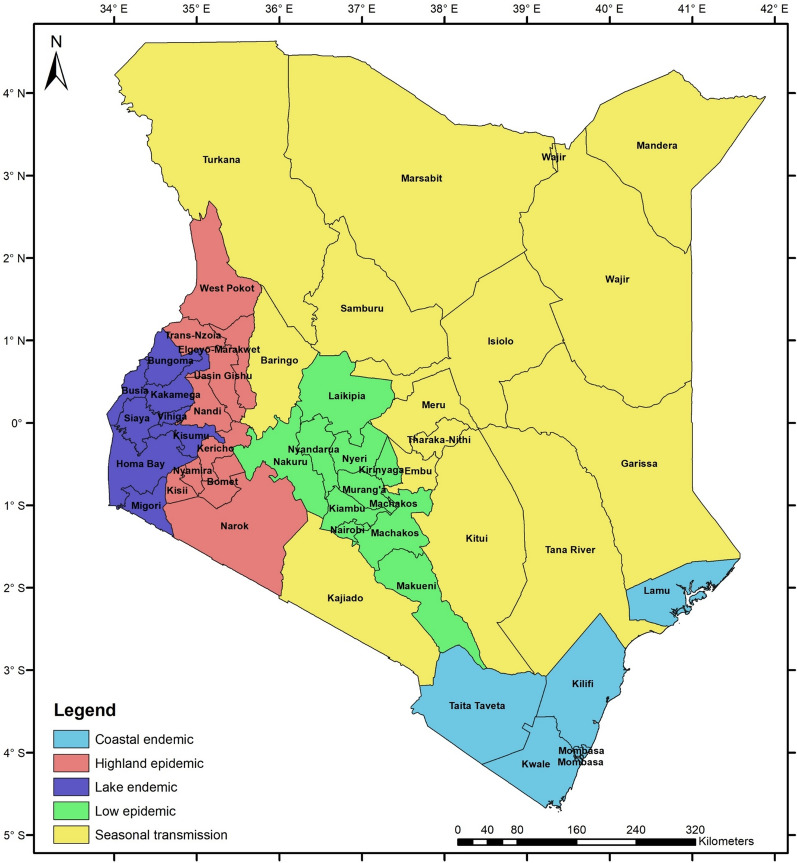
Malaria remains a public health problem in Kenya despite several concerted control efforts. Empirical evidence regarding malaria effects in Kenya suggests that the disease imposes substantial economic costs, jeopardizing the achievement of sustainable development goals. The Kenya Malaria Strategy (2019-2023), which is currently being implemented, is one of several sequential malaria control and elimination strategies. The strategy targets reducing malaria incidences and deaths by 75% of the 2016 levels by 2023 through spending around Kenyan Shillings 61.9 billion over 5 years. This paper assesses the economy-wide implications of implementing this strategy.
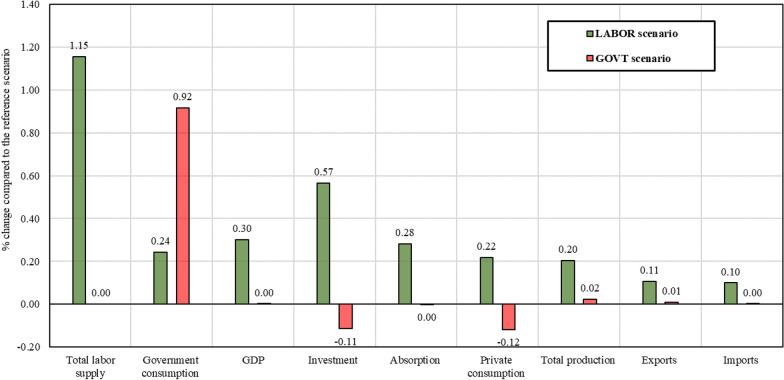
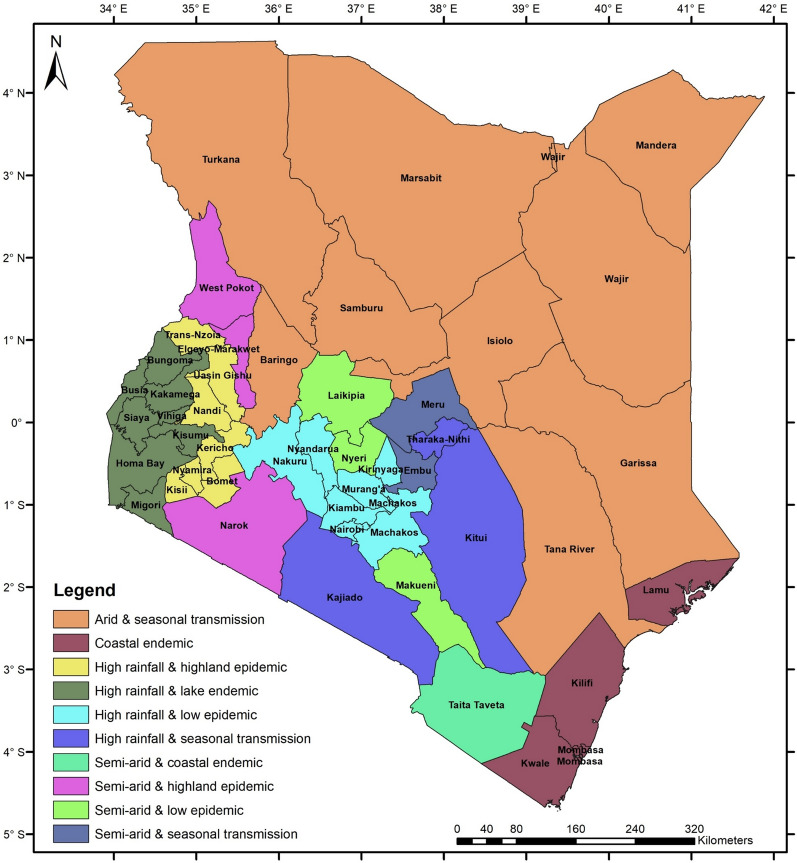
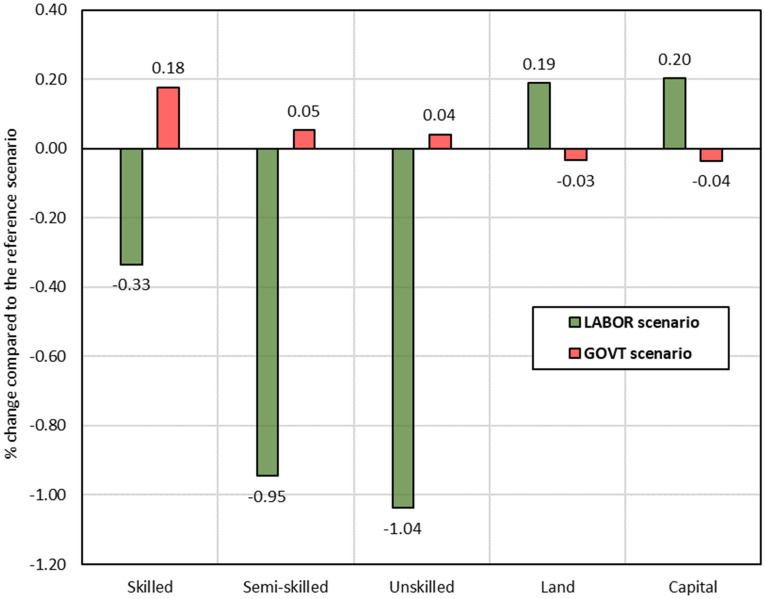
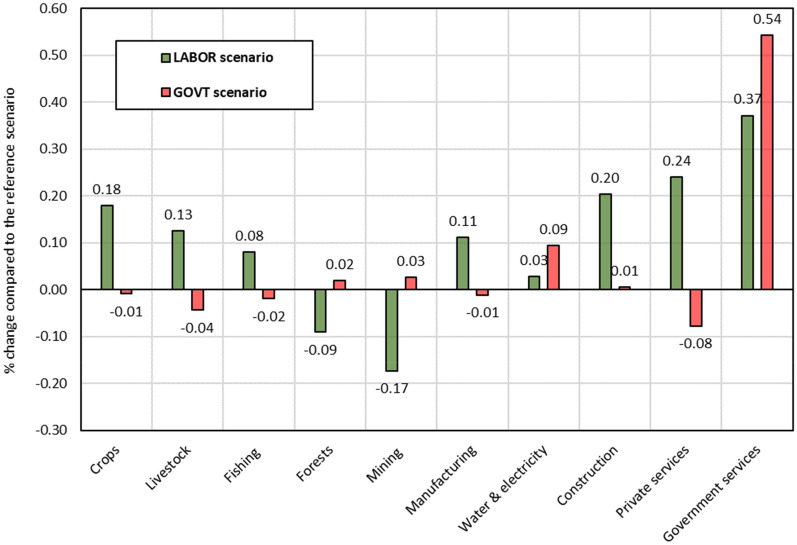
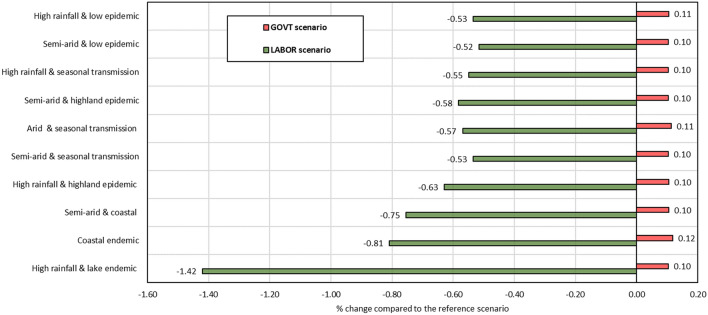
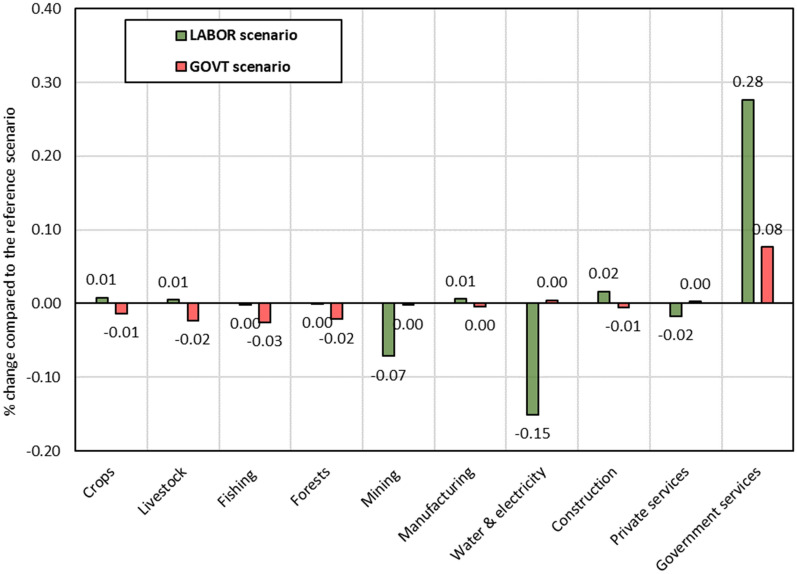
An economy-wide simulation model is calibrated to a comprehensive 2019 database for Kenya, considering different epidemiological zones. Two scenarios are simulated with the model. The first scenario (GOVT) simulates the annual costs of implementing the Kenya Malaria Strategy by increasing government expenditure on malaria control and elimination programmes. The second scenario (LABOR) reduces malaria incidences by 75% in all epidemiological malaria zones without accounting for the changes in government expenditure, which translates into rising the household labour endowment (benefits of the strategy).
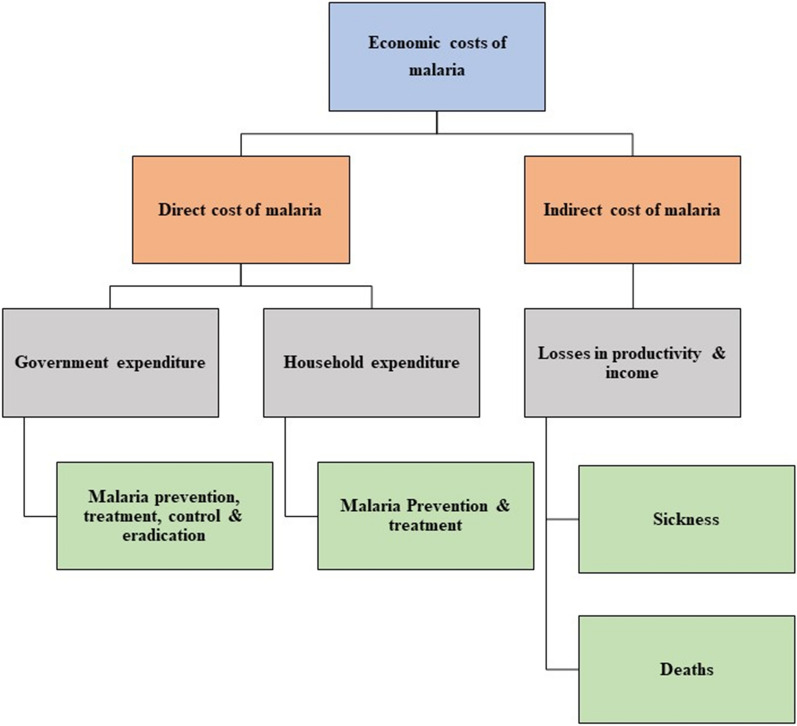
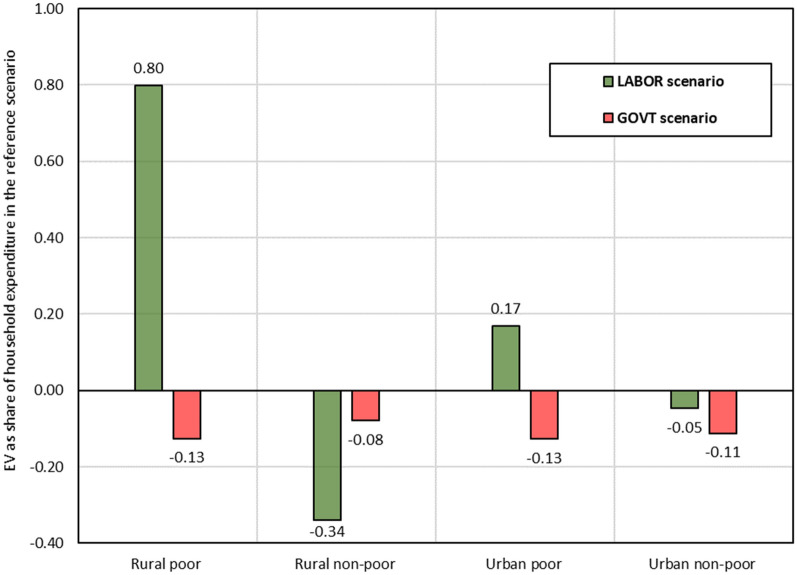
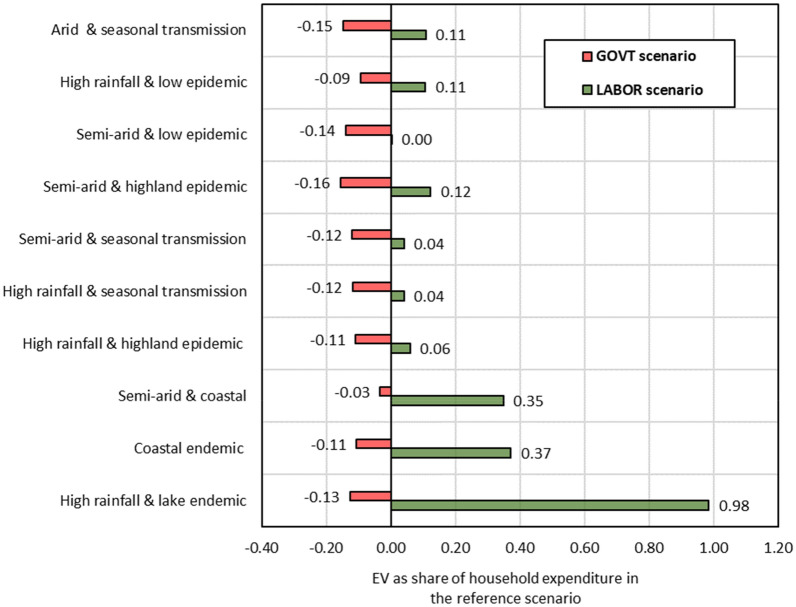
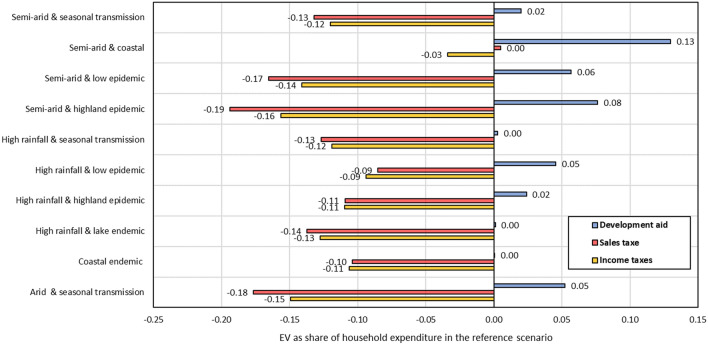
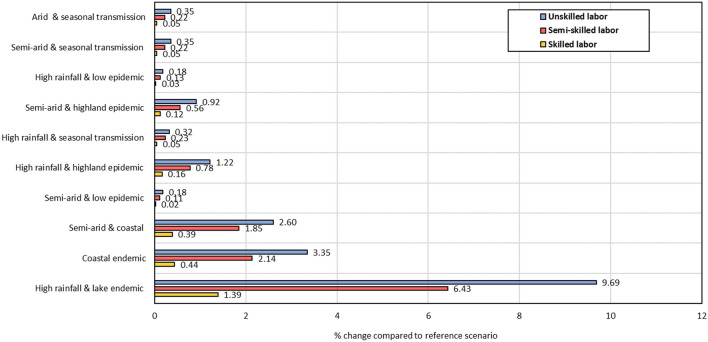
Implementing the Kenya Malaria Strategy (2019-2023) enhances gross domestic product at the end of the strategy implementation period due to more available labour. In the short term, government health expenditure (direct malaria costs) increases significantly, which is critical in controlling and eliminating malaria. Expanding the health sector raises the demand for production factors, such as labour and capital. The prices for these factors rise, boosting producer and consumer prices of non-health-related products. Consequently, household welfare decreases during the strategy implementation period. In the long run, household labour endowment increases due to reduced malaria incidences and deaths (indirect malaria costs). However, the size of the effects varies across malaria epidemiological and agroecological zones depending on malaria prevalence and factor ownership.
This paper provides policymakers with an ex-ante assessment of the implications of malaria control and elimination on household welfare across various malaria epidemiological zones. These insights assist in developing and implementing related policy measures that reduce the undesirable effects in the short run. Besides, the paper supports an economically beneficial long-term malaria control and elimination effect.
尽管肯尼亚采取了多项协同控制措施,但疟疾仍是一个公共卫生问题。肯尼亚疟疾影响的实证证据表明,该疾病造成了巨大的经济成本,危及可持续发展目标的实现。目前正在实施的《肯尼亚疟疾战略(2019-2023 年)》是一系列连续疟疾控制和消除战略之一。该战略的目标是通过在 5 年内花费约 619 亿肯尼亚先令,到 2023 年将疟疾发病率和死亡率比 2016 年降低 75%。本文评估了实施该战略对整个经济的影响。
使用一个经济范围模拟模型对肯尼亚 2019 年的综合数据库进行校准,考虑了不同的流行病学区域。该模型模拟了两种情景。第一种情景(政府)通过增加政府对疟疾控制和消除计划的支出来模拟实施肯尼亚疟疾战略的年度成本。第二种情景(劳动力)模拟在所有流行病学疟疾区将疟疾发病率降低 75%,而不考虑政府支出的变化,这意味着家庭劳动力供应增加(该战略的好处)。
实施肯尼亚疟疾战略(2019-2023 年)增加了总产出,因为在战略实施期末有更多的劳动力可用。短期内,政府卫生支出(直接疟疾成本)显著增加,这对于控制和消除疟疾至关重要。扩大卫生部门增加了对劳动力和资本等生产要素的需求。这些因素的价格上涨,推高了非卫生相关产品的生产者和消费者价格。因此,家庭福利在战略实施期间下降。从长期来看,由于疟疾发病率和死亡率降低(间接疟疾成本),家庭劳动力供应增加。然而,由于疟疾流行程度和要素所有权的不同,不同疟疾流行病学和农业生态区的效应大小也有所不同。
本文为决策者提供了在疟疾控制和消除对不同疟疾流行病学区家庭福利影响方面的事前评估。这些见解有助于制定和实施相关政策措施,以减轻短期的不利影响。此外,本文支持了一个在经济上有益的长期疟疾控制和消除效果。