Reinoso-Peláez Edgar L, Saura María, González-Recio Óscar, González Carmen, Fernández Almudena, Peiro-Pastor Ramón, López-García Adrián, Saborío-Montero Alejandro, Calvo Jorge H, Ramón Manuel, Serrano Malena
Departamento de Mejora Genética Animal, Instituto Nacional de Investigación y Tecnología Agraria y Alimentaria (INIA-CSIC), Madrid, Spain.
Departamento de Producción Agraria, Escuela Técnica Superior de Ingeniería Agronómica, Alimentaria y de Biosistemas, Universidad Politécnica de Madrid, Madrid, Spain.
Front Microbiol. 2023 Mar 23;14:1063807. doi: 10.3389/fmicb.2023.1063807. eCollection 2023.
The low pregnancy rate by artificial insemination in sheep represents a fundamental challenge for breeding programs. In this species, oestrus synchronization is carried out by manipulating hormonal regimens through the insertion of progestogen intravaginal devices. This reproductive strategy may alter the vaginal microbiota affecting the artificial insemination outcome.
In this study, we analyzed the vaginal microbiome of 94 vaginal swabs collected from 47 ewes with alternative treatments applied to the progesterone-releasing intravaginal devices (probiotic, maltodextrin, antibiotic and control), in two sample periods (before placing and after removing the devices). To our knowledge, this is the first study using nanopore-based metagenome sequencing for vaginal microbiome characterization in livestock.
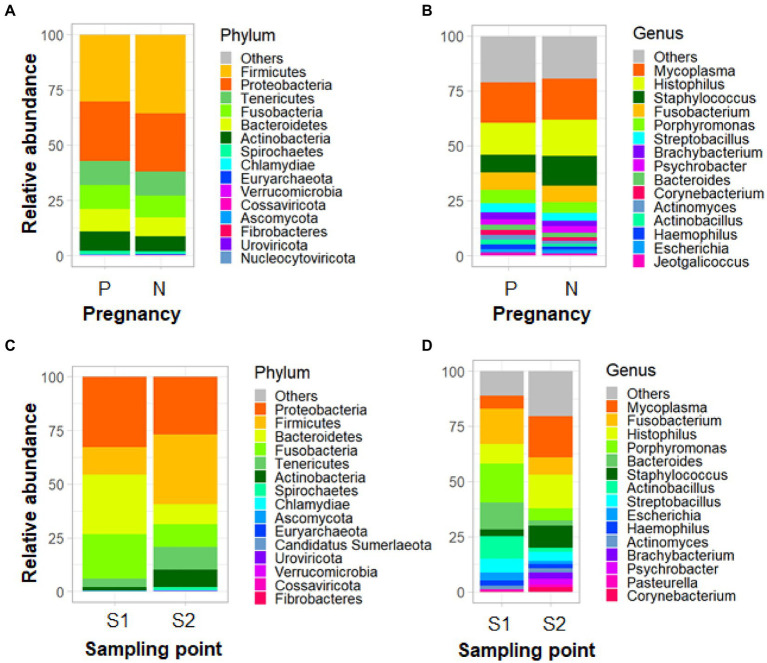
Our results revealed a significant lower abundance of the genera (Firmicutes) and (Proteobacteria) in pregnant compared to non-pregnant ewes. We also detected a significant lower abundance of in the group of samples treated with the probiotic.
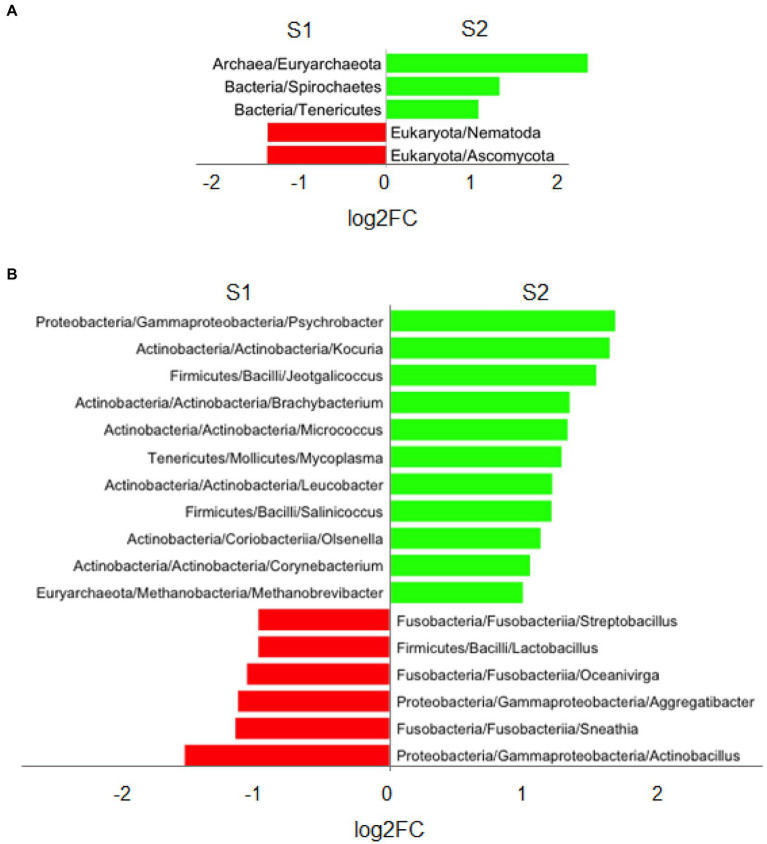
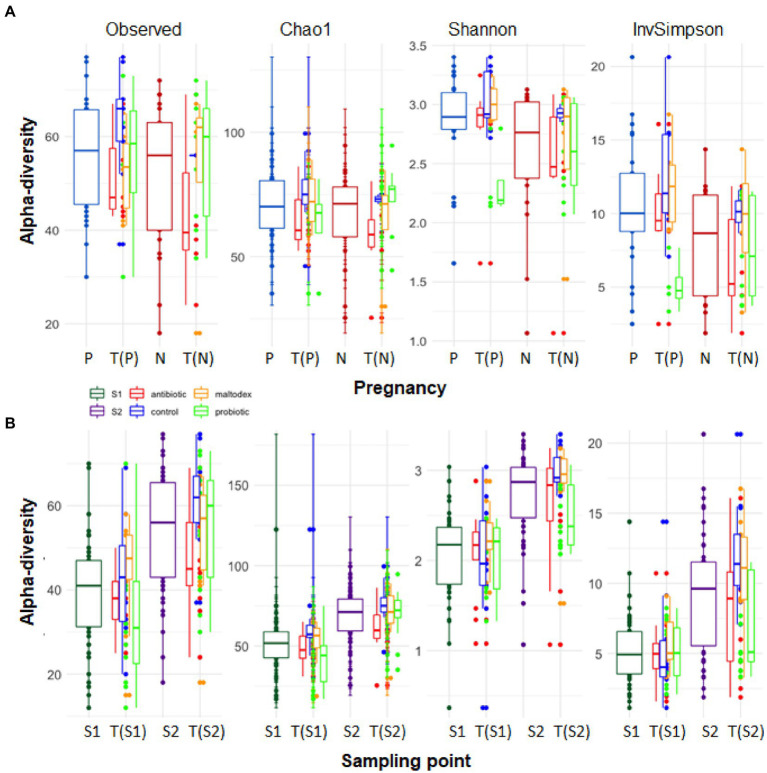
Although the use of probiotics represents a promising practice to improve insemination results, the election of the suitable species and concentration requires further investigation. In addition, the use of progestogen in the synchronization devices seemed to increase the alpha-diversity and decrease the abundance of harmful microorganisms belonging to Gammaproteobacteria and Fusobacteriia classes, suggesting a beneficial effect of their use.
绵羊人工授精的低妊娠率对育种计划构成了根本性挑战。在这个物种中,通过插入孕激素阴道内装置来操纵激素方案来进行发情同步。这种生殖策略可能会改变阴道微生物群,影响人工授精的结果。
在本研究中,我们分析了从47只母羊采集的94份阴道拭子的阴道微生物组,在两个采样时期(放置装置前和取出装置后)对孕激素释放阴道内装置应用了替代处理(益生菌、麦芽糊精、抗生素和对照)。据我们所知,这是第一项使用基于纳米孔的宏基因组测序来表征家畜阴道微生物组的研究。
我们的结果显示,与未怀孕的母羊相比,怀孕母羊中(厚壁菌门)和(变形菌门)属的丰度显著降低。我们还在益生菌处理的样本组中检测到的丰度显著降低。
尽管使用益生菌是提高授精结果的一种有前景的做法,但选择合适的菌种和浓度需要进一步研究。此外,同步装置中使用孕激素似乎增加了α多样性,并降低了属于γ-变形菌纲和梭杆菌纲的有害微生物的丰度,表明其使用具有有益效果。