Department of Medicine, VA New York Harbor Health Care System, New York, New York; Department of Medicine, NYU Langone Health, New York, New York.
Department of Medicine, VA New York Harbor Health Care System, New York, New York; Department of Medicine, NYU Langone Health, New York, New York.
Clin Gastroenterol Hepatol. 2023 Oct;21(11):2951-2957.e2. doi: 10.1016/j.cgh.2023.03.036. Epub 2023 Apr 8.
BACKGROUND & AIMS: The septin 9 blood test is indicated for colorectal cancer screening in individuals who decline first-line tests, but participation in this context is unclear. We conducted a randomized controlled trial to compare reoffering colonoscopy and fecal immunochemical test (FIT) alone versus also offering the blood test among individuals who declined colonoscopy and FIT.
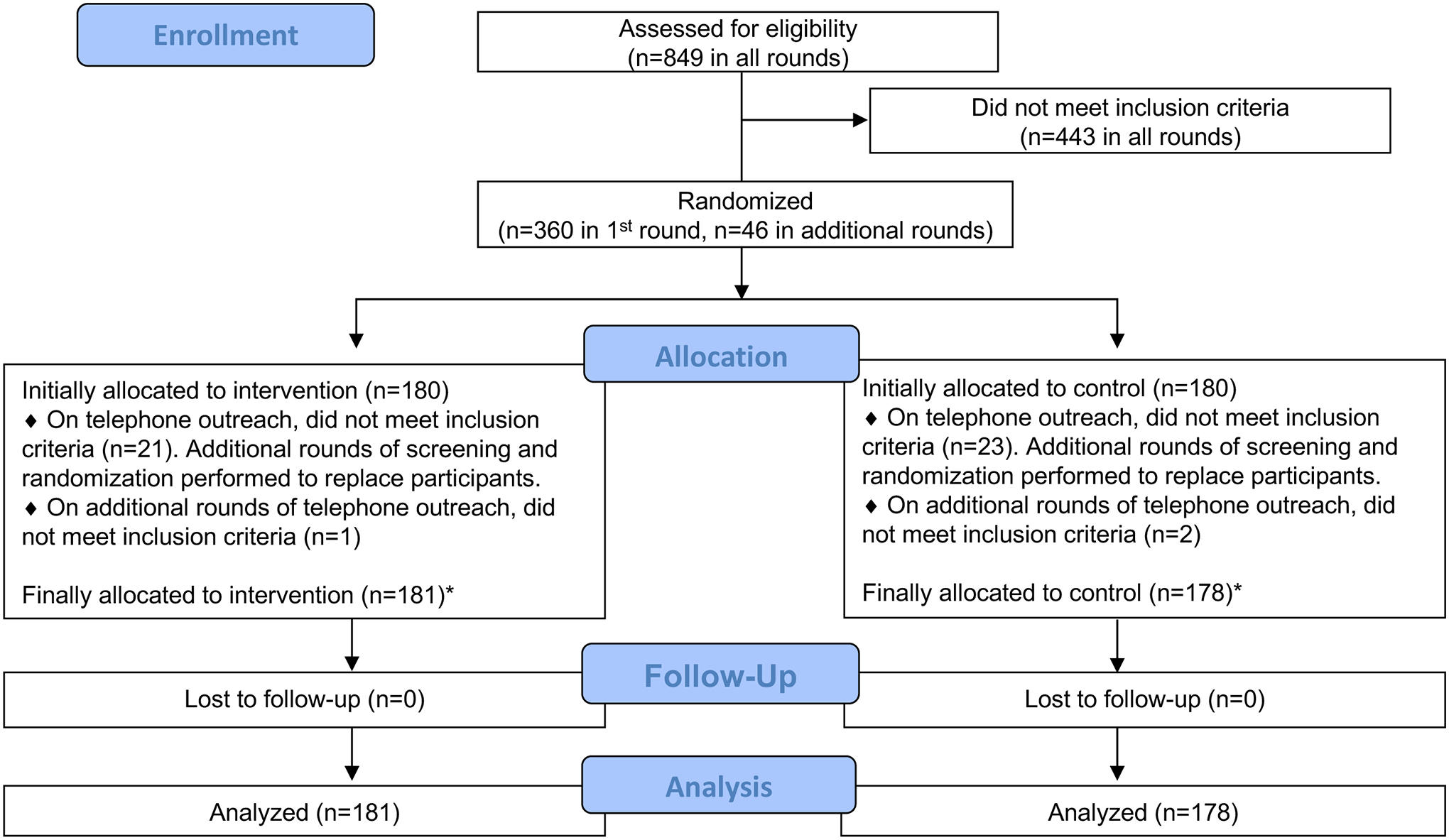
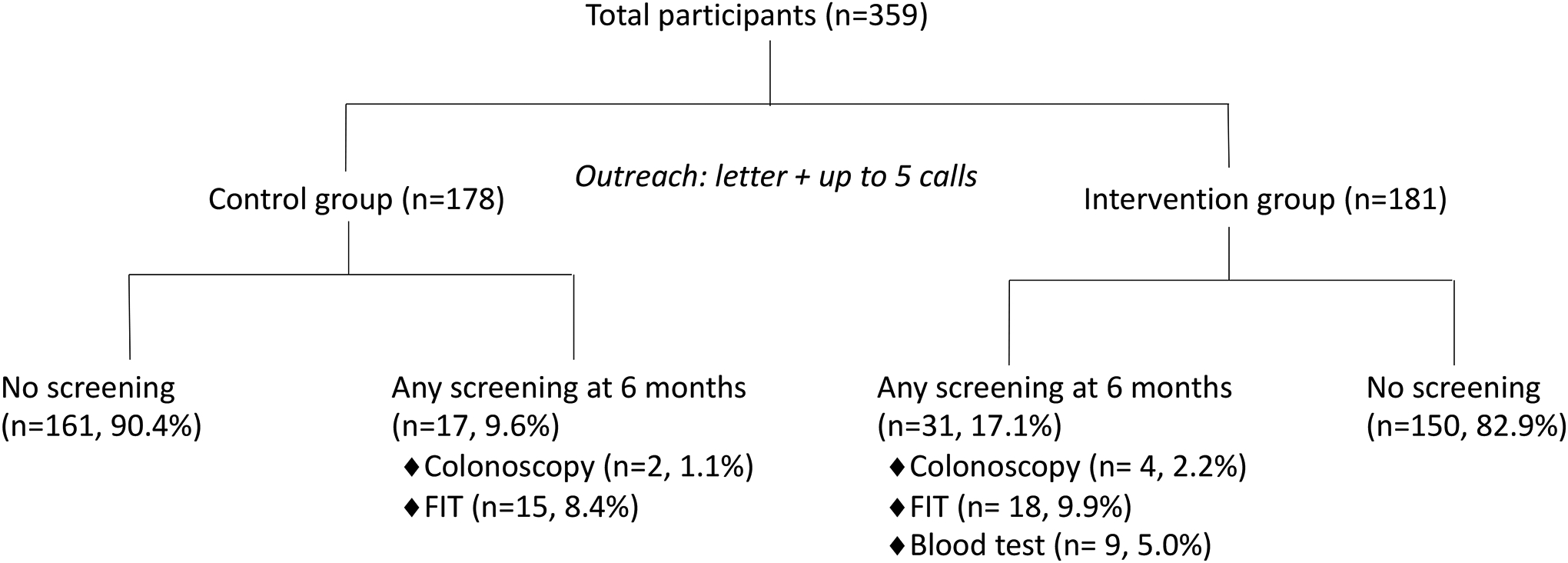
Screen-eligible Veterans aged 50-75 years who declined colonoscopy and FIT within the previous 6 months were randomized to letter and telephone outreach to reoffer screening with colonoscopy/FIT only (control), or additionally offering the blood test as a second-line option (intervention). The primary outcome was completion of any screening test within 6 months. The secondary outcome was completion of a full screening strategy within 6 months, including colonoscopy for those with a positive noninvasive test.
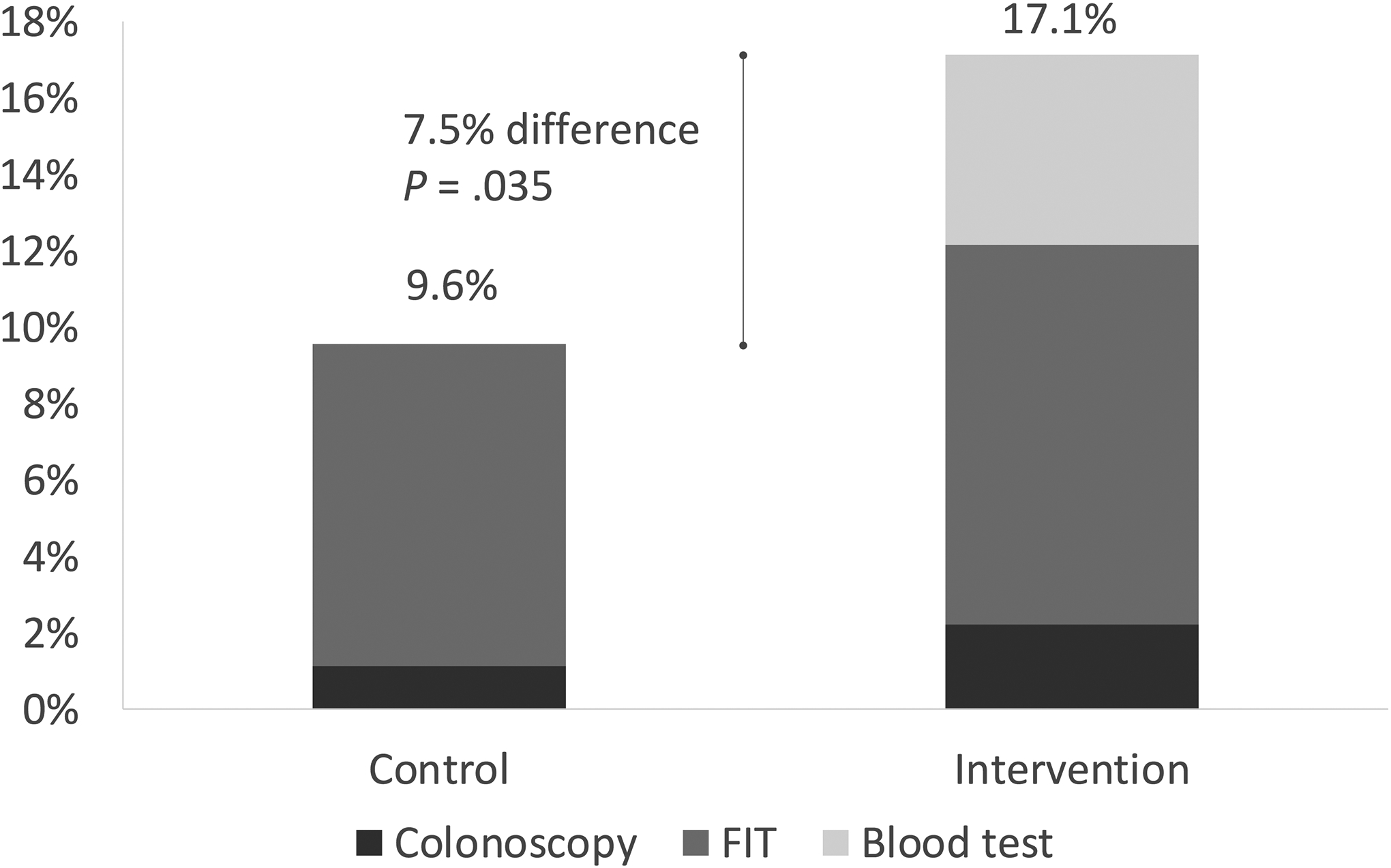
Of 359 participants who completed follow-up, 9.6% in the control group and 17.1% in the intervention group completed any screening (7.5% difference; P = .035). Uptake of colonoscopy and FIT was similar in the 2 groups. The full screening strategy was completed in 9.0% and 14.9% in the control and intervention groups, respectively (5.9% difference; P = .084).
Among individuals who previously declined colonoscopy and FIT, offering a blood test as a secondary option increased screening by 7.5% without decreasing uptake of first-line screening options. However, completion of a full screening strategy did not increase. These findings indicate that a blood test is a promising method to improve colorectal cancer screening, but obtaining a timely colonoscopy after a positive noninvasive test remains a challenge (ClincialTrials.gov number, NCT03598166).
对于拒绝接受一线检查的结直肠癌筛查人群,推荐使用 septin 9 血液检测,但目前对此类人群的参与情况尚不清楚。本研究开展了一项随机对照试验,旨在比较在拒绝接受结肠镜检查和粪便免疫化学检测(FIT)的人群中,重新提供结肠镜检查和 FIT 检查与同时提供血液检测相比,对检查的接受程度。
符合筛查条件的年龄在 50-75 岁之间的退伍军人在过去 6 个月内拒绝接受结肠镜检查和 FIT,将他们随机分为两组,一组通过信件和电话进行随访,仅重新提供结肠镜检查/FIT 筛查(对照组),另一组另外提供血液检测作为二线选择(干预组)。主要结局是在 6 个月内完成任何筛查检测。次要结局是在 6 个月内完成完整的筛查策略,包括对非侵入性检测阳性者进行结肠镜检查。
在完成随访的 359 名参与者中,对照组中有 9.6%,干预组中有 17.1%完成了任何筛查(差异为 7.5%;P=0.035)。两组的结肠镜检查和 FIT 使用率相似。对照组和干预组分别有 9.0%和 14.9%完成了完整的筛查策略(差异为 5.9%;P=0.084)。
在先前拒绝接受结肠镜检查和 FIT 的人群中,提供血液检测作为二线选择可将筛查率提高 7.5%,而不会降低一线筛查方法的接受率。然而,完整的筛查策略并未增加。这些发现表明,血液检测是提高结直肠癌筛查率的一种有前途的方法,但在非侵入性检测阳性后获得及时的结肠镜检查仍然是一个挑战(ClinicalTrials.gov 编号:NCT03598166)。