• 文献检索
  • 文档翻译
  • 深度研究
  • 学术资讯
  • Suppr Zotero 插件Zotero 插件
  • 邀请有礼
  • 套餐&价格
  • 历史记录
应用&插件
Suppr Zotero 插件Zotero 插件浏览器插件Mac 客户端Windows 客户端微信小程序
定价
高级版会员购买积分包购买API积分包
服务
文献检索文档翻译深度研究API 文档MCP 服务
关于我们
关于 Suppr公司介绍联系我们用户协议隐私条款
关注我们

Suppr 超能文献

核心技术专利:CN118964589B侵权必究
粤ICP备2023148730 号-1Suppr @ 2026

文献检索

告别复杂PubMed语法,用中文像聊天一样搜索,搜遍4000万医学文献。AI智能推荐,让科研检索更轻松。

立即免费搜索

文件翻译

保留排版,准确专业,支持PDF/Word/PPT等文件格式,支持 12+语言互译。

免费翻译文档

深度研究

AI帮你快速写综述,25分钟生成高质量综述,智能提取关键信息,辅助科研写作。

立即免费体验

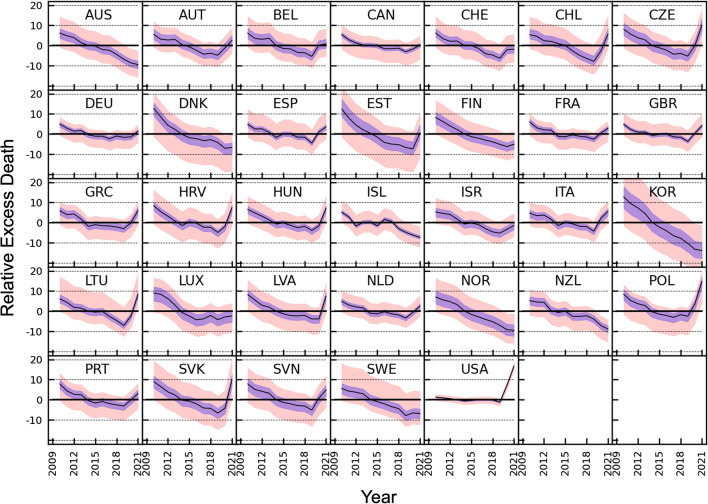
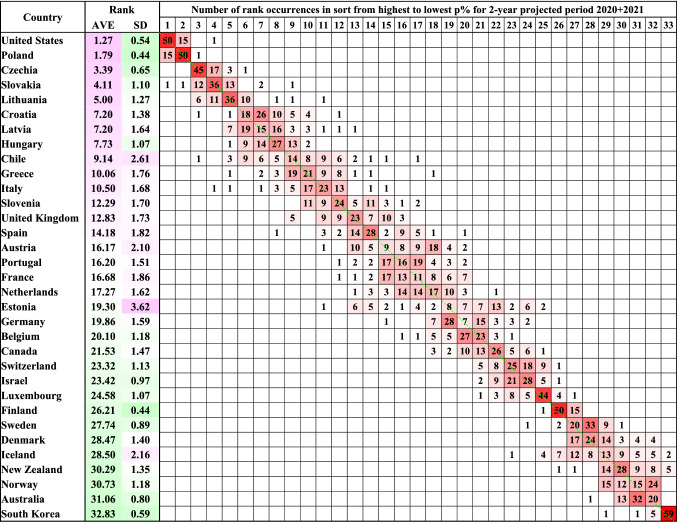
2009-2021 年多元宇宙分析得出的超额死亡估计数。

Excess death estimates from multiverse analysis in 2009-2021.

机构信息

Department of Structural Biology, Stanford University, Stanford, CA, 94305, USA.

Shanghai Institute for Advanced Immunochemical Studies, ShanghaiTech University, Shanghai, 201210, China.

出版信息

Eur J Epidemiol. 2023 Nov;38(11):1129-1139. doi: 10.1007/s10654-023-00998-2. Epub 2023 Apr 12.

DOI:10.1007/s10654-023-00998-2
PMID:37043153
原文链接:https://pmc.ncbi.nlm.nih.gov/articles/PMC10090741/
Abstract

Excess death estimates have great value in public health, but they can be sensitive to analytical choices. Here we propose a multiverse analysis approach that considers all possible different time periods for defining the reference baseline and a range of 1 to 4 years for the projected time period for which excess deaths are calculated. We used data from the Human Mortality Database on 33 countries with detailed age-stratified death information on an annual basis during the period 2009-2021. The use of different time periods for reference baseline led to large variability in the absolute magnitude of the exact excess death estimates. However, the relative ranking of different countries compared to others for specific years remained largely unaltered. The relative ranking of different years for the specific country was also largely independent of baseline. Averaging across all possible analyses, distinct time patterns were discerned across different countries. Countries had declines between 2009 and 2019, but the steepness of the decline varied markedly. There were also large differences across countries on whether the COVID-19 pandemic years 2020-2021 resulted in an increase of excess deaths and by how much. Consideration of longer projected time windows resulted in substantial shrinking of the excess deaths in many, but not all countries. Multiverse analysis of excess deaths over long periods of interest can offer an approach that better accounts for the uncertainty in estimating expected mortality patterns, comparative mortality trends across different countries, and the nature of observed mortality peaks.

摘要

超额死亡估计在公共卫生方面具有重要价值,但它们可能对分析选择敏感。在这里,我们提出了一种多宇宙分析方法,该方法考虑了定义参考基线的所有可能不同时间段,以及计算超额死亡的预测时间段为 1 到 4 年的范围。我们使用了来自人类死亡率数据库的数据,该数据库包含了 33 个国家在 2009-2021 年期间按年度详细的年龄分层死亡信息。使用不同的时间段作为参考基线会导致精确超额死亡估计的绝对值发生很大变化。然而,与其他国家相比,特定年份的不同国家的相对排名基本保持不变。特定国家不同年份的相对排名也基本独立于基线。对所有可能的分析进行平均,不同国家之间存在明显的时间模式差异。各国在 2009 年至 2019 年期间有所下降,但下降的幅度差异很大。在 2020 年至 2021 年的 COVID-19 大流行期间,是否会导致超额死亡增加以及增加多少,各国之间也存在很大差异。考虑更长的预测时间窗口会导致许多国家(但不是所有国家)的超额死亡大幅减少。对长期感兴趣的超额死亡进行多宇宙分析可以提供一种方法,更好地考虑到估计预期死亡率模式、不同国家之间的比较死亡率趋势以及观察到的死亡率峰值的性质的不确定性。
https://cdn.ncbi.nlm.nih.gov/pmc/blobs/f49c/10663196/fba2f01b2a4a/10654_2023_998_Fig2_HTML.jpg
https://cdn.ncbi.nlm.nih.gov/pmc/blobs/f49c/10663196/58e054e68db8/10654_2023_998_Fig1_HTML.jpg
https://cdn.ncbi.nlm.nih.gov/pmc/blobs/f49c/10663196/fba2f01b2a4a/10654_2023_998_Fig2_HTML.jpg
https://cdn.ncbi.nlm.nih.gov/pmc/blobs/f49c/10663196/58e054e68db8/10654_2023_998_Fig1_HTML.jpg
https://cdn.ncbi.nlm.nih.gov/pmc/blobs/f49c/10663196/fba2f01b2a4a/10654_2023_998_Fig2_HTML.jpg

相似文献

1
Excess death estimates from multiverse analysis in 2009-2021.2009-2021 年多元宇宙分析得出的超额死亡估计数。
Eur J Epidemiol. 2023 Nov;38(11):1129-1139. doi: 10.1007/s10654-023-00998-2. Epub 2023 Apr 12.
2
Excess death estimates from multiverse analysis in 2009-2021.2009 - 2021年多宇宙分析得出的超额死亡估计数。
medRxiv. 2023 Mar 17:2022.09.21.22280219. doi: 10.1101/2022.09.21.22280219.
3
Estimating excess mortality due to the COVID-19 pandemic: a systematic analysis of COVID-19-related mortality, 2020-21.估算2019冠状病毒病大流行造成的超额死亡率:2020 - 2021年与2019冠状病毒病相关死亡率的系统分析
Lancet. 2022 Apr 16;399(10334):1513-1536. doi: 10.1016/S0140-6736(21)02796-3. Epub 2022 Mar 10.
4
Flaws and uncertainties in pandemic global excess death calculations.大流行期间全球超额死亡计算中的缺陷和不确定性。
Eur J Clin Invest. 2023 Aug;53(8):e14008. doi: 10.1111/eci.14008. Epub 2023 Apr 24.
5
Comparison of pandemic excess mortality in 2020-2021 across different empirical calculations.2020-2021 年不同经验性计算方法得出的大流行超额死亡率比较。
Environ Res. 2022 Oct;213:113754. doi: 10.1016/j.envres.2022.113754. Epub 2022 Jun 24.
6
Estimates of excess mortality for the five Nordic countries during the COVID-19 pandemic 2020-2021.2020-2021 年 COVID-19 大流行期间北欧五国超额死亡率估计。
Int J Epidemiol. 2022 Dec 13;51(6):1722-1732. doi: 10.1093/ije/dyac204.
7
Are COVID-19 age-mortality curves for 2020 flatter in developing countries? Evidence from a cross-sectional observational study of population-level official death counts and excess deaths estimates.2020 年发展中国家 COVID-19 年龄死亡率曲线更平坦吗?基于人口水平官方死亡人数和超额死亡估计的横断面观察性研究证据。
BMJ Open. 2022 Nov 8;12(11):e061589. doi: 10.1136/bmjopen-2022-061589.
8
Variability in excess deaths across countries with different vulnerability during 2020-2023.2020-2023 年间,脆弱性不同的国家超额死亡人数的变化。
Proc Natl Acad Sci U S A. 2023 Dec 5;120(49):e2309557120. doi: 10.1073/pnas.2309557120. Epub 2023 Nov 29.
9
Estimates of excess mortality during the COVID-19 pandemic strongly depend on subjective methodological choices.新冠大流行期间超额死亡率的估计值在很大程度上取决于主观的方法选择。
Herz. 2023 Jun;48(3):180-183. doi: 10.1007/s00059-023-05166-6. Epub 2023 May 4.
10
Covid-19, non-Covid-19 and excess mortality rates not comparable across countries.新冠病毒(Covid-19)、非新冠病毒(Non-Covid-19)和超额死亡率在各国之间不可比。
Epidemiol Infect. 2021 Aug 2;149:e176. doi: 10.1017/S0950268821001850.

引用本文的文献

1
Excess and reduced work absence during COVID-19 in Poland: insights from cause-specific time-series models.波兰新冠疫情期间缺勤过多和减少的情况:特定病因时间序列模型的见解
Popul Health Metr. 2025 Jul 2;23(1):35. doi: 10.1186/s12963-025-00400-1.
2
Mortality in Frankfurt am Main, Germany, 2020-2023: higher excess mortality during an influenza wave in 2022 than during all COVID-19 waves altogether.德国美因河畔法兰克福2020 - 2023年的死亡率:2022年流感高峰期的超额死亡率高于整个新冠疫情期间的超额死亡率。
GMS Hyg Infect Control. 2025 Mar 4;20:Doc04. doi: 10.3205/dgkh000533. eCollection 2025.
3
Post-pandemic excess mortality of COVID-19 in Hong Kong: a retrospective study.

本文引用的文献

1
A guided multiverse study of neuroimaging analyses.神经影像学分析的引导式多重宇宙研究。
Nat Commun. 2022 Jun 29;13(1):3758. doi: 10.1038/s41467-022-31347-8.
2
Comparison of pandemic excess mortality in 2020-2021 across different empirical calculations.2020-2021 年不同经验性计算方法得出的大流行超额死亡率比较。
Environ Res. 2022 Oct;213:113754. doi: 10.1016/j.envres.2022.113754. Epub 2022 Jun 24.
3
COVID-19 excess mortality among long-term care residents in Ontario, Canada.加拿大安大略省长期护理居民的 COVID-19 超额死亡率。
香港新冠疫情后新冠病毒病的超额死亡率:一项回顾性研究。
Lancet Reg Health West Pac. 2025 Apr 23;58:101554. doi: 10.1016/j.lanwpc.2025.101554. eCollection 2025 May.
4
Marital status and risk of cardiovascular disease - a multi-analyst study in epidemiology.婚姻状况与心血管疾病风险——一项流行病学的多分析员研究
Eur J Epidemiol. 2025 May 5. doi: 10.1007/s10654-025-01235-8.
5
Does mask usage correlate with excess mortality? Findings from 24 European countries.口罩使用与超额死亡率相关吗?来自24个欧洲国家的研究结果。
BMC Public Health. 2025 Mar 12;25(1):913. doi: 10.1186/s12889-025-22172-x.
6
Relationship between COVID-19 cases and monthly mortality from all causes, cancer, cardiovascular diseases and diabetes in 16 countries, 2020-21.2020 - 2021年16个国家新冠病毒病病例与全因、癌症、心血管疾病和糖尿病月度死亡率之间的关系
Int J Epidemiol. 2024 Dec 16;54(1). doi: 10.1093/ije/dyaf006.
7
Productivity Losses due to Health Problems Arising from COVID-19 Pandemic: A Systematic Review of Population-Level Studies Worldwide.2019年冠状病毒病疫情引发的健康问题导致的生产力损失:对全球人口层面研究的系统评价
Appl Health Econ Health Policy. 2025 Mar;23(2):231-251. doi: 10.1007/s40258-024-00935-8. Epub 2025 Jan 20.
8
Impact of COVID-19 on total excess mortality and geographic disparities in Europe, 2020-2023: a spatio-temporal analysis.2020 - 2023年新冠疫情对欧洲总超额死亡率及地理差异的影响:一项时空分析
Lancet Reg Health Eur. 2024 Jul 3;44:100996. doi: 10.1016/j.lanepe.2024.100996. eCollection 2024 Sep.
9
Cause-specific excess mortality in Denmark, Finland, Norway, and Sweden during the COVID-19 pandemic 2020-2022: a study using nationwide population data.2020-2022 年 COVID-19 大流行期间丹麦、芬兰、挪威和瑞典的特定原因超额死亡率:一项使用全国人口数据的研究。
Eur J Epidemiol. 2024 Sep;39(9):1037-1050. doi: 10.1007/s10654-024-01154-0. Epub 2024 Sep 16.
10
One Question, Many Results—Why Epidemiological Studies Yield Heterogeneous Findings. Part 34 of a Series on Evaluation of Scientific Publications.一个问题,多种结果——为何流行病学研究结果参差不齐。科学出版物评估系列之第34部分
Dtsch Arztebl Int. 2024 Nov 1;121(22):740-745. doi: 10.3238/arztebl.m2024.0135.
PLoS One. 2022 Jan 20;17(1):e0262807. doi: 10.1371/journal.pone.0262807. eCollection 2022.
4
Socialize, De-Commodify and De-Financialize Long-Term Care.使长期护理社会化、去商品化和去金融化。
Healthc Pap. 2021 Sep;20(1):34-39. doi: 10.12927/hcpap.2021.26642.
5
Consensus-based guidance for conducting and reporting multi-analyst studies.基于共识的多分析师研究开展和报告指南。
Elife. 2021 Nov 9;10:e72185. doi: 10.7554/eLife.72185.
6
Excess mortality due to Covid-19? A comparison of total mortality in 2020 with total mortality in 2016 to 2019 in Germany, Sweden and Spain.因新冠病毒导致的超额死亡率?德国、瑞典和西班牙 2020 年总死亡率与 2016 年至 2019 年总死亡率的比较。
PLoS One. 2021 Aug 3;16(8):e0255540. doi: 10.1371/journal.pone.0255540. eCollection 2021.
7
Excess Mortality After COVID-19 in Swedish Long-Term Care Facilities.新冠疫情后瑞典长期护理机构的超额死亡率。
J Am Med Dir Assoc. 2021 Aug;22(8):1574-1580.e8. doi: 10.1016/j.jamda.2021.06.010. Epub 2021 Jun 24.
8
Sexually Transmitted Disease Cases Continue to Break Records.
JAMA. 2021 May 25;325(20):2040. doi: 10.1001/jama.2021.6937.
9
Gender specific excess mortality in Italy during the COVID-19 pandemic accounting for age.意大利在 COVID-19 大流行期间按年龄划分的性别特异性超额死亡率
Eur J Epidemiol. 2021 Feb;36(2):213-218. doi: 10.1007/s10654-021-00717-9. Epub 2021 Jan 25.
10
Examining the robustness of observational associations to model, measurement and sampling uncertainty with the vibration of effects framework.运用效应波动框架,检验在模型、测量和抽样不确定性下观察性关联的稳健性。
Int J Epidemiol. 2021 Mar 3;50(1):266-278. doi: 10.1093/ije/dyaa164.