Tea Research Institute, Guizhou Academy of Agricultural Sciences, 1 Jin'nong Road, Guiyang, 550006, Guizhou, China.
Sci Rep. 2023 Apr 12;13(1):6015. doi: 10.1038/s41598-023-32435-5.
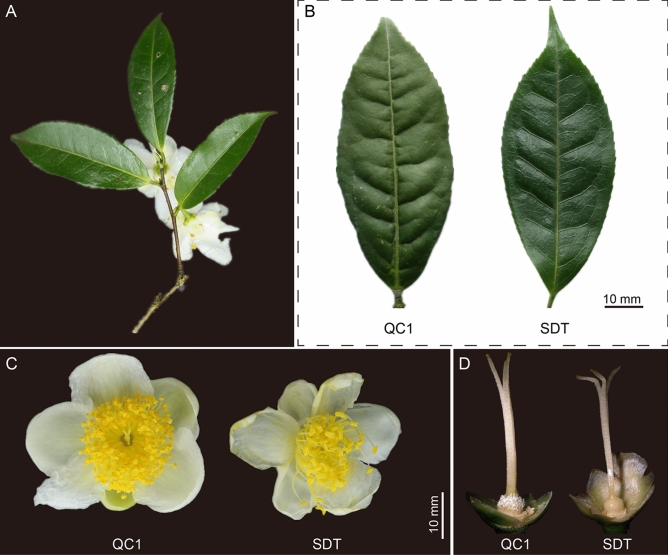
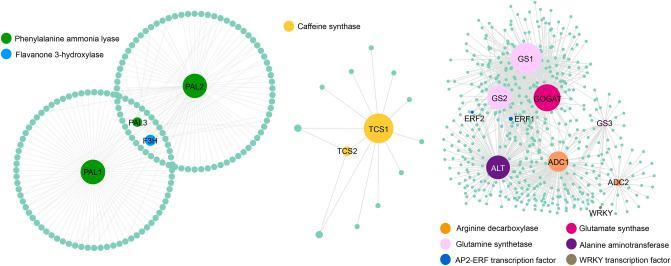
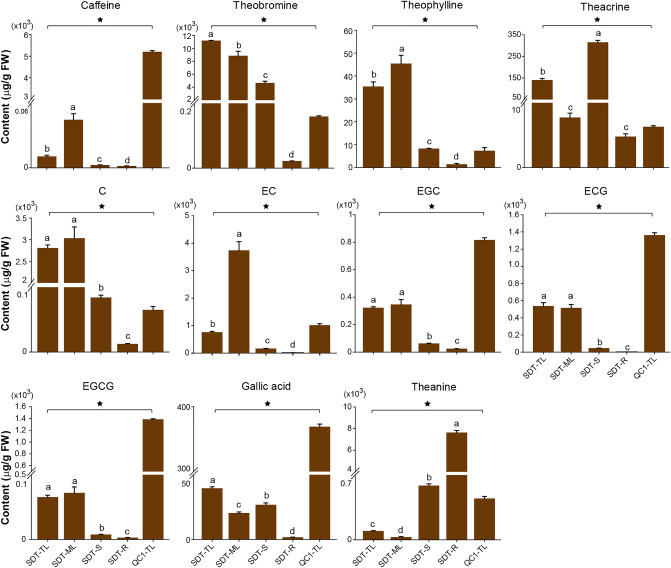
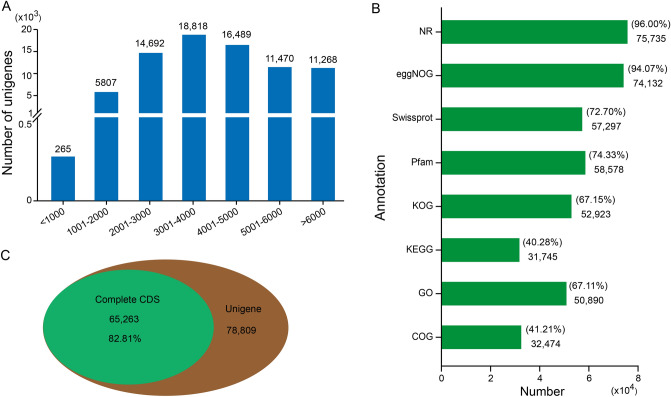
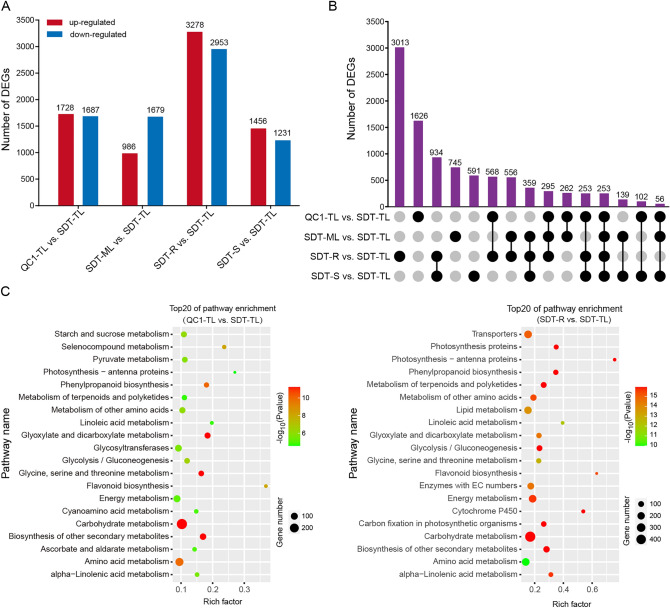
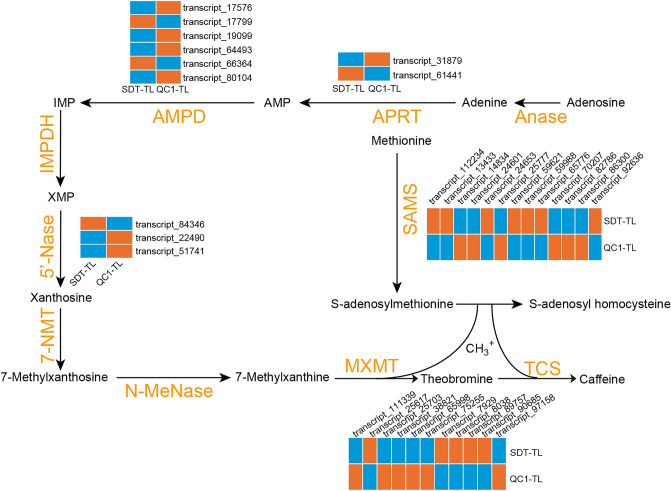
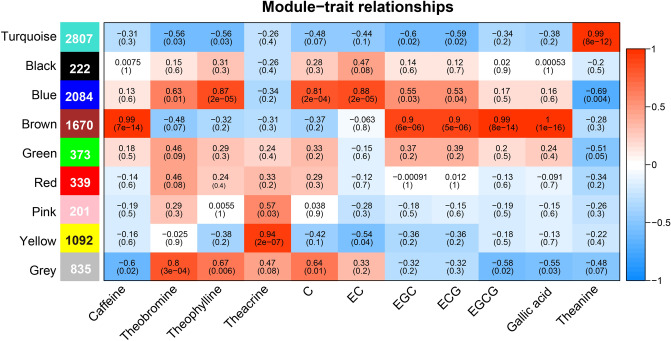
Tea plants are crops with economic, health and cultural value. Catechin, caffeine and theanine are the main secondary metabolites of taste. In the process of germplasm collection, we found a resource in the Sandu Aquatic Autonomous County of Guizhou (SDT) that possessed significantly different characteristic metabolites compared with the cultivar 'Qiancha 1'. SDT is rich in theobromine and theophylline, possesses low levels of (-)-epicatechin-3-gallate, (-)-epigallocatechin-3-gallate, and theanine content, and is almost free of caffeine. However, research on this tea resource is limited. Full-length transcriptome analysis was performed to investigate the transcriptome and gene expression of these metabolites. In total, 78,809 unique transcripts were obtained, of which 65,263 were complete coding sequences. RNA-seq revealed 3415 differentially expressed transcripts in the tender leaves of 'Qiancha 1' and 'SDT'. Furthermore, 2665, 6231, and 2687 differentially expressed transcripts were found in different SDT tissues. These differentially expressed transcripts were enriched in flavonoid and amino acid metabolism processes. Co-expression network analysis identified five modules associated with metabolites and found that genes of caffeine synthase (TCS) may be responsible for the low caffeine content in SDT. Phenylalanine ammonia lyase (PAL), glutamine synthetase (GS), glutamate synthase (GOGAT), and arginine decarboxylase (ADC) play important roles in the synthesis of catechin and theanine. In addition, we identified that ethylene resposive factor (ERF) and WRKY transcription factors may be involved in theanine biosynthesis. Overall, our study provides candidate genes to improve understanding of the synthesis mechanisms of these metabolites and provides a basis for molecular breeding of tea plant.
茶树具有经济、健康和文化价值。儿茶素、咖啡因和茶氨酸是其主要的次生代谢产物。在种质资源收集过程中,我们在贵州三都水族自治县(SDT)发现了一个资源,与栽培品种‘钱茶 1 号’相比,它具有显著不同的特征代谢产物。SDT 富含可可碱和茶碱,(-)-表儿茶素-3-没食子酸酯、(-)-表没食子儿茶素-3-没食子酸酯含量低,茶氨酸含量高,几乎不含咖啡因。然而,对这种茶资源的研究是有限的。进行全长转录组分析以研究这些代谢产物的转录组和基因表达。总共获得了 78809 个独特的转录本,其中 65263 个是完整的编码序列。RNA-seq 揭示了‘钱茶 1 号’和‘SDT’嫩梢中 3415 个差异表达的转录本。此外,在不同的 SDT 组织中发现了 2665、6231 和 2687 个差异表达的转录本。这些差异表达的转录本富集在黄酮类和氨基酸代谢过程中。共表达网络分析确定了与代谢物相关的五个模块,并发现咖啡因合酶(TCS)基因可能是 SDT 中咖啡因含量低的原因。苯丙氨酸解氨酶(PAL)、谷氨酰胺合成酶(GS)、谷氨酸合酶(GOGAT)和精氨酸脱羧酶(ADC)在儿茶素和茶氨酸的合成中发挥重要作用。此外,我们还发现乙烯响应因子(ERF)和 WRKY 转录因子可能参与茶氨酸的生物合成。总的来说,我们的研究提供了候选基因,以提高对这些代谢产物合成机制的理解,并为茶树的分子育种提供了基础。