Centre for Biostatistics, Division of Population Health, Health Services Research & Primary Care, School of Health Sciences, Faculty of Biology, Medicine and Health, The University of Manchester, Oxford Road, Manchester, M13 9PL, UK.
Centre for Integrated Genomic Medicine, Division of Population Health, Health Services Research & Primary Care, School of Health Sciences, Faculty of Biology, Medicine and Health, The University of Manchester, Oxford Road, Manchester, M13 9PL, UK.
BMC Med. 2023 Apr 12;21(1):143. doi: 10.1186/s12916-023-02843-5.
The immune response to infections could be largely driven by the individual's genes, especially in the major histocompatibility complex (MHC) region. Varicella-zoster virus (VZV) is a highly communicable pathogen. In addition to infection, the reactivations of VZV can be a potential causal factor for multiple traits. Identification of VZV immune response-related health conditions can therefore help elucidate the aetiology of certain diseases.
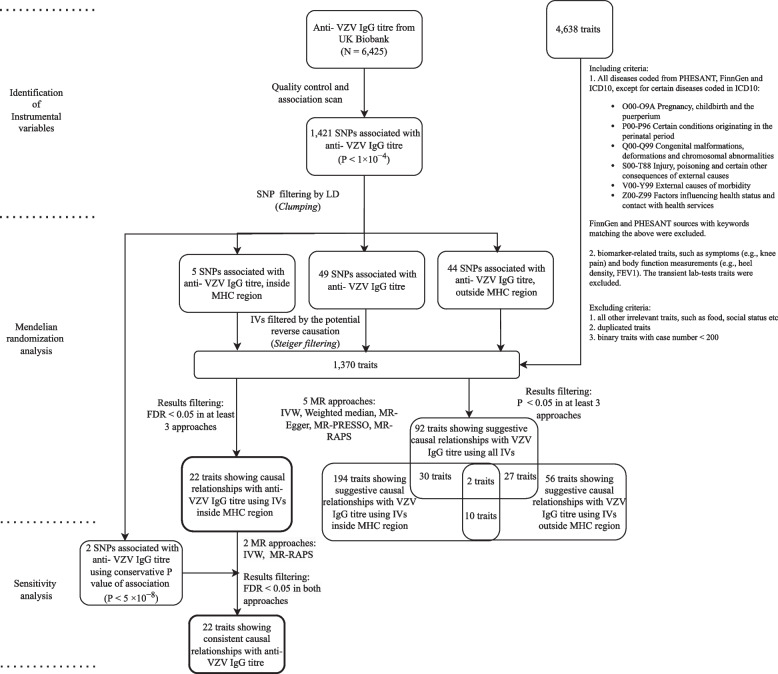
A phenome-wide Mendelian randomization (MR) study of anti-VZV immunoglobulin G (IgG) levels with 1370 traits was conducted to explore the potential causal role of VZV-specific immune response on multiple traits using the UK Biobank cohort. For the robustness of the results, we performed MR analyses using five different methods. To investigate the impact of the MHC region on MR results, the analyses were conducted using instrumental variables (IVs) inside (IV) and outside (IV) the MHC region or all together (IV).
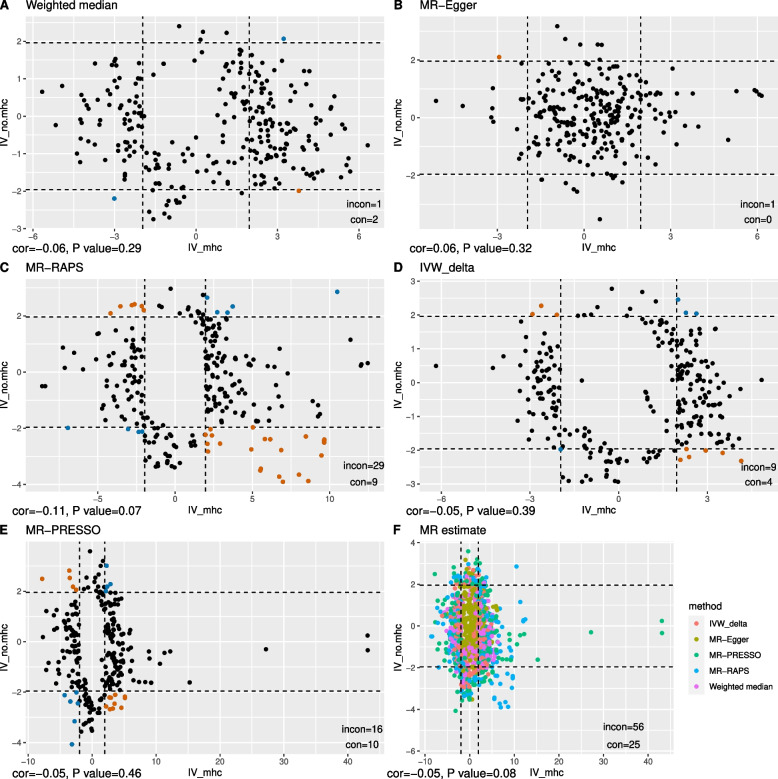
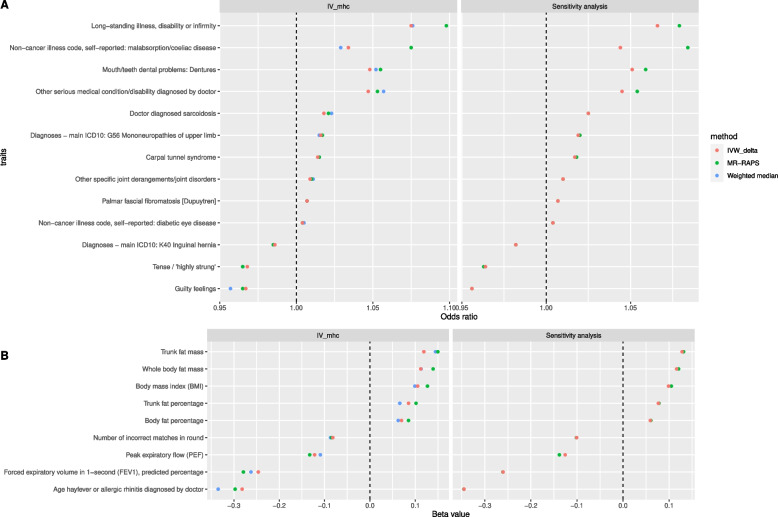
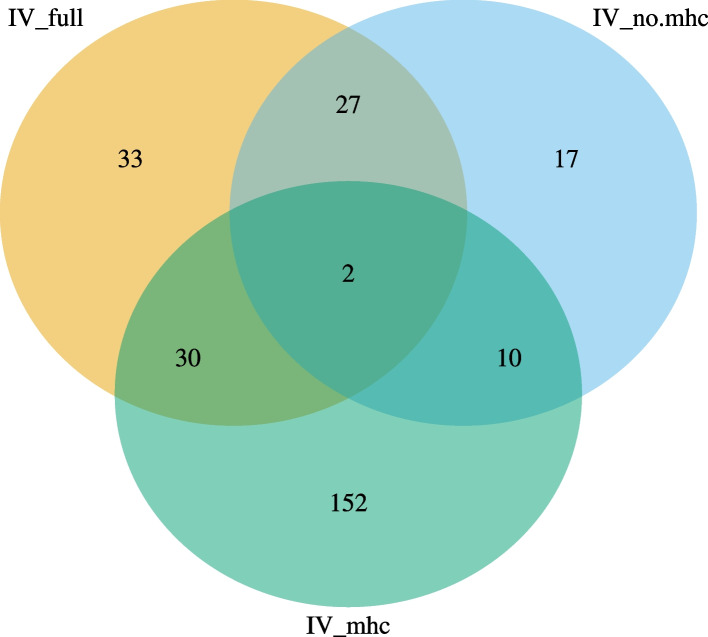
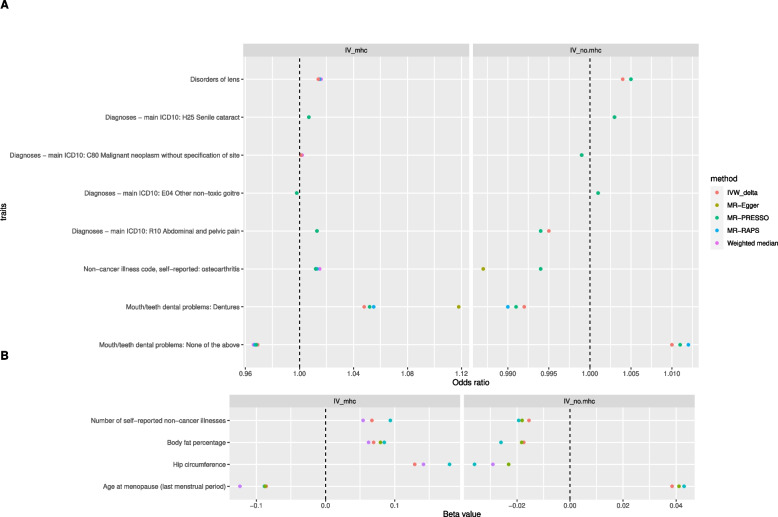
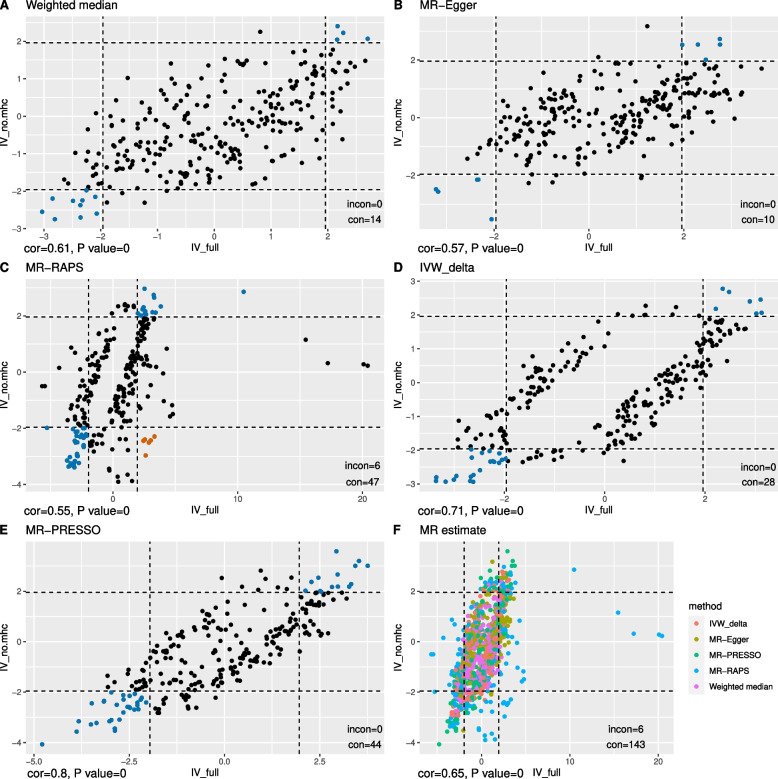
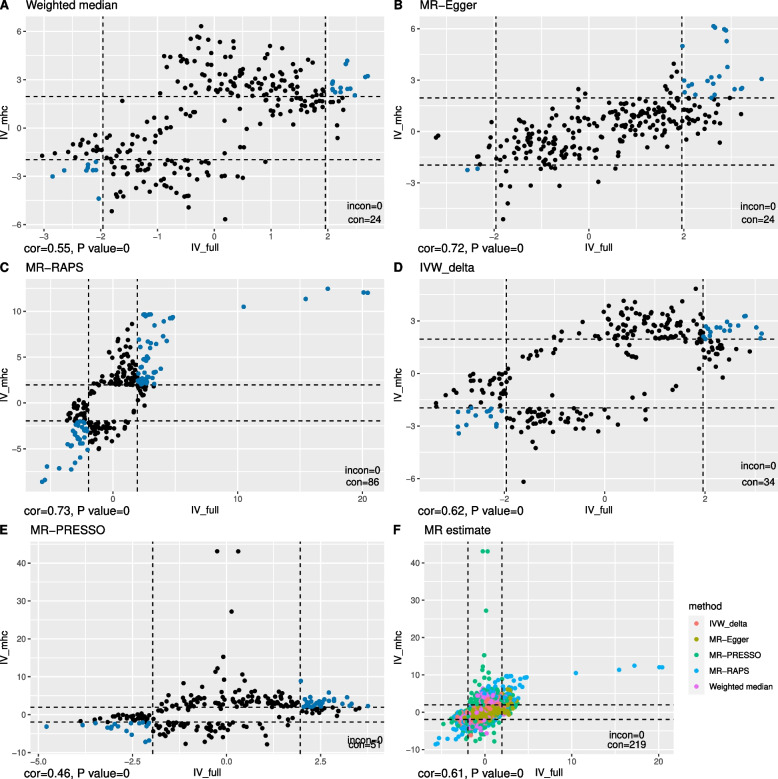
Forty-nine single nucleotide polymorphisms (IV) were associated with anti-VZV IgG levels, of which five (IV) were located in the MHC region and 44 (IV) were not. Statistical evidence (false discovery rate < 0.05 in at least three of the five MR methods) for a causal effect of anti-VZV IgG levels was found on 22 traits using IV, while no evidence was found when using IV or IV. The reactivations of VZV increased the risk of Dupuytren disease, mononeuropathies of the upper limb, sarcoidosis, coeliac disease, teeth problems and earlier onset of allergic rhinitis, which evidence was concordant with the literature. Suggestive causal evidence (P < 0.05 in at least three of five MR methods) using IV, IV and IV was detected in 92, 194 and 56 traits, respectively. MR results from IV correlated with those from IV or IV. However, the results between IV and IV were noticeably different, as evidenced by causal associations in opposite directions between anti-VZV IgG and ten traits.
In this exploratory study, anti-VZV IgG was causally associated with multiple traits. IVs in the MHC region might have a substantial impact on MR, and therefore, could be potentially considered in future MR studies.
个体的基因,尤其是主要组织相容性复合体(MHC)区域的基因,可能在感染的免疫反应中起主要作用。水痘带状疱疹病毒(VZV)是一种高度传染性病原体。除感染外,VZV 的再激活可能是多种特征的潜在因果因素。因此,识别与 VZV 免疫反应相关的健康状况有助于阐明某些疾病的病因。
使用英国生物库队列,对 1370 种特征的抗 VZV 免疫球蛋白 G(IgG)水平进行全基因组孟德尔随机化(MR)研究,以探讨 VZV 特异性免疫反应对多种特征的潜在因果作用。为了保证结果的稳健性,我们使用了五种不同的方法进行 MR 分析。为了研究 MHC 区域对 MR 结果的影响,我们使用了 MHC 区域内(IV)、区域外(IV)和全部(IV)的工具变量(IV)进行分析。
49 个单核苷酸多态性(IV)与抗 VZV IgG 水平相关,其中 5 个(IV)位于 MHC 区域内,44 个(IV)不在 MHC 区域内。使用 IV 发现抗 VZV IgG 水平对 22 种特征具有因果作用的统计学证据(在至少三种 MR 方法中,假发现率<0.05),而使用 IV 或 IV 则没有发现。VZV 的再激活增加了掌腱膜挛缩症、单神经病上肢、结节病、乳糜泻、牙齿问题和过敏性鼻炎发病年龄较早的风险,这与文献中的证据一致。使用 IV、IV 和 IV,分别在 92、194 和 56 种特征中检测到与 VZV 再激活相关的因果关系(在至少三种 MR 方法中,P<0.05)。IV 的 MR 结果与 IV 或 IV 的结果一致。然而,IV 与 IV 的结果明显不同,抗 VZV IgG 与 10 种特征之间的因果关系呈相反方向。
在这项探索性研究中,抗 VZV IgG 与多种特征存在因果关系。MHC 区域内的 IV 可能对 MR 有重大影响,因此,在未来的 MR 研究中可以考虑将其纳入其中。