Department of Food and Nutrition, Chonnam National University, Gwangju 61186, Republic of Korea.
Nutrients. 2023 Apr 4;15(7):1757. doi: 10.3390/nu15071757.
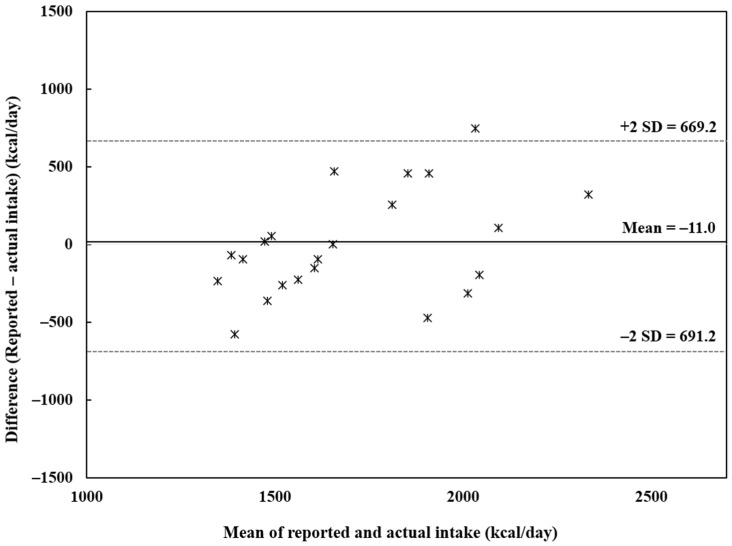
Despite the wide use of 24-h dietary recalls and differences in food culture between Western and Asian countries, limited studies validating 24-h dietary recalls have been performed in rice-based meals and in Asians. To determine the accuracy of 24-h dietary recalls in Koreans, 22 older women participating in a controlled-feeding study completed a single interviewer-administered 24-h dietary recall. The recalls of food items were classified as matches, exclusions, or intrusions. Portion size reports were categorized as corresponding (≤10% error), overreport, underreport, and missing. Recall accuracy was analyzed according to the type of dish, food group, or nutrients and compared by one-way analysis of variance or paired -test. Participants reported 95% of the foods that they consumed. Sauces were most frequently missing. Corresponding portion sizes were 24%, while 43% were underreported. Kimchi was most frequently underreported. No difference was found among food groups. The recalled intakes of energy and most nutrients were similar to the actual intakes, with the exception of fat and sodium, which were underreported. The interviewer-administered 24-h dietary recall may be a reliable tool to assess food and nutrient intake in older Korean women. More accurate methods are necessary to assess sauce, kimchi, fat, and sodium intakes in the Korean diet.
尽管 24 小时膳食回顾法被广泛应用,且西方国家和亚洲国家的饮食文化存在差异,但针对基于大米的膳食和亚洲人群,验证 24 小时膳食回顾法的准确性的研究却十分有限。为了确定该方法在韩国人群中的准确性,22 名参与控制喂养研究的老年女性完成了一次由单一调查员进行的 24 小时膳食回顾法。将食物项目的回忆分为匹配、排除或干扰。部分大小报告分为相应(≤10%误差)、高报、低报和缺失。根据菜肴类型、食物组或营养素分析回忆准确性,并通过单因素方差分析或配对检验进行比较。参与者报告了他们所食用的 95%的食物。酱汁最常被遗漏。相应的部分大小为 24%,而 43%被低报。泡菜被低报的情况最常见。食物组之间没有差异。除了脂肪和钠,能量和大多数营养素的回忆摄入量与实际摄入量相似,这两种营养素被低报了。由调查员进行的 24 小时膳食回顾法可能是评估韩国老年女性食物和营养素摄入量的可靠工具。需要更准确的方法来评估韩国饮食中酱汁、泡菜、脂肪和钠的摄入量。