Huang Xiulin, Xiao Hui, Shi Yongxin, Ben Suqin
Department of Respiratory and Critical Care Medicine, Shanghai General Hospital, Shanghai Jiao Tong University School of Medicine, Shanghai, China.
J Thorac Dis. 2023 Mar 31;15(3):1406-1425. doi: 10.21037/jtd-23-238.
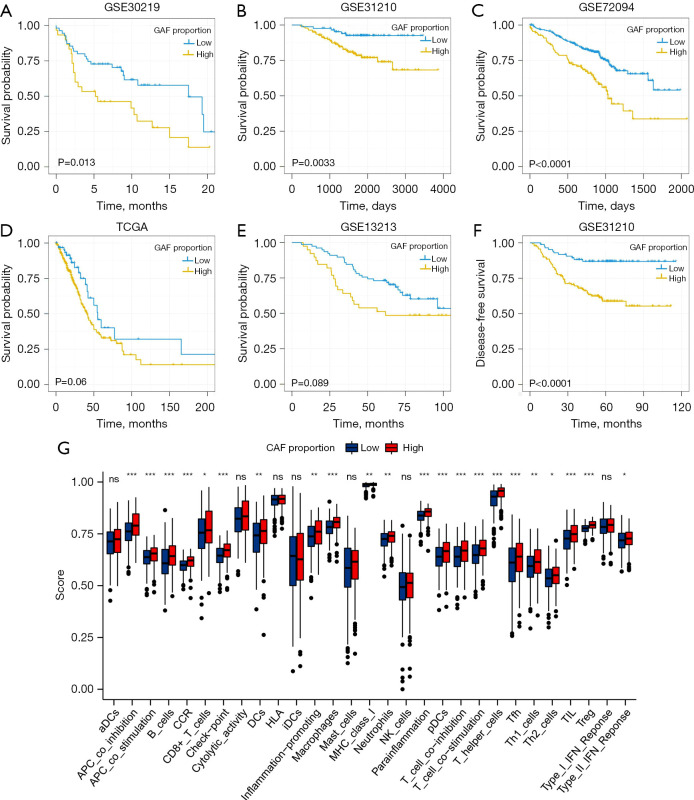
An accumulating amount of studies are highlighting the impacts of cancer-associated fibroblasts (CAFs) on the initiation, metastasis, invasion, and immune evasion of lung cancer. However, it is still unclear how to tailor treatment regimens based on the transcriptomic characteristics of CAFs in the tumor microenvironment of patients with lung cancer.
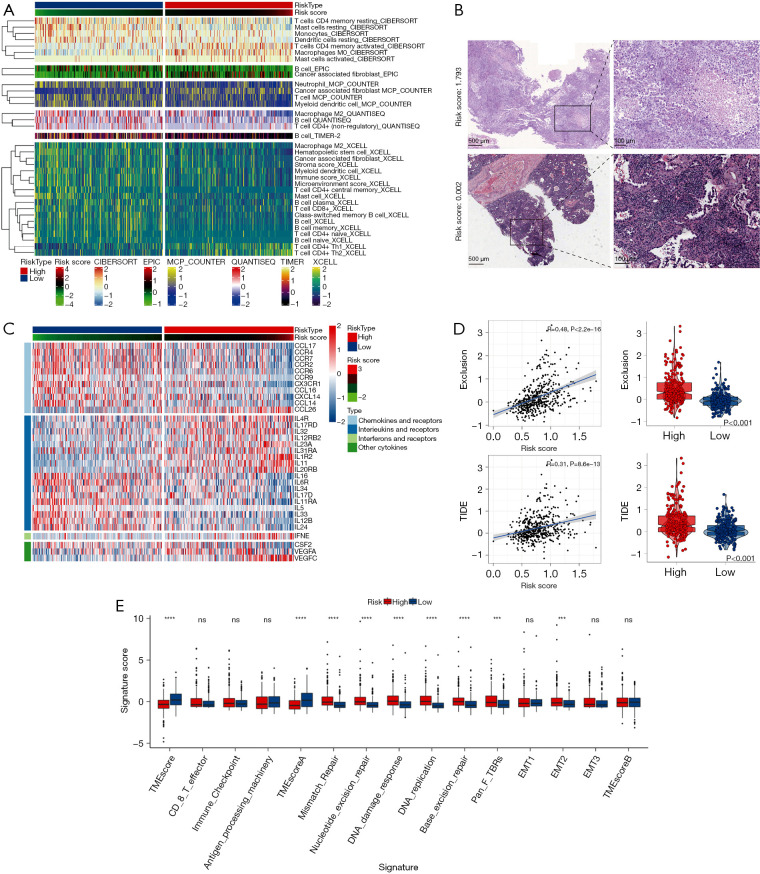
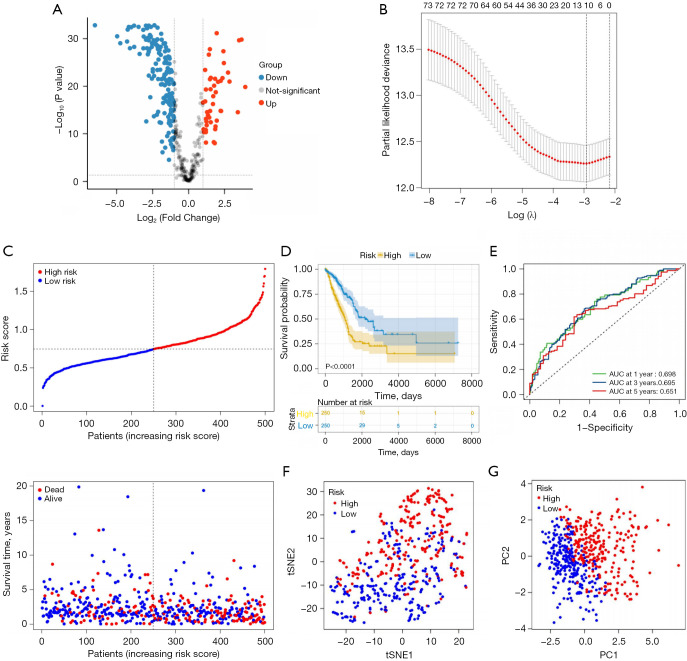
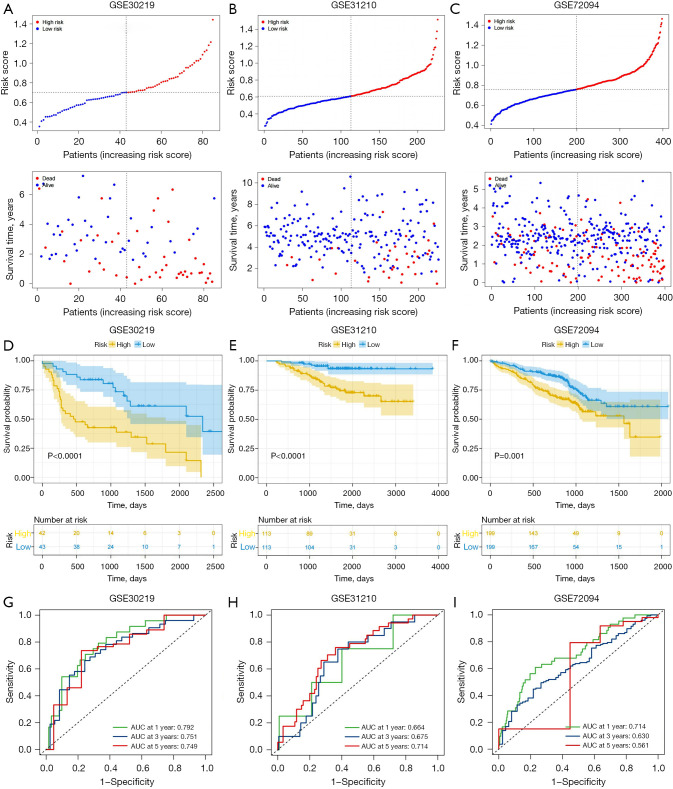
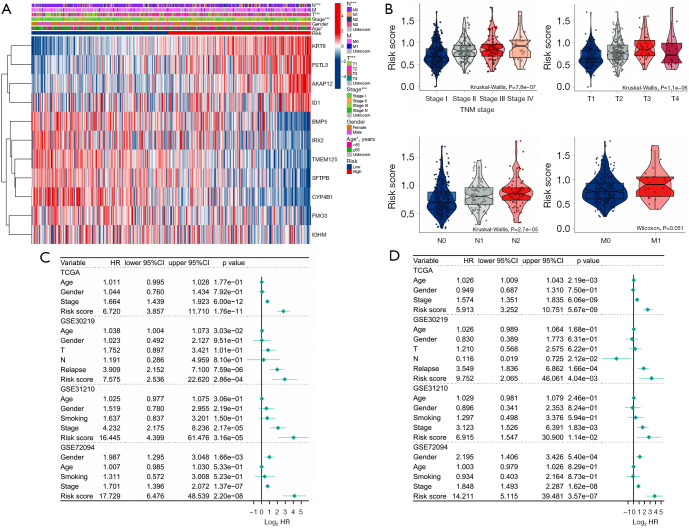
Our study examined single-cell RNA-sequencing data from the Gene Expression Omnibus (GEO) database to identify expression profiles for CAF marker genes and constructed a prognostic signature of lung adenocarcinoma using these genes in The Cancer Genome Atlas (TCGA) database. The signature was validated in 3 independent GEO cohorts. Univariate and multivariate analyses were used to confirm the clinical significance of the signature. Next, multiple differential gene enrichment analysis methods were used to explore the biological pathways related to the signature. Six algorithms were used to assess the relative proportion of infiltrating immune cells, and the relationship between the signature and immunotherapy response of lung adenocarcinoma (LUAD) was explored based on the tumor immune dysfunction and exclusion (TIDE) algorithm.
The signature related to CAFs in this study showed good accuracy and predictive capacity. In all clinical subgroups, the high-risk patients had a poor prognosis. The univariate and multivariate analyses confirmed that the signature was an independent prognostic marker. Moreover, the signature was closely associated with particular biological pathways related to cell cycle, DNA replication, carcinogenesis, and immune response. The 6 algorithms used to assess the relative proportion of infiltrating immune cells indicated that a lower infiltration of immune cells in the tumor microenvironment was associated with high-risk scores. Importantly, we found a negative correlation between TIDE, exclusion score, and risk score.
Our study constructed a prognostic signature based on CAF marker genes useful for prognosis and immune infiltration estimation of lung adenocarcinoma. This tool could enhance therapy efficacy and allow individualized treatments.
越来越多的研究凸显了癌症相关成纤维细胞(CAFs)对肺癌的发生、转移、侵袭和免疫逃逸的影响。然而,基于肺癌患者肿瘤微环境中CAFs的转录组特征来制定治疗方案仍不明确。
我们的研究检测了来自基因表达综合数据库(GEO)的单细胞RNA测序数据,以确定CAF标记基因的表达谱,并在癌症基因组图谱(TCGA)数据库中使用这些基因构建了肺腺癌的预后特征。该特征在3个独立的GEO队列中得到验证。采用单因素和多因素分析来确认该特征的临床意义。接下来,使用多种差异基因富集分析方法来探索与该特征相关的生物学途径。使用6种算法评估浸润免疫细胞的相对比例,并基于肿瘤免疫功能障碍和排除(TIDE)算法探索该特征与肺腺癌(LUAD)免疫治疗反应之间的关系。
本研究中与CAFs相关的特征显示出良好的准确性和预测能力。在所有临床亚组中,高危患者预后较差。单因素和多因素分析证实该特征是一个独立的预后标志物。此外,该特征与细胞周期、DNA复制、致癌作用和免疫反应等特定生物学途径密切相关。用于评估浸润免疫细胞相对比例的6种算法表明,肿瘤微环境中免疫细胞浸润较低与高危评分相关。重要的是,我们发现TIDE、排除评分和风险评分之间呈负相关。
我们的研究基于CAF标记基因构建了一个预后特征,可用于肺腺癌的预后评估和免疫浸润估计。该工具可提高治疗效果并实现个体化治疗。