Department of Thoracic Surgery, Jiangsu Key Laboratory of Molecular and Translational Cancer Research, Jiangsu Cancer Hospital and Nanjing Medical University Affiliated Cancer Hospital and Jiangsu Institute of Cancer Research, Nanjing, 21009, People's Republic of China.
Department of Science and Technology, Jiangsu Cancer Hospital and Nanjing Medical University Affiliated Cancer Hospital and Jiangsu Institute of Cancer Research, Nanjing, 21009, People's Republic of China.
J Hematol Oncol. 2022 Oct 8;15(1):141. doi: 10.1186/s13045-022-01359-4.
Besides featured glucose consumption, recent studies reveal that cancer cells might prefer "addicting" specific energy substrates from the tumor microenvironment (TME); however, the underlying mechanisms remain unclear.
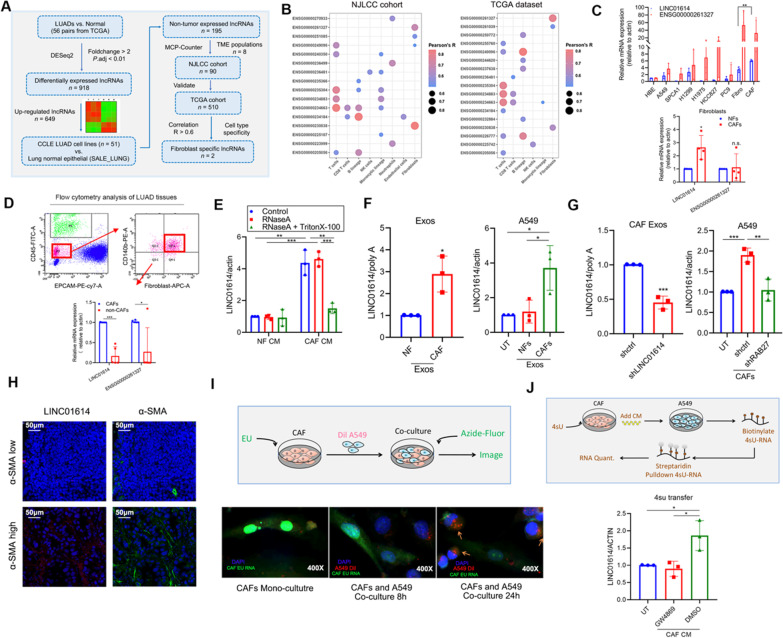
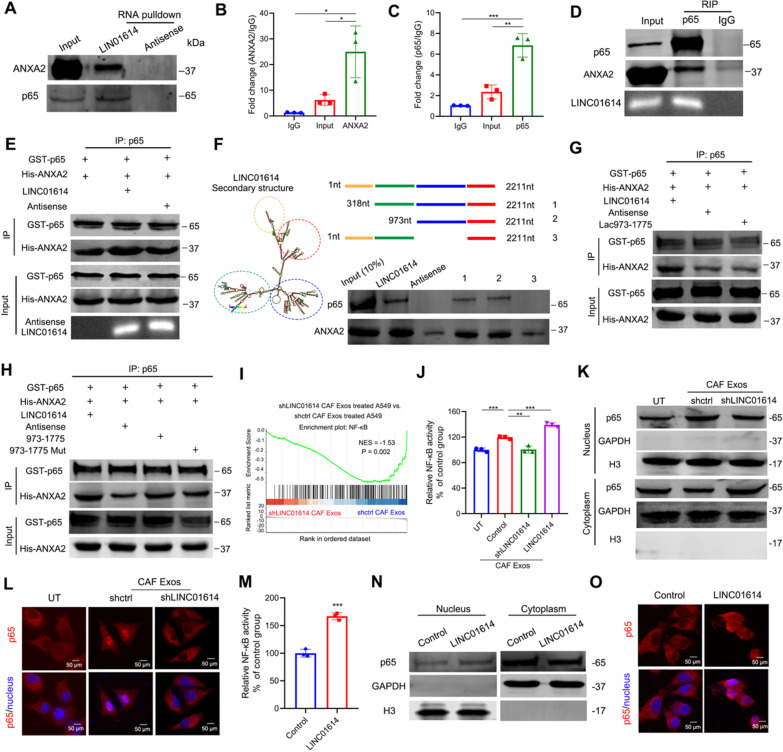
Fibroblast-specific long noncoding RNAs were screened using RNA-seq data of our NJLCC cohort, TCGA, and CCLE datasets. The expression and package of LINC01614 into exosomes were identified using flow cytometric sorting, fluorescence in situ hybridization (FISH), and quantitative reverse transcription polymerase chain reaction (RT-PCR). The transfer and functional role of LINC01614 in lung adenocarcinoma (LUAD) and CAFs were investigated using 4-thiouracil-labeled RNA transfer and gain- and loss-of-function approaches. RNA pull-down, RNA immunoprecipitation, dual-luciferase assay, gene expression microarray, and bioinformatics analysis were performed to investigate the underlying mechanisms involved.
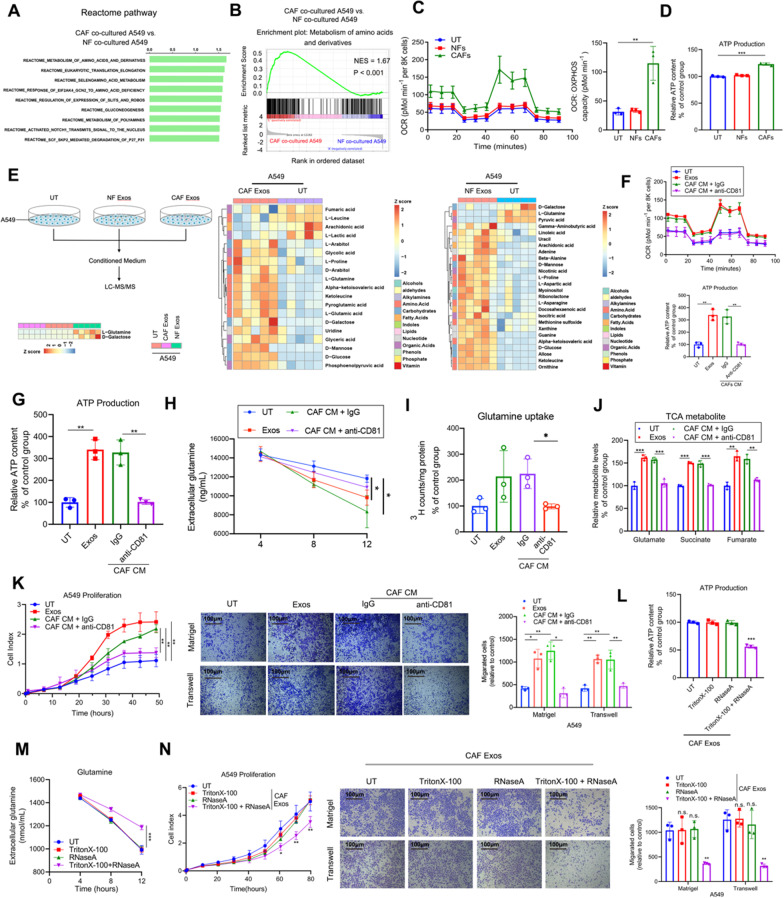
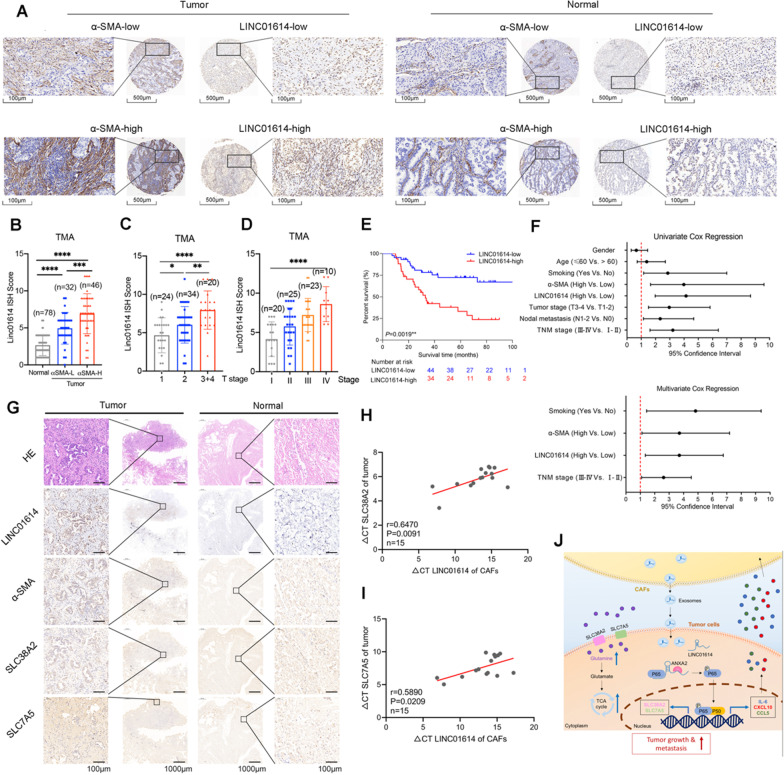
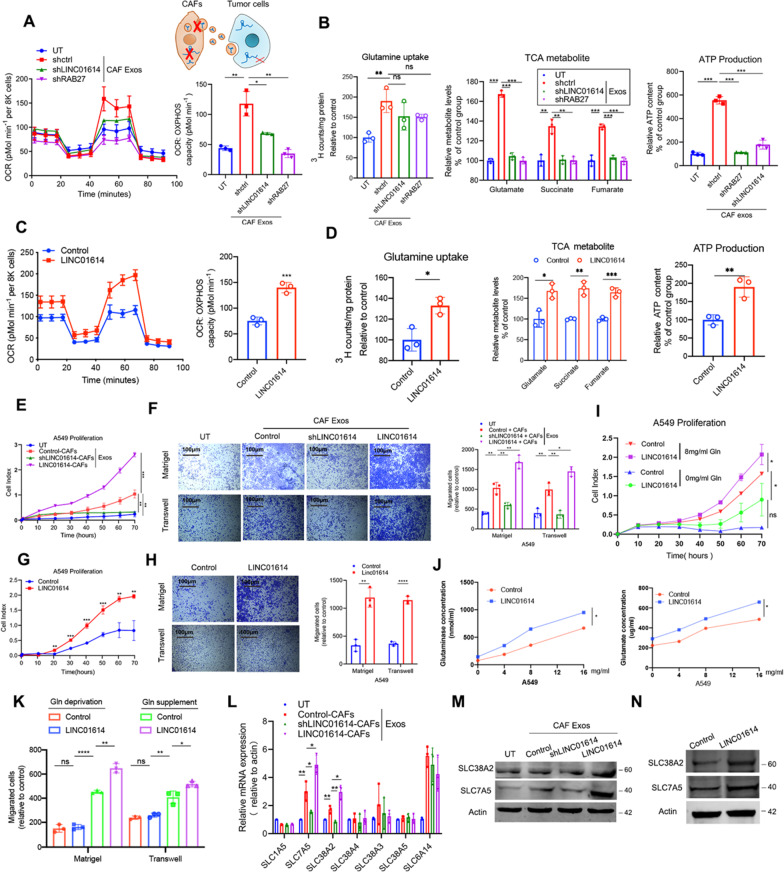
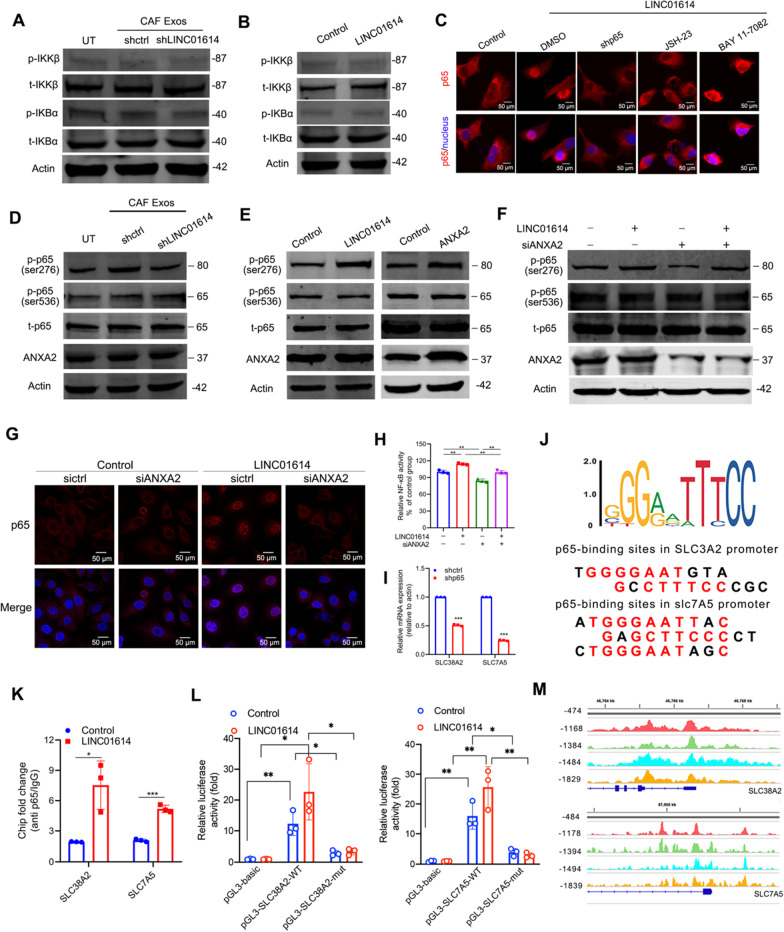
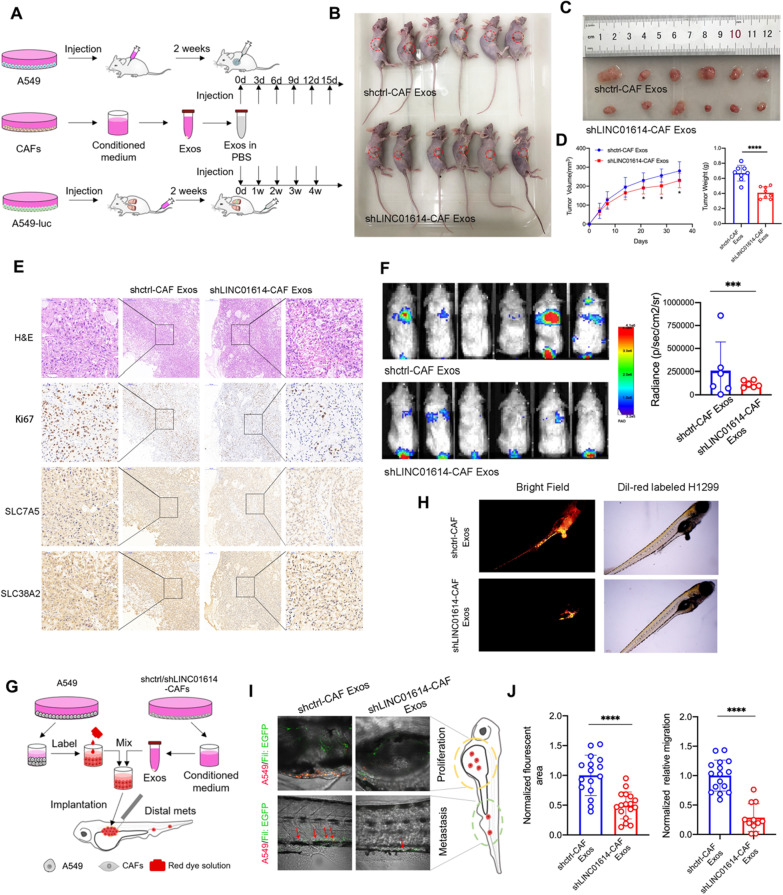
We demonstrate that cancer-associated fibroblasts (CAFs) in LUAD primarily enhance the glutamine metabolism of cancer cells. A CAF-specific long noncoding RNA, LINC01614, packaged by CAF-derived exosomes, mediates the enhancement of glutamine uptake in LUAD cells. Mechanistically, LINC01614 directly interacts with ANXA2 and p65 to facilitate the activation of NF-κB, which leads to the upregulation of the glutamine transporters SLC38A2 and SLC7A5 and eventually enhances the glutamine influx of cancer cells. Reciprocally, tumor-derived proinflammatory cytokines upregulate LINC01614 in CAFs, constituting a feedforward loop between CAFs and cancer cells. Blocking exosome-transmitted LINC01614 inhibits glutamine addiction and LUAD growth in vivo. Clinically, LINC01614 expression in CAFs is associated with the glutamine influx and poor prognosis of patients with LUAD.
Our study highlights the therapeutic potential of targeting a CAF-specific lncRNA to inhibit glutamine utilization and cancer progression in LUAD.
除了特征性的葡萄糖消耗外,最近的研究表明,癌细胞可能更喜欢从肿瘤微环境(TME)中“成瘾”特定的能量底物;然而,潜在的机制尚不清楚。
使用我们的 NJLCC 队列、TCGA 和 CCLE 数据集的 RNA-seq 数据筛选成纤维细胞特异性长非编码 RNA。使用流式细胞分选、荧光原位杂交(FISH)和定量逆转录聚合酶链反应(RT-PCR)鉴定 LINC01614 的表达和包裹到外泌体中。使用 4-硫代尿嘧啶标记的 RNA 转移和增益和功能丧失方法研究 LINC01614 在肺腺癌(LUAD)和 CAFs 中的转移和功能作用。进行 RNA 下拉、RNA 免疫沉淀、双荧光素酶测定、基因表达微阵列和生物信息学分析以研究涉及的潜在机制。
我们证明 LUAD 中的癌相关成纤维细胞(CAFs)主要增强癌细胞的谷氨酰胺代谢。一种 CAF 特异性长非编码 RNA,LINC01614,由 CAF 衍生的外泌体包裹,介导 LUAD 细胞中谷氨酰胺摄取的增强。在机制上,LINC01614 直接与 ANXA2 和 p65 相互作用,促进 NF-κB 的激活,导致谷氨酰胺转运体 SLC38A2 和 SLC7A5 的上调,最终增强癌细胞的谷氨酰胺内流。反过来,肿瘤衍生的促炎细胞因子上调 CAFs 中的 LINC01614,构成 CAFs 和癌细胞之间的正反馈回路。阻断外泌体传递的 LINC01614 抑制体内谷氨酰胺成瘾和 LUAD 生长。临床上,CAFs 中 LINC01614 的表达与 LUAD 患者的谷氨酰胺内流和预后不良相关。
我们的研究强调了靶向 CAF 特异性 lncRNA 抑制 LUAD 中谷氨酰胺利用和癌症进展的治疗潜力。