Guizhou Engineering Research Center of Industrial Key-technology for Dendrobium Nobile, Zunyi Medical University, Zunyi Medical University, Zunyi, Guizhou, China.
Joint International Research Laboratory of Ethnomedicine of Ministry of Education, Zunyi Medical University, Zunyi Medical University, Zunyi, Guizhou, China.
PeerJ. 2023 Apr 11;11:e15225. doi: 10.7717/peerj.15225. eCollection 2023.
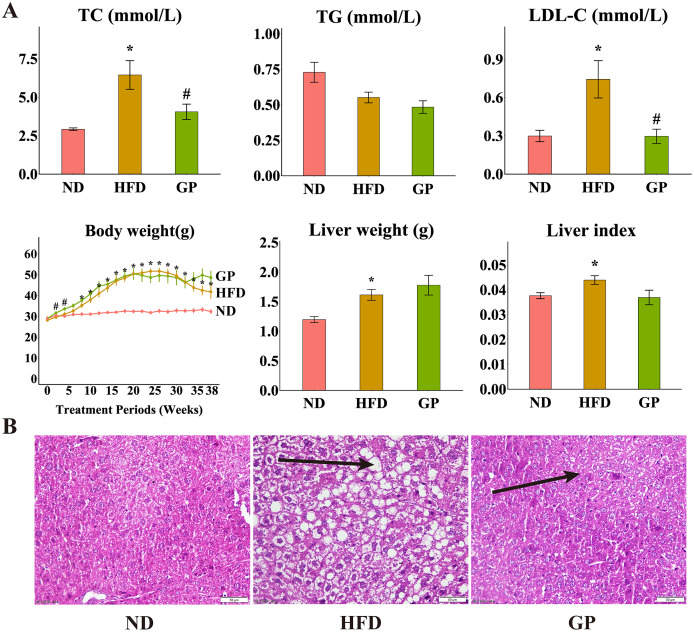
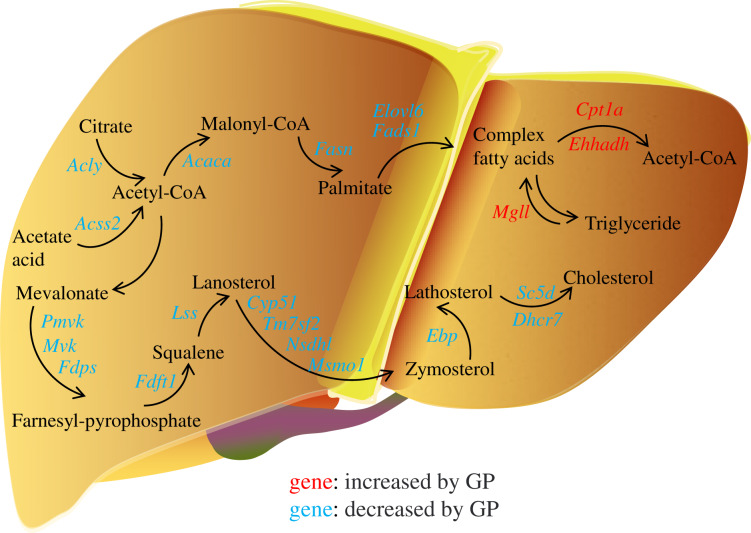
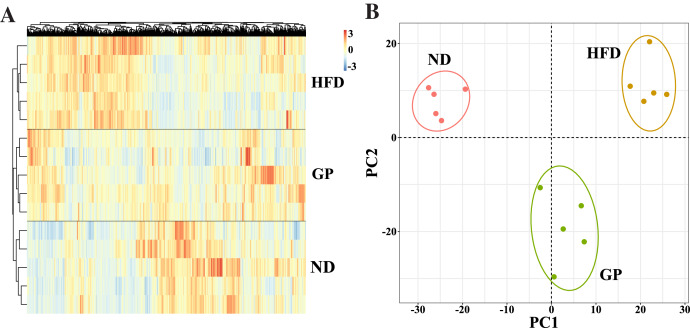
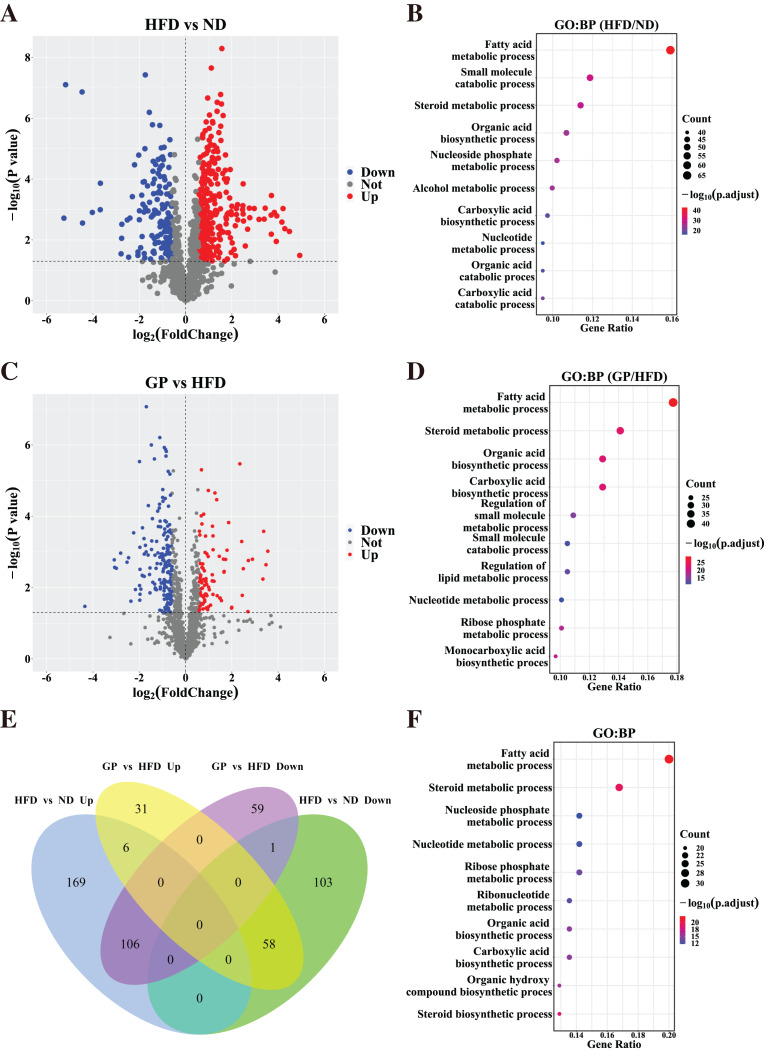
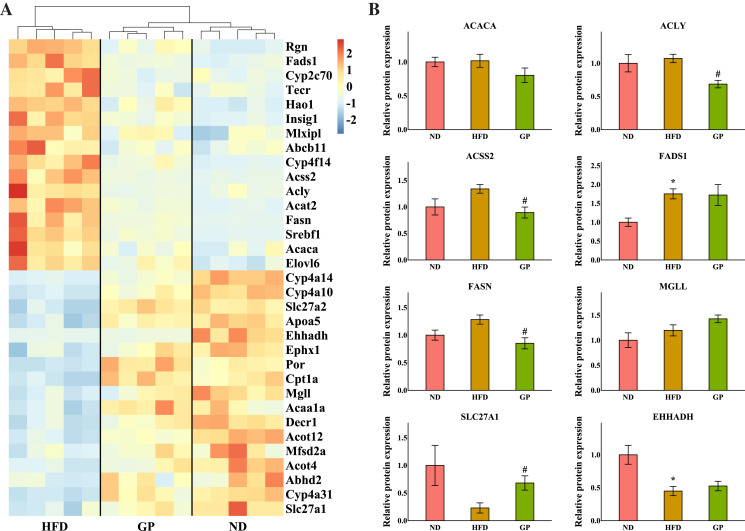
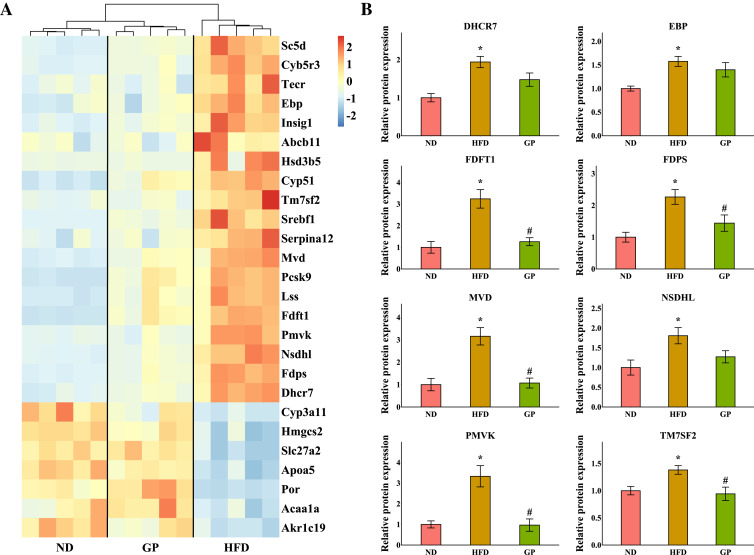
Gypenosides (GP), extracted from the traditional Chinese herb (Thunb.) Makino, have been used to treat metabolic disorders, including lipid metabolism disorders and diabetes. Although recent studies have confirmed their beneficial effects in nonalcoholic fatty liver disease (NAFLD), the underlying therapeutic mechanism remains unclear. In this study, we explored the protective mechanism of GP against NAFLD in mice and provided new insights into the prevention and treatment of NAFLD. Male C57BL6/J mice were divided into three experimental groups: normal diet, high-fat diet (HFD), and GP groups. The mice were fed an HFD for 16 weeks to establish an NAFLD model and then treated with GP for 22 weeks. The transcriptome and proteome of the mice livers were profiled using RNA sequencing and high-resolution mass spectrometry, respectively. The results showed that GP decreased serum lipid levels, liver index, and liver fat accumulation in mice. Principal component and heatmap analyses indicated that GP significantly modulated the changes in the expression of genes associated with HFD-induced NAFLD. The 164 differentially expressed genes recovered using GP were enriched in fatty acid and steroid metabolism pathways. Further results showed that GP reduced fatty acid synthesis by downregulating the expression of , , , , , , and ; modulated glycerolipid metabolism by inducing the expression of ; promoted fatty acid transportation and degradation by inducing the expression of , , and ; and reduced hepatic cholesterol synthesis by downregulating the expression of , , , , , , , , , , and . The proteomic data further indicated that GP decreased the protein expression levels of ACACA, ACLY, ACSS2, TM7SF2, EBP, FDFT1, NSDHL, PMVK, MVD, FDPS, and DHCR7 and increased those of MGLL, SLC27A1, and EHHADH. In conclusion, GP can regulate the key genes involved in hepatic lipid metabolism in NAFLD mice, providing initial evidence for the mechanisms underlying the therapeutic effect of GP in NAFLD.
绞股蓝苷(GP)是从传统中药(Thunb.)中提取的,已用于治疗代谢紊乱,包括脂质代谢紊乱和糖尿病。尽管最近的研究证实了它们在非酒精性脂肪性肝病(NAFLD)中的有益作用,但潜在的治疗机制尚不清楚。在这项研究中,我们探讨了 GP 对 NAFLD 小鼠的保护机制,为 NAFLD 的预防和治疗提供了新的见解。雄性 C57BL6/J 小鼠分为三组:正常饮食组、高脂肪饮食(HFD)组和 GP 组。HFD 喂养 16 周建立 NAFLD 模型,然后用 GP 处理 22 周。采用 RNA 测序和高分辨率质谱法分别对小鼠肝脏的转录组和蛋白质组进行了分析。结果表明,GP 可降低小鼠血清脂质水平、肝指数和肝脂肪堆积。主成分和热图分析表明,GP 显著调节了与 HFD 诱导的 NAFLD 相关的基因表达变化。GP 恢复的 164 个差异表达基因在脂肪酸和类固醇代谢途径中富集。进一步的结果表明,GP 通过下调 、 、 、 、 、 和 的表达来减少脂肪酸的合成;通过诱导 的表达来调节甘油磷脂代谢;通过诱导 、 和 的表达来促进脂肪酸的运输和降解;通过下调 的表达来减少肝内胆固醇的合成, 、 、 、 、 、 、 、 、 和 。蛋白质组学数据进一步表明,GP 降低了 ACACA、ACLY、ACSS2、TM7SF2、EBP、FDFT1、NSDHL、PMVK、MVD、FDPS 和 DHCR7 的蛋白表达水平,增加了 MGLL、SLC27A1 和 EHHADH 的蛋白表达水平。总之,GP 可调节 NAFLD 小鼠肝脏脂质代谢相关的关键基因,为 GP 在 NAFLD 中的治疗作用机制提供了初步证据。