National Engineering Technology Research Center for Combined Vaccines, Wuhan, People's Republic of China.
The Second Laboratory of Viral Vaccine Research, Wuhan Institute of Biological Products Co. Ltd., Wuhan, People's Republic of China.
Emerg Microbes Infect. 2023 Dec;12(1):2202278. doi: 10.1080/22221751.2023.2202278.
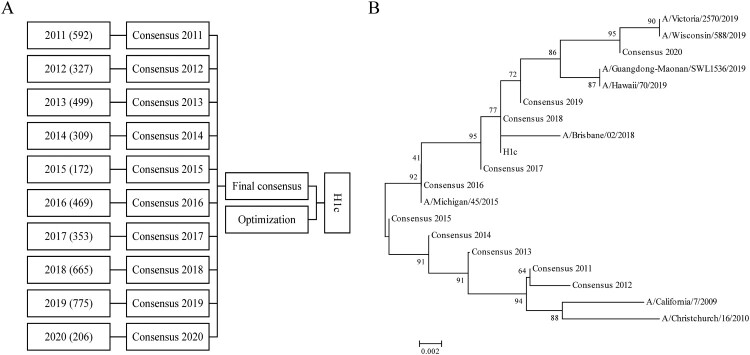
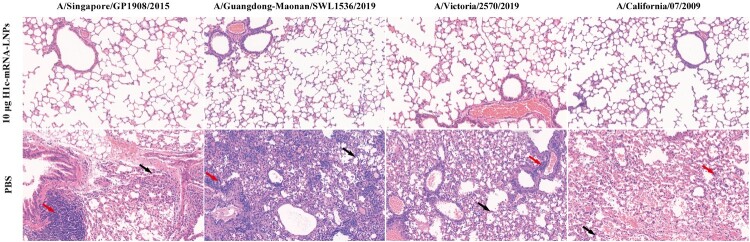
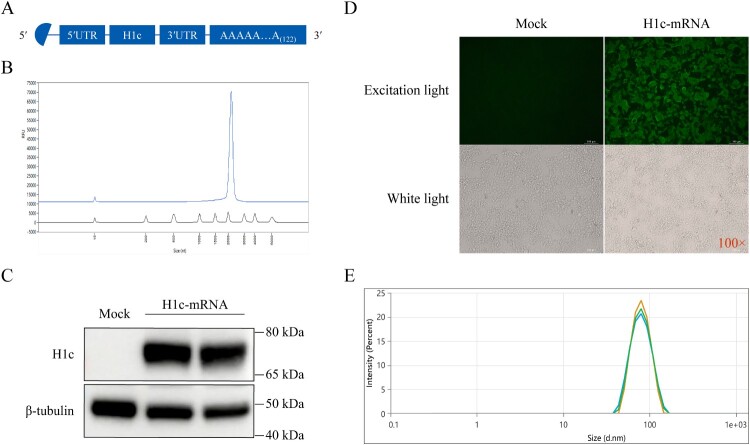
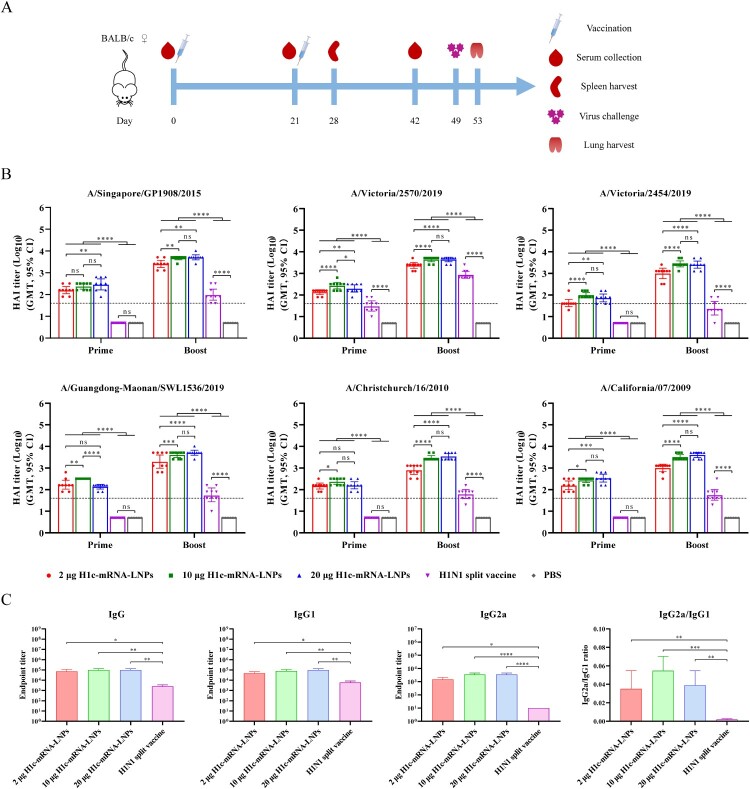
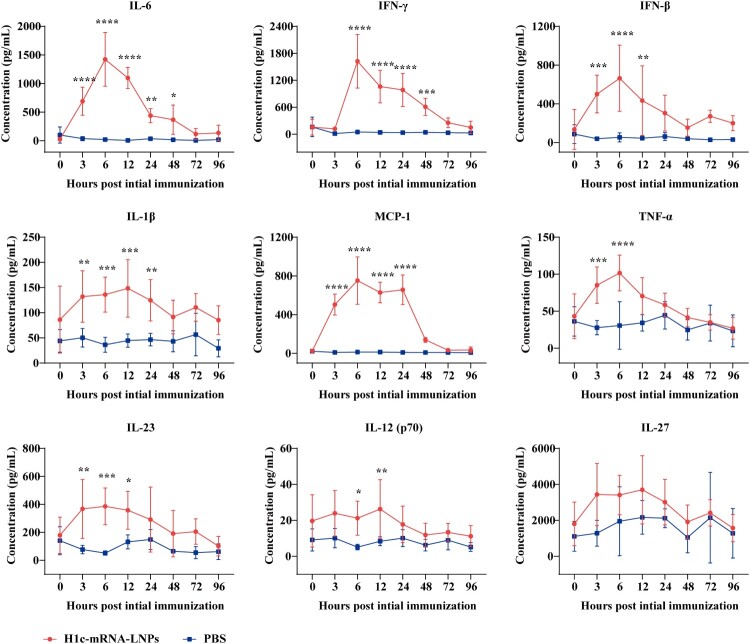
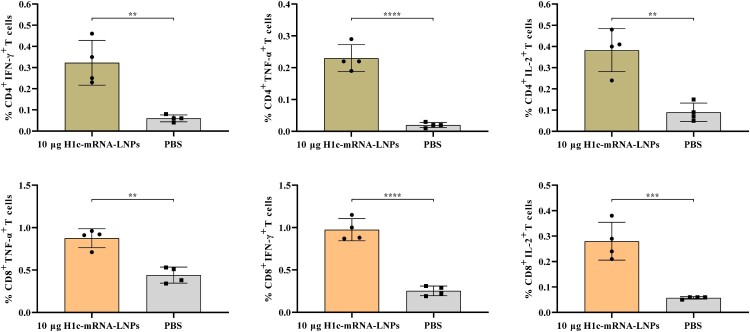
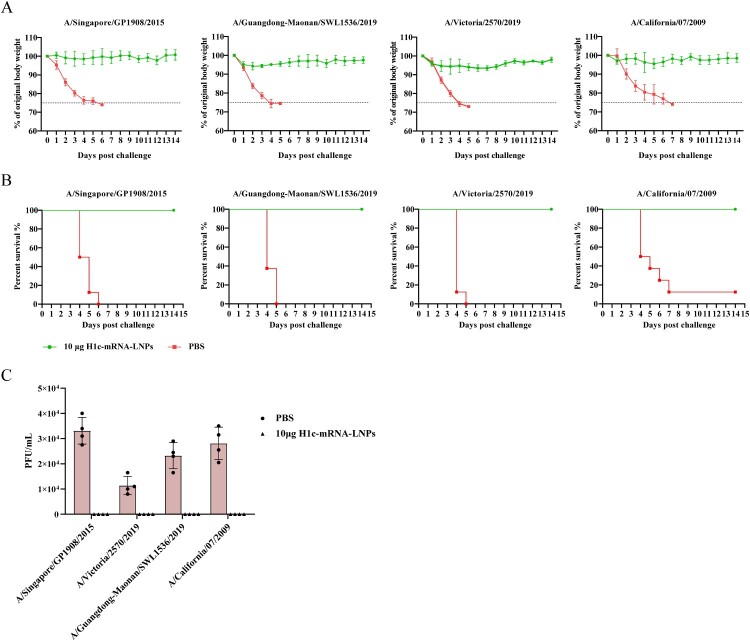
Seasonal influenza, causes hundreds of thousands of deaths annually, posing a severe threat to human health. Currently available influenza vaccines are targeted only at specific strains or conserved epitopes; however, these vaccines are not completely efficacious because influenza viruses can undergo mutation during circulation, leading to antigenic mismatch between recommended strains and circulating strains and elusion from the immune system. Therefore, developing an influenza vaccine that is quick, effective, and broadly protective has become crucial, and the integral part of hemagglutinin (HA) remains an ideal target for vaccine development. This study developed a lipid nanoparticle-encapsulated nucleoside-modified mRNA vaccine (mRNA-LNPs) encoding a consensus full-length HA sequence (H1c) and evaluated its protective efficacy and immunogenicity through in vitro and in vivo assays. Following two intramuscular immunizations (2, 10 µg, or 20 µg) at a 3-week interval in BALB/c mice, H1c-mRNA-LNP vaccine induced strong antibodies as shown in the hemagglutination-inhibition test and protective neutralizing antibodies against numerous heterologous H1N1 influenza viruses as shown in the microneutralization assay. Additionally, both Th1- and Th2-biased cellular immune responses were elicited, with the Th1-biased response being stronger. Two doses of the H1c-mRNA-LNP vaccine could neutralize a panel of heterologous H1N1 influenza viruses and could confer protection in mice. Taken together, these findings suggest that the H1c-mRNA-LNP vaccine encoding a consensus full-length HA is a feasible strategy for developing a cross-protective vaccine against a panel of heterologous H1N1 influenza viruses.
季节性流感每年导致数十万人死亡,对人类健康构成严重威胁。目前可用的流感疫苗仅针对特定株或保守表位;然而,这些疫苗并非完全有效,因为流感病毒在循环过程中会发生突变,导致推荐株与流行株之间的抗原不匹配,并逃避免疫系统。因此,开发一种快速、有效且广泛保护的流感疫苗变得至关重要,而血凝素(HA)的整体部分仍然是疫苗开发的理想目标。本研究开发了一种包裹核苷修饰 mRNA 的脂质纳米颗粒疫苗(mRNA-LNPs),编码共识全长 HA 序列(H1c),并通过体外和体内试验评估了其保护效力和免疫原性。在 BALB/c 小鼠中,间隔 3 周进行两次肌肉内免疫(2、10μg 或 20μg)后,H1c-mRNA-LNP 疫苗在血凝抑制试验中诱导了强烈的抗体,在微量中和试验中诱导了针对多种异源 H1N1 流感病毒的保护性中和抗体。此外,还引发了 Th1 和 Th2 偏向的细胞免疫反应,Th1 偏向反应更强。两剂 H1c-mRNA-LNP 疫苗可中和一组异源 H1N1 流感病毒,并可在小鼠中提供保护。总之,这些发现表明,编码共识全长 HA 的 H1c-mRNA-LNP 疫苗是开发针对一组异源 H1N1 流感病毒的交叉保护疫苗的可行策略。