Department of Cancer Biology, Wake Forest School of Medicine, Winston-Salem, North Carolina, USA.
Department of Internal Medicine, Section on Gerontology and Geriatric Medicine, Wake Forest School of Medicine, Winston-Salem, North Carolina, USA.
Alzheimers Dement. 2023 Nov;19(11):4952-4966. doi: 10.1002/alz.13055. Epub 2023 Apr 18.
Brain cell-derived small extracellular vesicles (sEVs) in blood offer unique cellular and molecular information related to the onset and progression of Alzheimer's disease (AD). We simultaneously enriched six specific sEV subtypes from the plasma and analyzed a selected panel of microRNAs (miRNAs) in older adults with/without cognitive impairment.
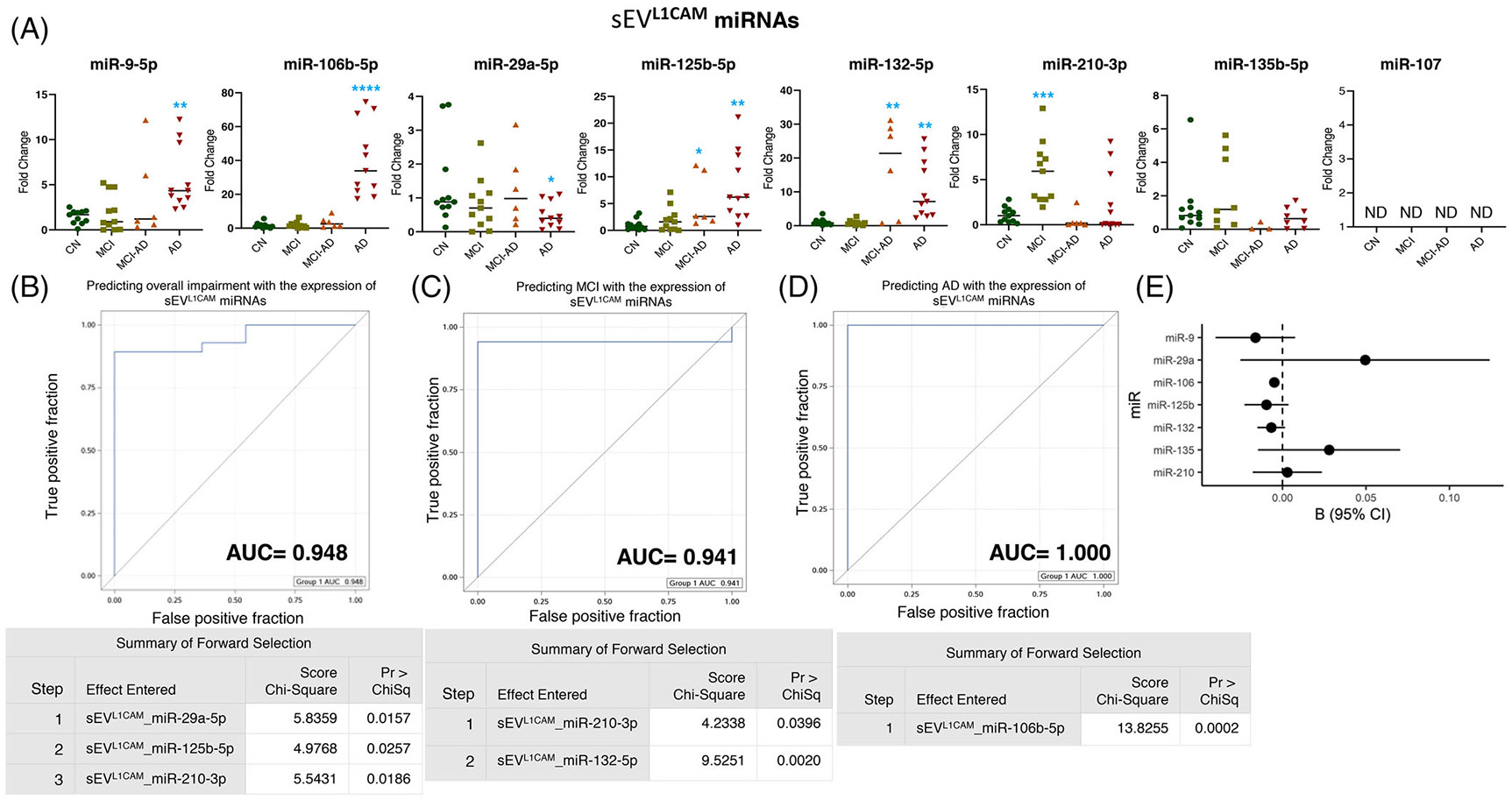
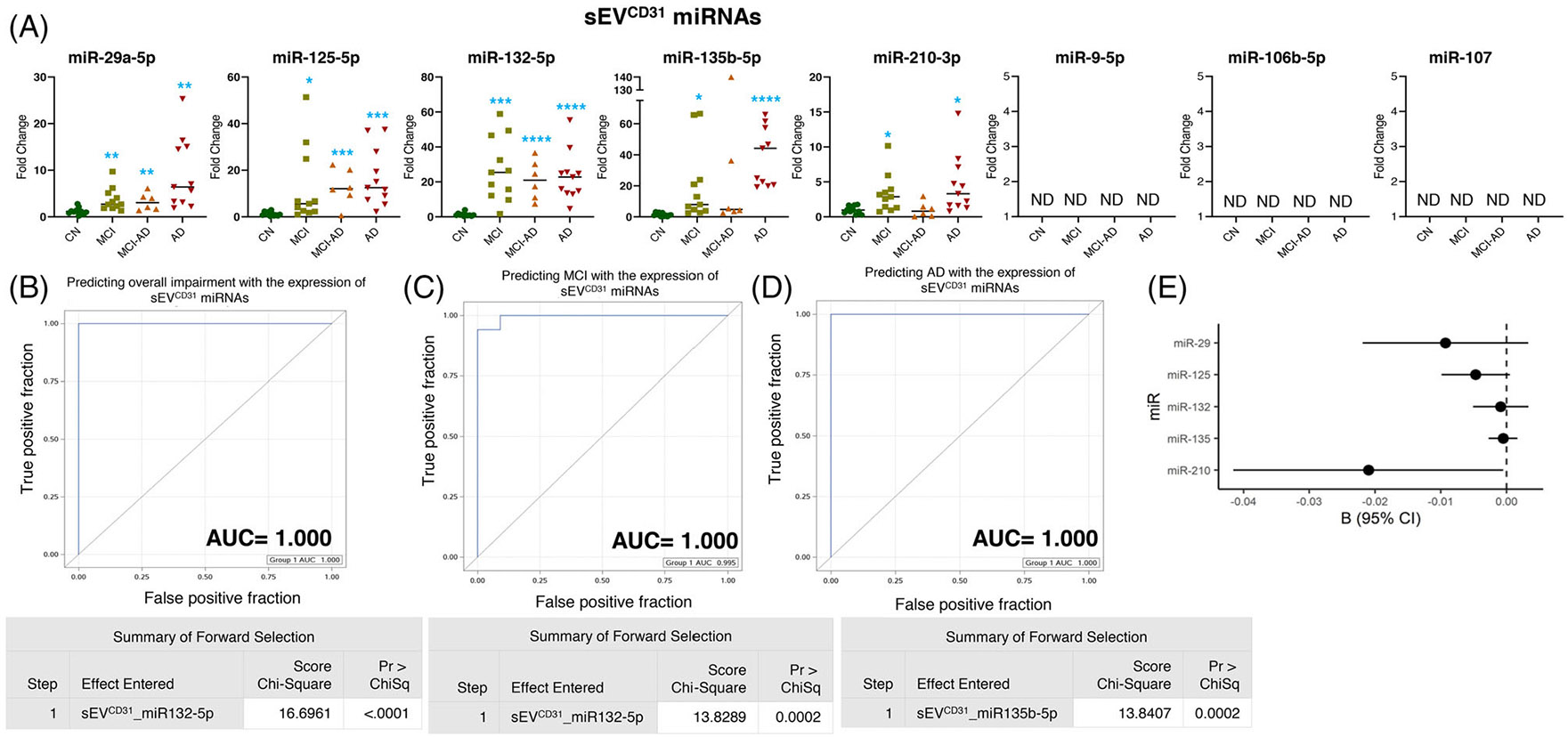
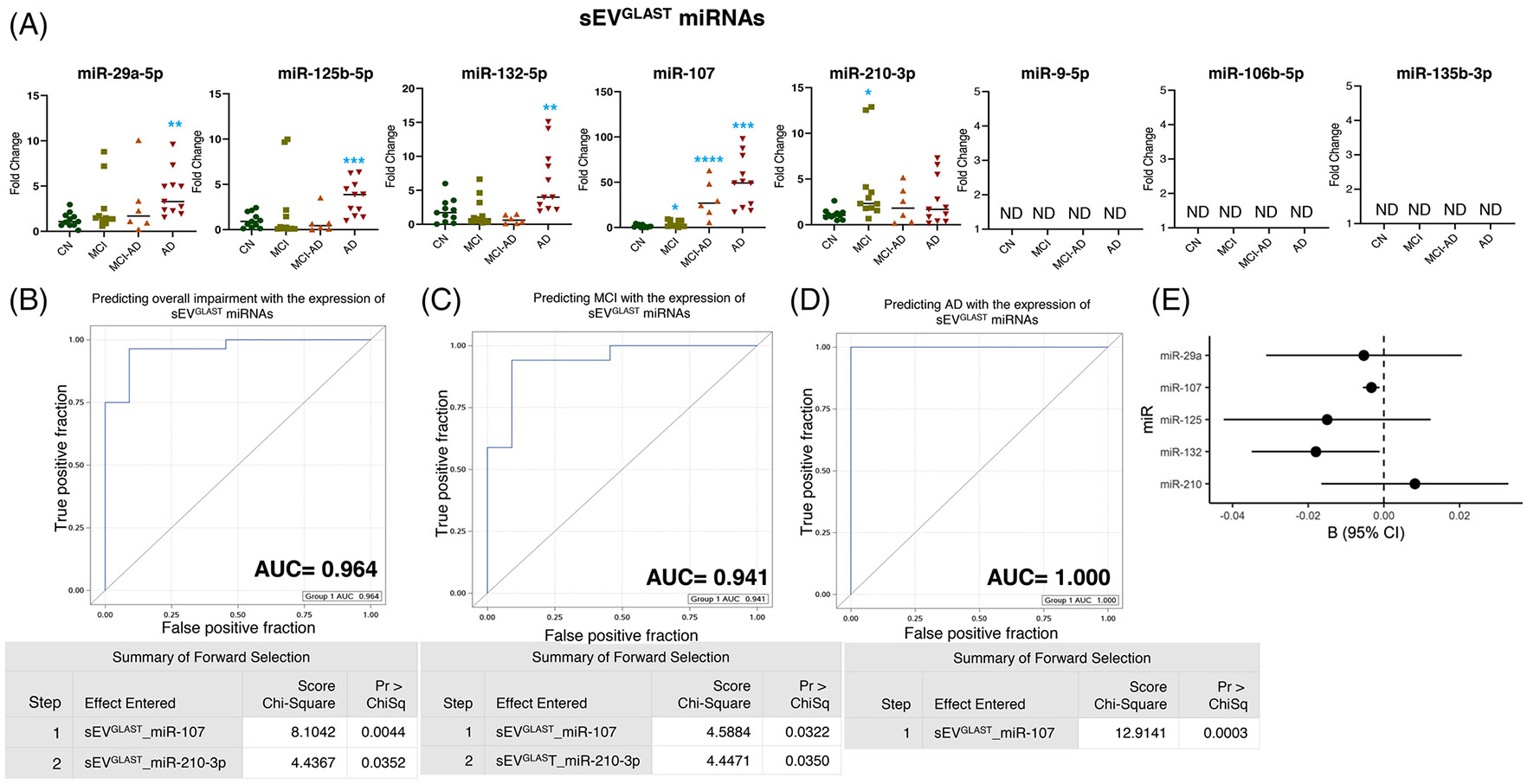
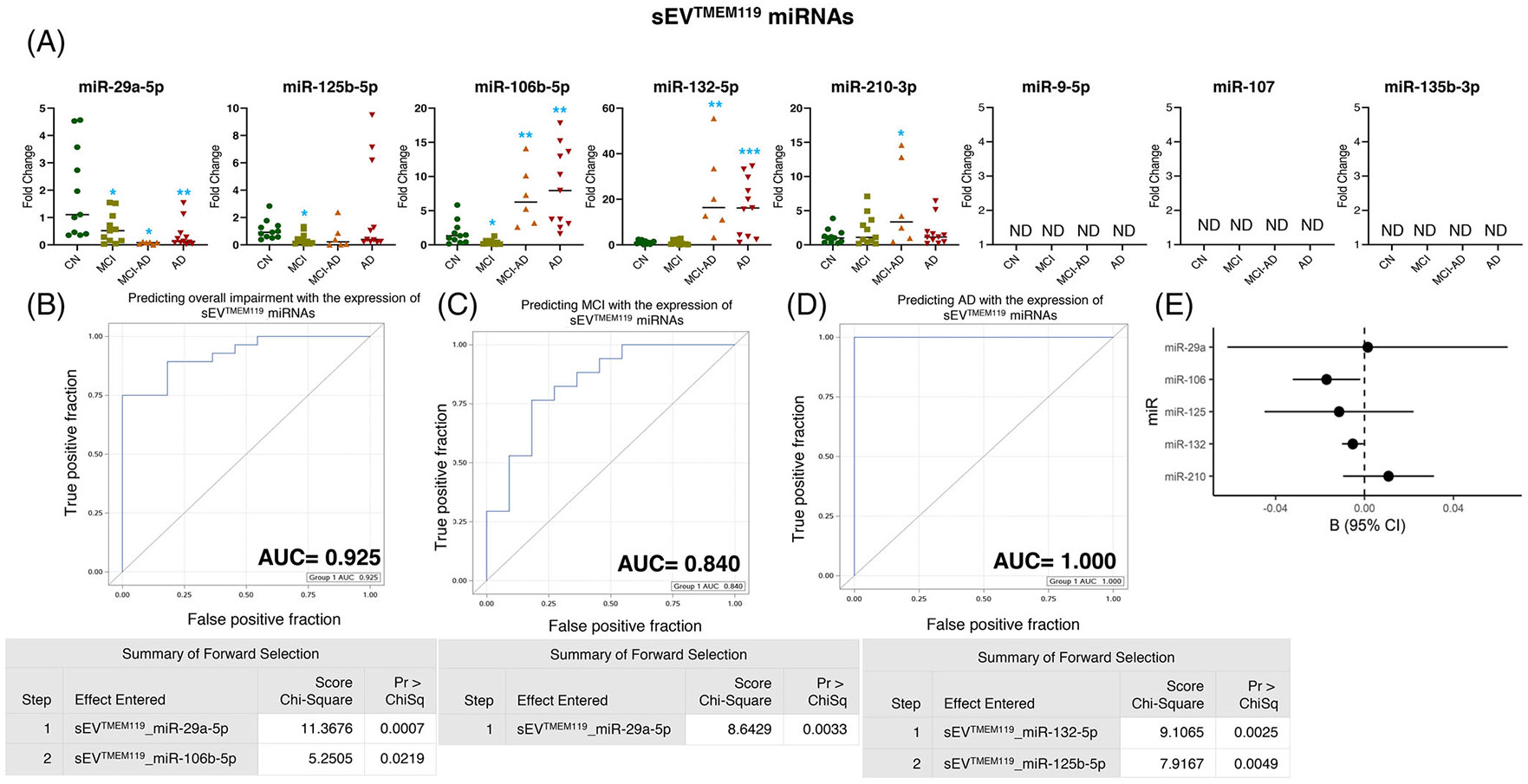
Total sEVs were isolated from the plasma of participants with normal cognition (CN; n = 11), mild cognitive impairment (MCI; n = 11), MCI conversion to AD dementia (MCI-AD; n = 6), and AD dementia (n = 11). Various brain cell-derived sEVs (from neurons, astrocytes, microglia, oligodendrocytes, pericytes, and endothelial cells) were enriched and analyzed for specific miRNAs.
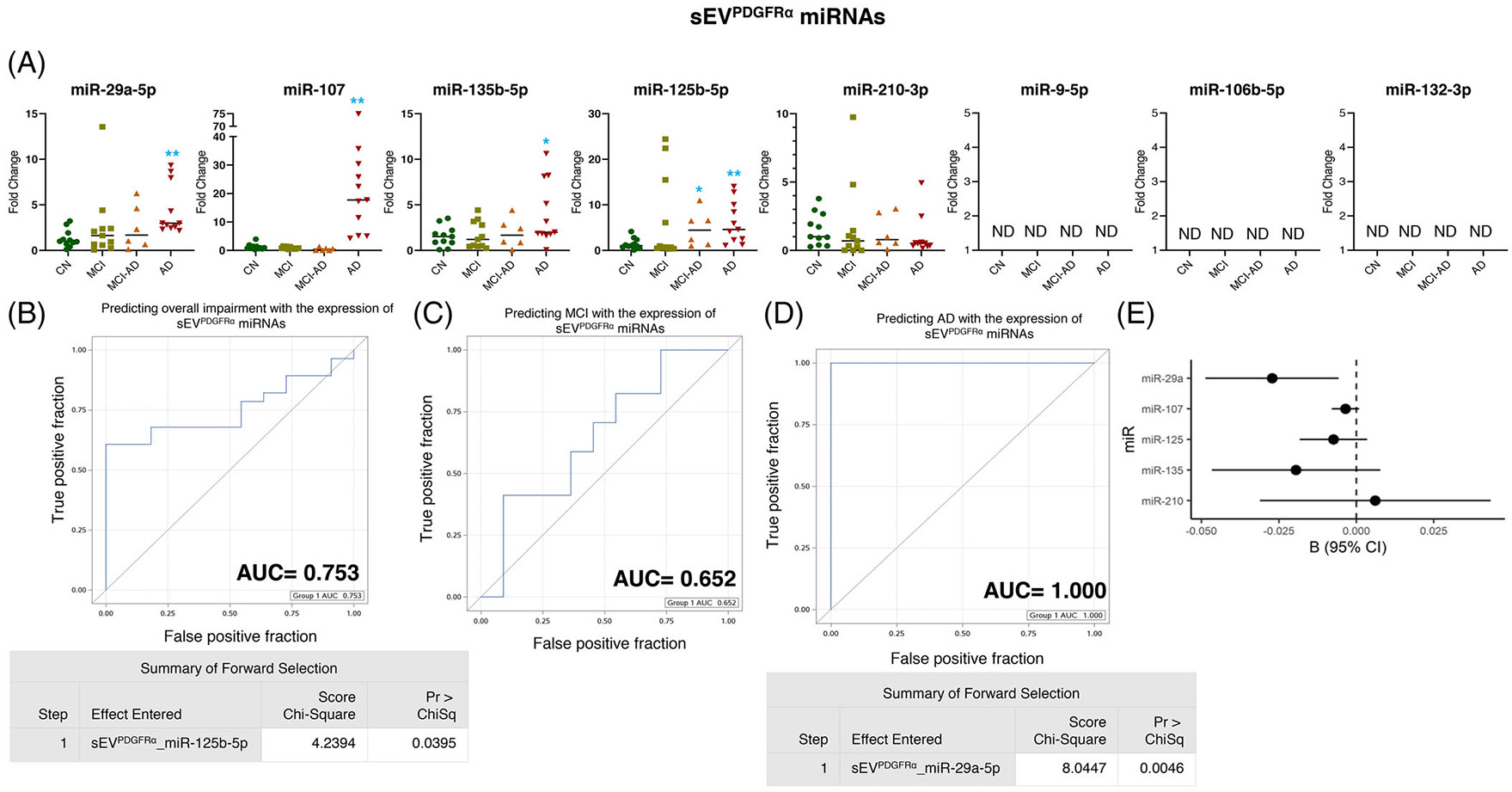
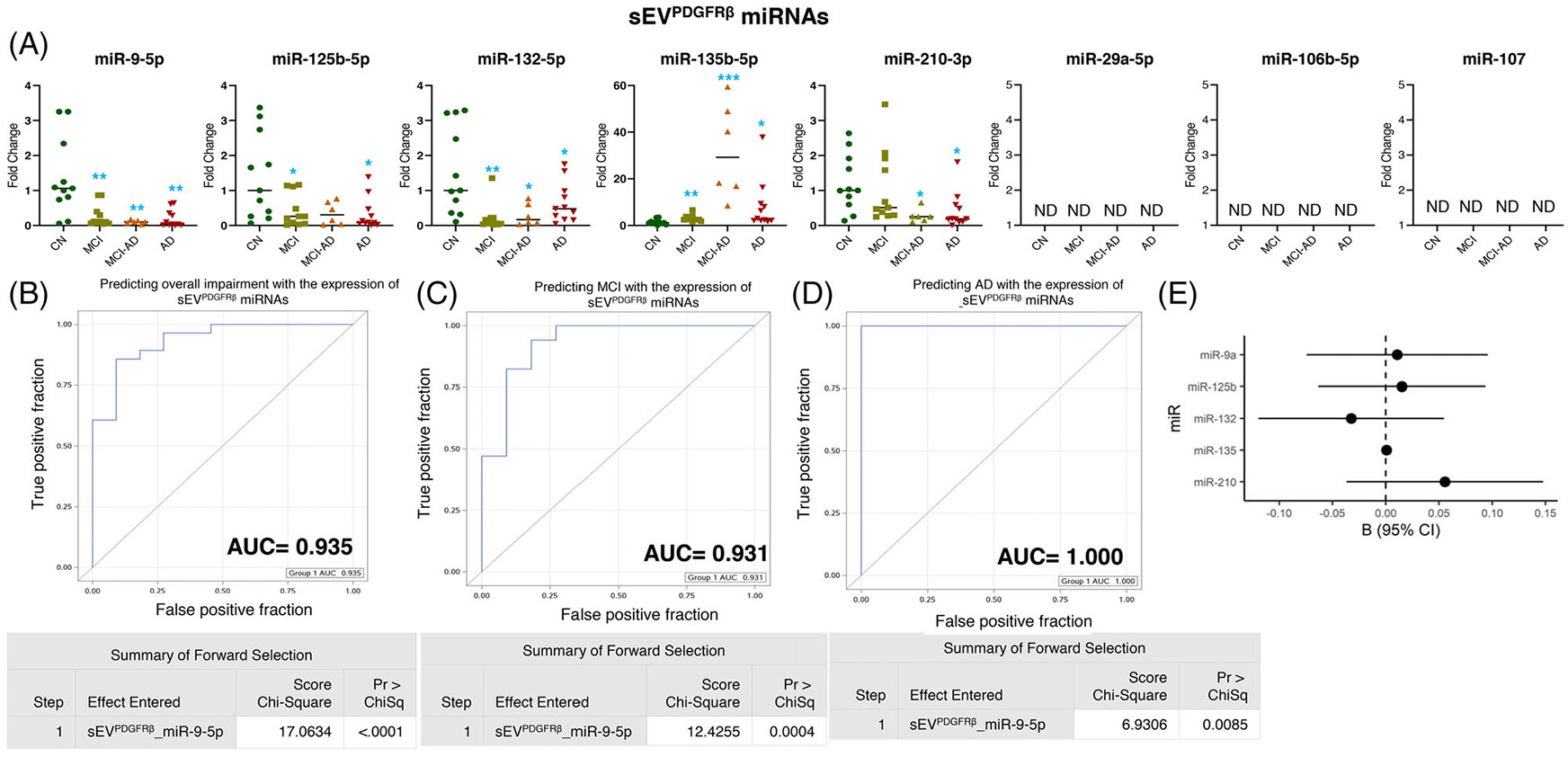
miRNAs in sEV subtypes differentially expressed in MCI, MCI-AD, and AD dementia compared to the CN group clearly distinguished dementia status, with an area under the curve (AUC) > 0.90 and correlated with the temporal cortical region thickness on magnetic resonance imaging (MRI).
miRNA analyses in specific sEVs could serve as a novel blood-based molecular biomarker for AD.
Multiple brain cell-derived small extracellular vesicles (sEVs) could be isolated simultaneously from blood. MicroRNA (miRNA) expression in sEVs could detect Alzheimer's disease (AD) with high specificity and sensitivity. miRNA expression in sEVs correlated with cortical region thickness on magnetic resonance imaging (MRI). Altered expression of miRNAs in sEV and sEV suggested vascular dysfunction. miRNA expression in sEVs could predict the activation state of specific brain cell types.
血液中的脑细胞衍生小细胞外囊泡(sEVs)提供了与阿尔茨海默病(AD)发病和进展相关的独特细胞和分子信息。我们从血浆中同时富集了六种特定的 sEV 亚型,并分析了认知障碍老年人(CN;n=11)、轻度认知障碍(MCI;n=11)、MCI 向 AD 痴呆转化(MCI-AD;n=6)和 AD 痴呆(n=11)的选定 miRNA 组。
从认知正常(CN;n=11)、轻度认知障碍(MCI;n=11)、MCI 向 AD 痴呆转化(MCI-AD;n=6)和 AD 痴呆(n=11)参与者的血浆中分离总 sEV。各种脑细胞衍生的 sEV(来自神经元、星形胶质细胞、小胶质细胞、少突胶质细胞、周细胞和内皮细胞)被富集并分析特定的 miRNA。
与 CN 组相比,MCI、MCI-AD 和 AD 痴呆患者 sEV 亚型中的 miRNA 表达差异明显区分了痴呆状态,曲线下面积(AUC)>0.90,与磁共振成像(MRI)上颞皮质区域厚度相关。
sEV 中 miRNA 的分析可以作为 AD 的新型血液分子生物标志物。
可以从血液中同时分离出多种脑细胞衍生的 sEV。sEV 中 miRNA 的表达可以高度特异性和敏感性地检测 AD。sEV 中 miRNA 的表达与 MRI 上皮质区域厚度相关。sEV 和 sEV 中 miRNA 的改变提示血管功能障碍。sEV 中 miRNA 的表达可以预测特定脑区的激活状态。