Nunes Tiago D G, Slawinska Magdalena W, Lindner Heike, Raissig Michael T
Centre for Organismal Studies Heidelberg, Heidelberg University, Heidelberg, Germany.
Institute of Plant Sciences, University of Bern, Bern, Switzerland.
Quant Plant Biol. 2022 Mar 9;3:e6. doi: 10.1017/qpb.2021.19. eCollection 2022.
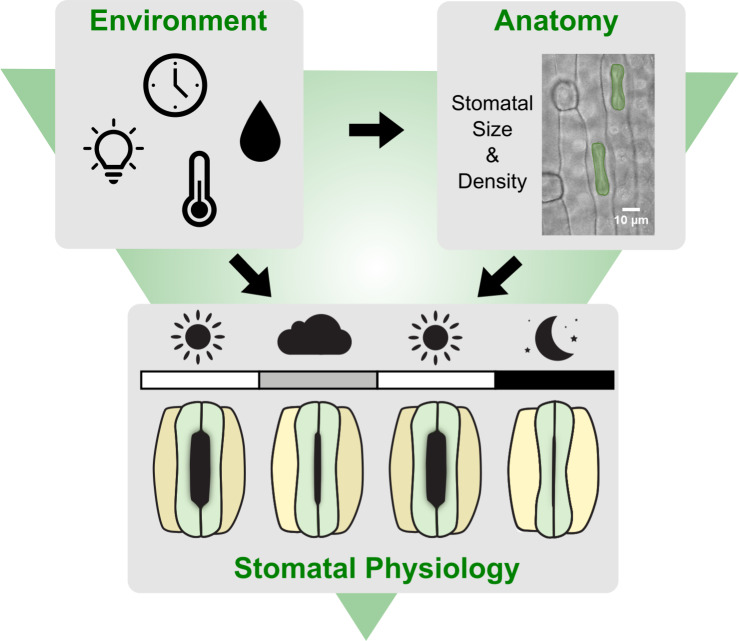
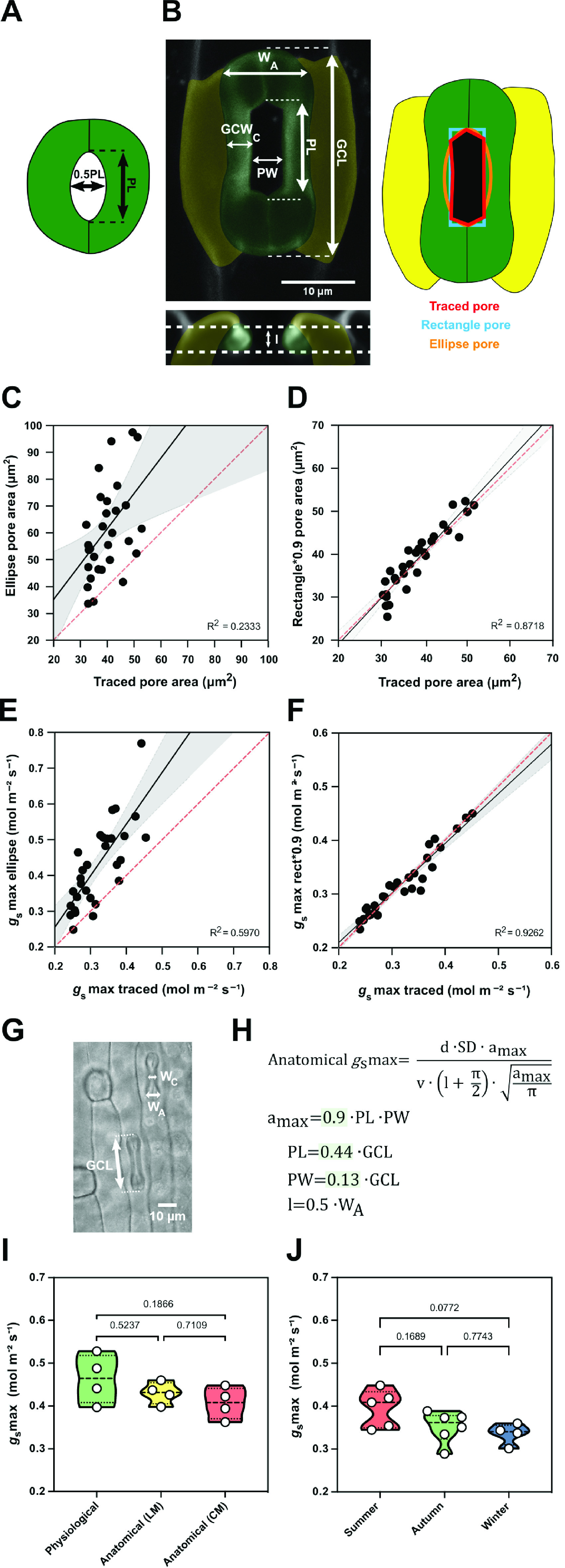
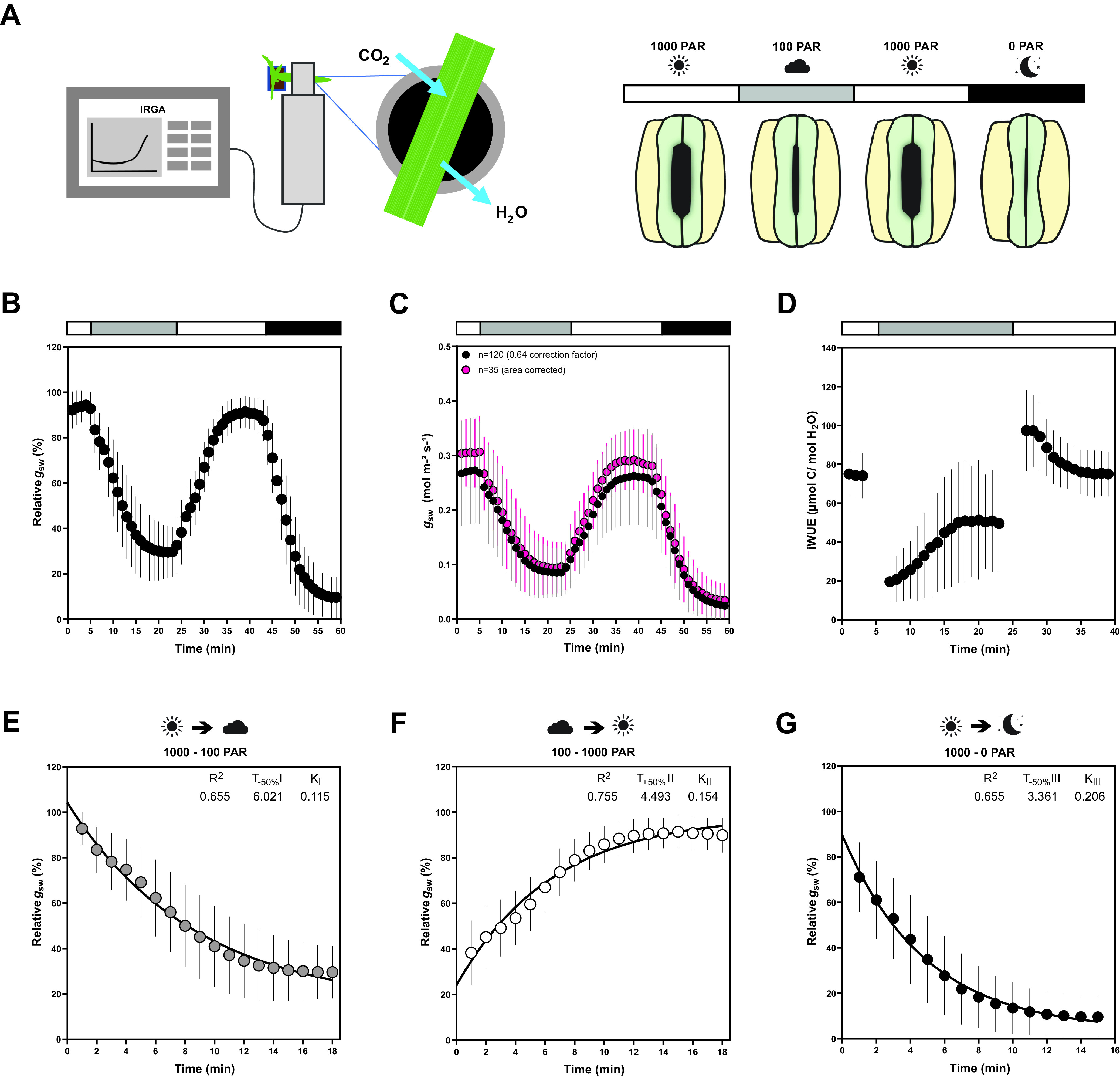
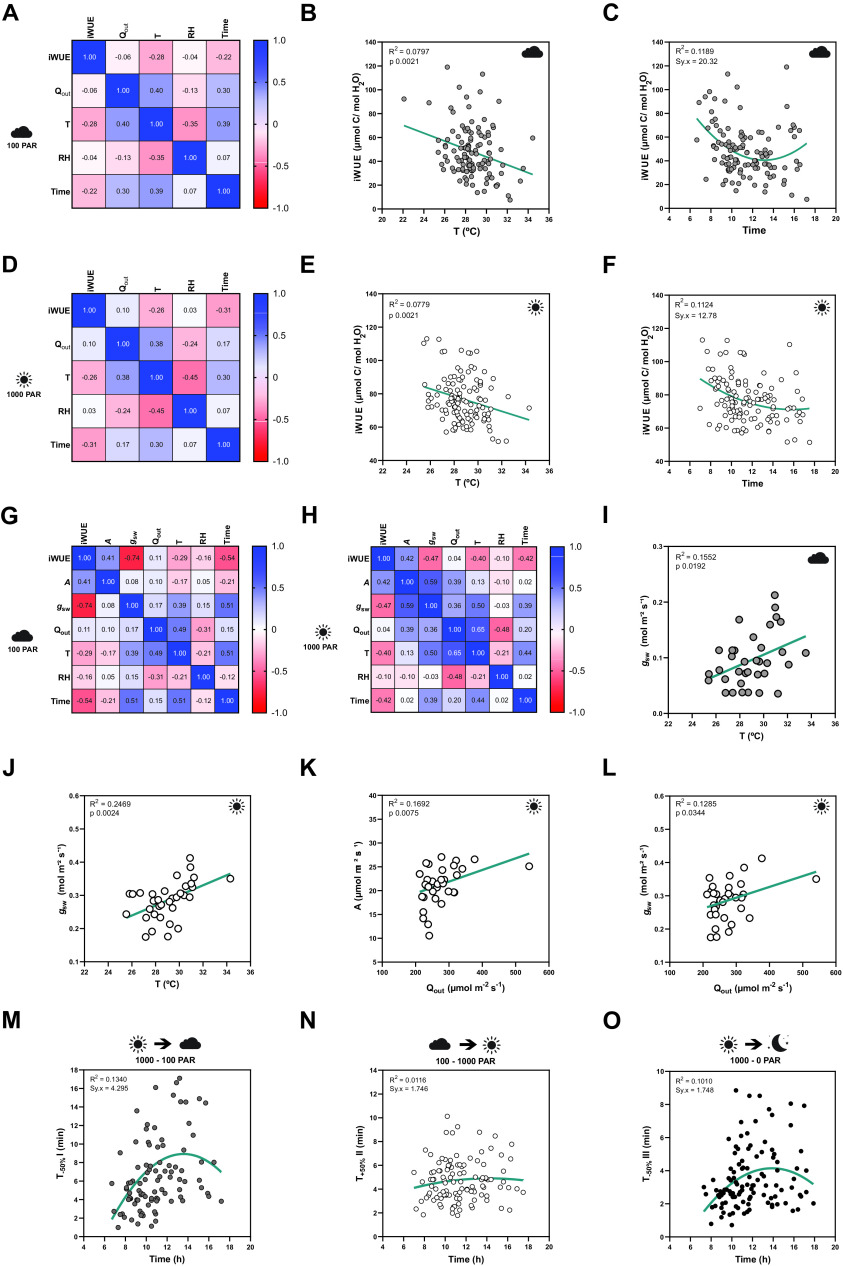
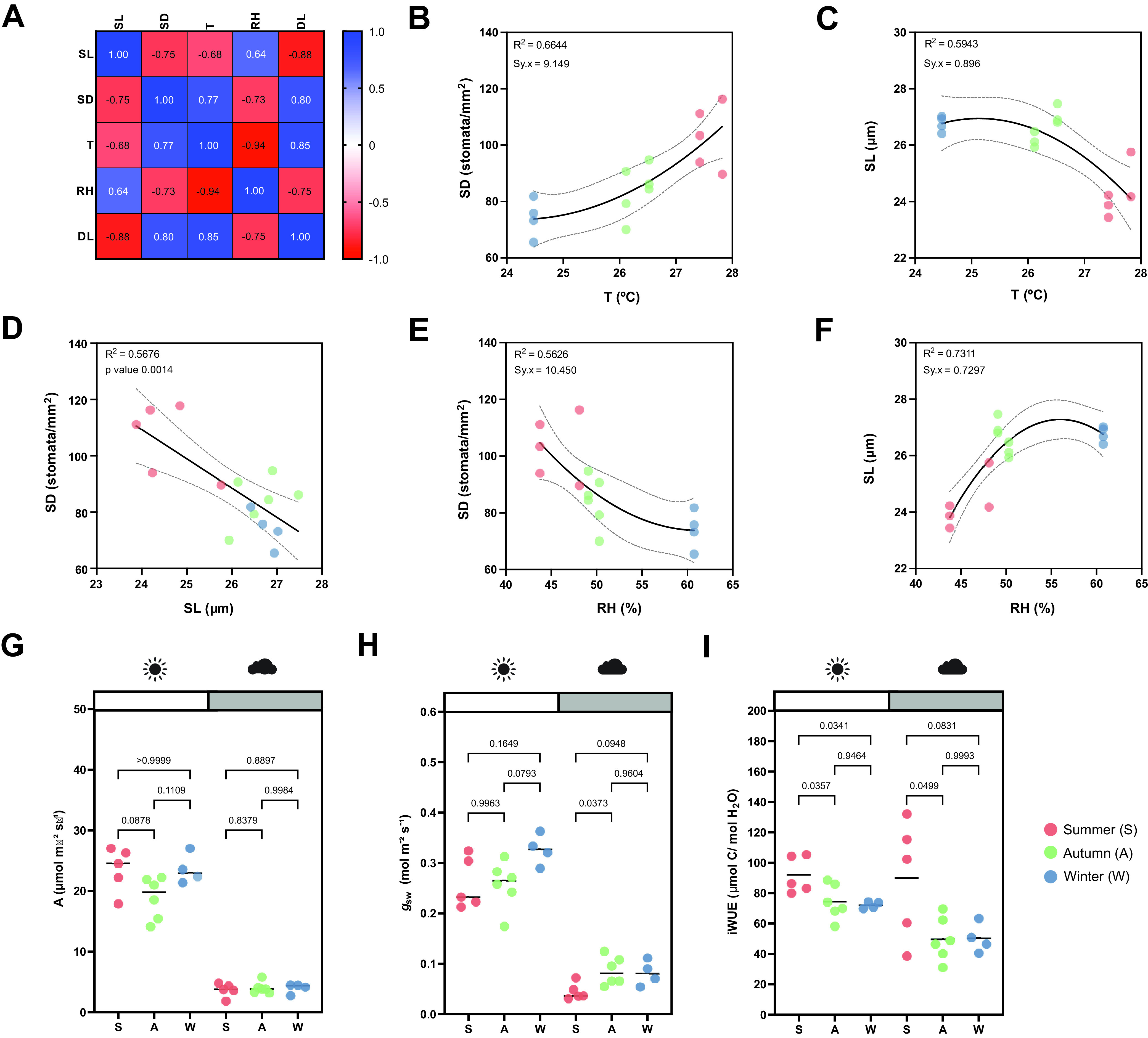
Stomata are cellular pores on the leaf epidermis that allow plants to regulate carbon assimilation and water loss. Stomata integrate environmental signals to regulate pore apertures and adapt gas exchange to fluctuating conditions. Here, we quantified intraspecific plasticity of stomatal gas exchange and anatomy in response to seasonal variation in . Over the course of 2 years, we (a) used infrared gas analysis to assess light response kinetics of 120 Bd21-3 wild-type individuals in an environmentally fluctuating greenhouse and (b) microscopically determined the seasonal variability of stomatal anatomy in a subset of these plants. We observed systemic environmental effects on gas exchange measurements and remarkable intraspecific plasticity of stomatal anatomical traits. To reliably link anatomical variation to gas exchange, we adjusted anatomical max calculations for grass stomatal morphology. We propose that systemic effects and variability in stomatal anatomy should be accounted for in long-term gas exchange studies.
气孔是叶片表皮上的细胞孔隙,使植物能够调节碳同化和水分流失。气孔整合环境信号以调节气孔孔径,并使气体交换适应波动的环境条件。在此,我们量化了气孔气体交换和解剖结构的种内可塑性,以响应[此处原文缺失相关内容]的季节变化。在两年的时间里,我们(a)使用红外气体分析法评估了120株Bd21-3野生型个体在环境波动的温室中的光响应动力学,以及(b)通过显微镜确定了这些植物子集的气孔解剖结构的季节变异性。我们观察到了对气体交换测量的系统性环境影响以及气孔解剖特征显著的种内可塑性。为了可靠地将解剖变异与气体交换联系起来,我们针对禾本科植物气孔形态调整了解剖学最大计算值。我们建议在长期气体交换研究中应考虑系统性影响和气孔解剖结构的变异性。