Genome Institute of Singapore, Agency for Science, Technology, and Research (A* STAR), Singapore, Singapore.
Department of Laboratory Medicine and Pathology, University of Washington, Seattle, WA, 98195, USA.
Geroscience. 2023 Aug;45(4):2161-2178. doi: 10.1007/s11357-023-00796-4. Epub 2023 Apr 22.
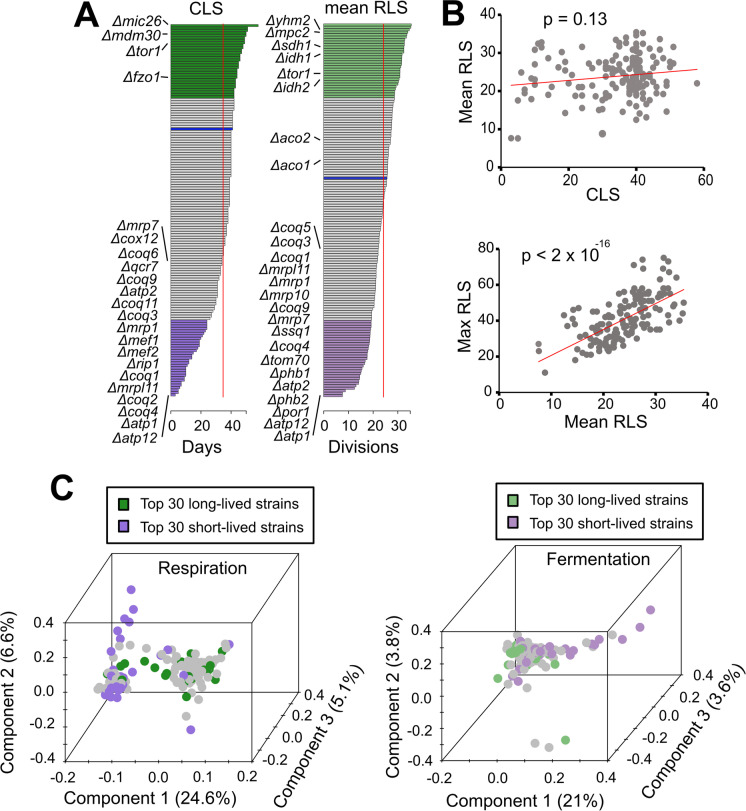
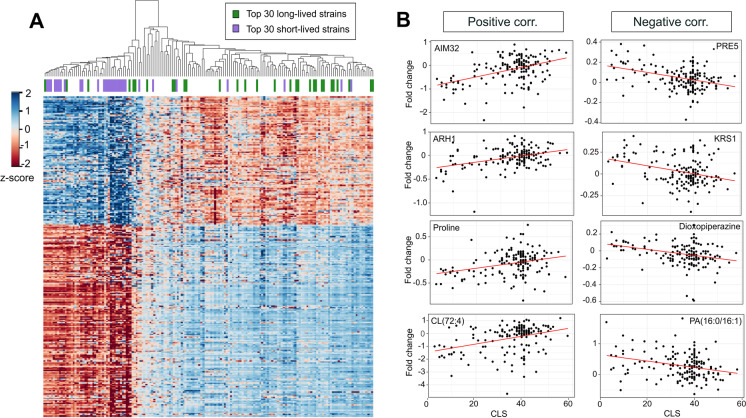
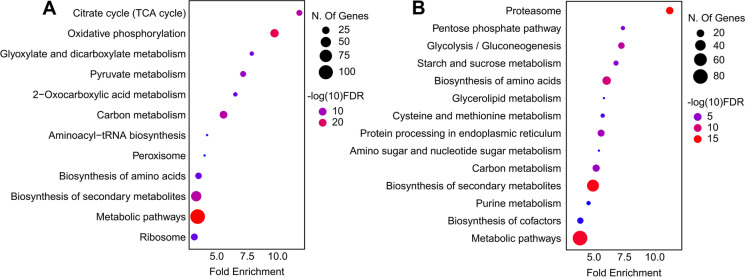
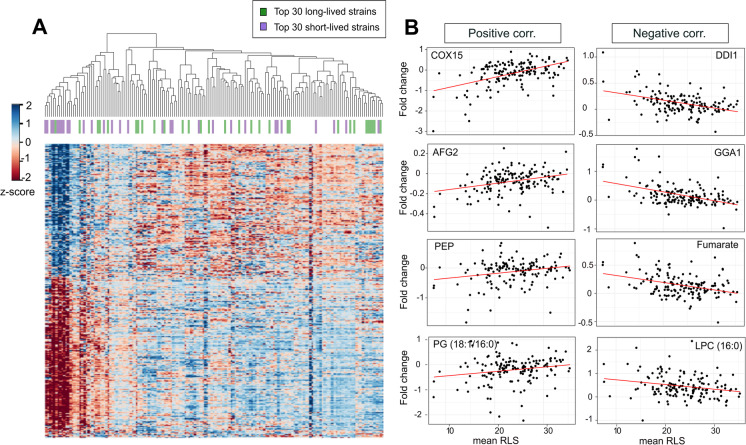
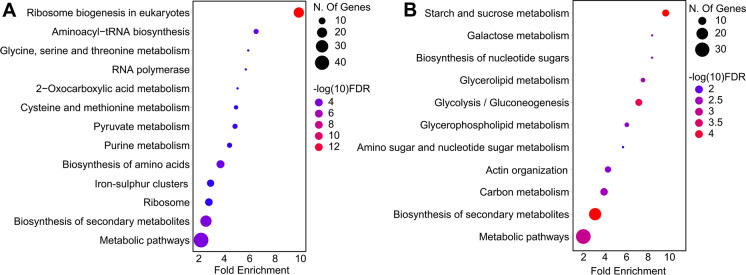
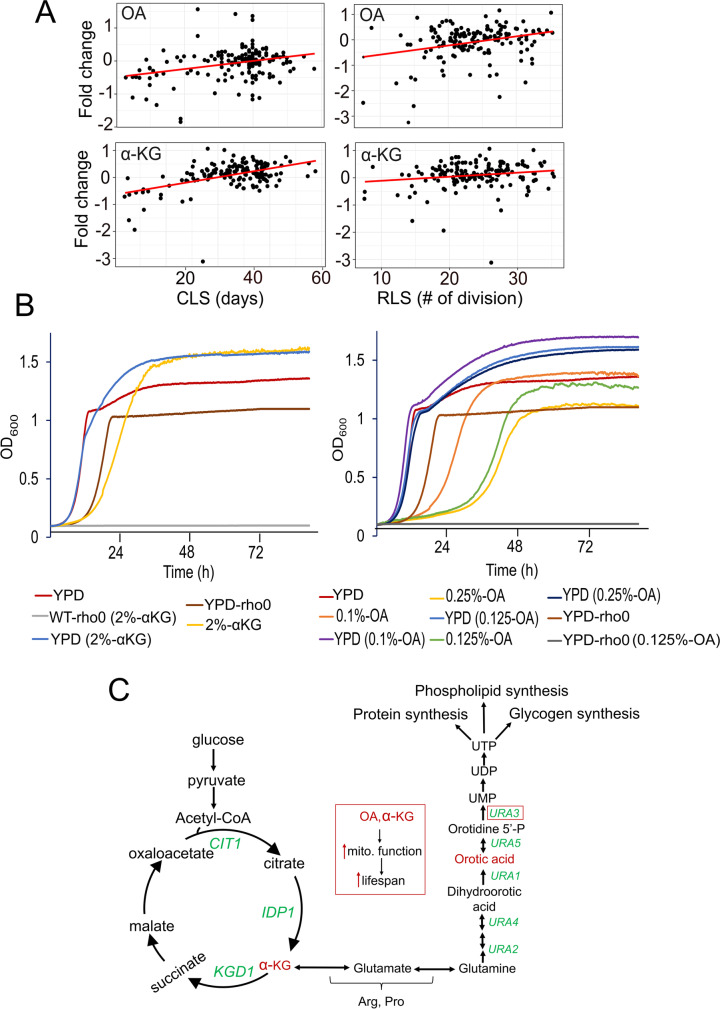
Altered mitochondrial function is tightly linked to lifespan regulation, but underlying mechanisms remain unclear. Here, we report the chronological and replicative lifespan variation across 167 yeast knock-out strains, each lacking a single nuclear-coded mitochondrial gene, including 144 genes with human homologs, many associated with diseases. We dissected the signatures of observed lifespan differences by analyzing profiles of each strain's proteome, lipidome, and metabolome under fermentative and respiratory culture conditions, which correspond to the metabolic states of replicative and chronologically aging cells, respectively. Examination of the relationships among extended longevity phenotypes, protein, and metabolite levels revealed that although many of these nuclear-encoded mitochondrial genes carry out different functions, their inhibition attenuates a common mechanism that controls cytosolic ribosomal protein abundance, actin dynamics, and proteasome function to regulate lifespan. The principles of lifespan control learned through this work may be applicable to the regulation of lifespan in more complex organisms, since many aspects of mitochondrial function are highly conserved among eukaryotes.
线粒体功能的改变与寿命调节密切相关,但潜在的机制仍不清楚。在这里,我们报告了 167 株酵母敲除菌株的时序和复制寿命变化,每个菌株都缺失一个单一的核编码线粒体基因,其中包括 144 个与人类同源的基因,许多与疾病有关。我们通过分析每个菌株在发酵和呼吸培养条件下的蛋白质组、脂质组和代谢组的图谱,来剖析观察到的寿命差异的特征,这分别对应于复制和时序老化细胞的代谢状态。对延长寿命表型、蛋白质和代谢物水平之间关系的研究表明,尽管许多这些核编码线粒体基因具有不同的功能,但它们的抑制作用减弱了一种共同的机制,该机制控制细胞质核糖体蛋白丰度、肌动蛋白动态和蛋白酶体功能,从而调节寿命。通过这项工作学到的寿命控制原则可能适用于更复杂生物体的寿命调节,因为真核生物中线粒体功能的许多方面都高度保守。