Department of Translational Research in Psychiatry, Max Planck Institute of Psychiatry, Munich, Germany.
Department of Behavioral and Psychological Science, Zhejiang University, Hangzhou, China.
Eur Arch Psychiatry Clin Neurosci. 2024 Apr;274(3):559-571. doi: 10.1007/s00406-023-01608-8. Epub 2023 Apr 23.
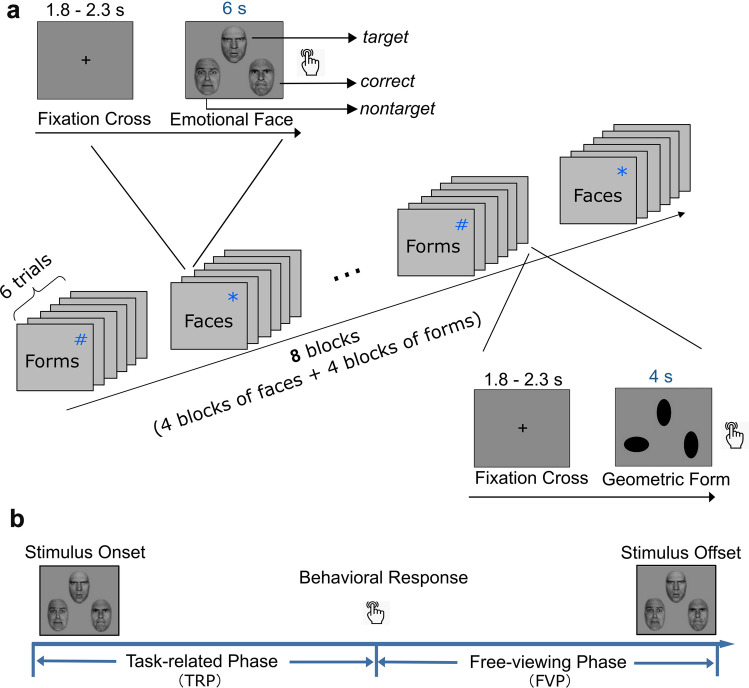
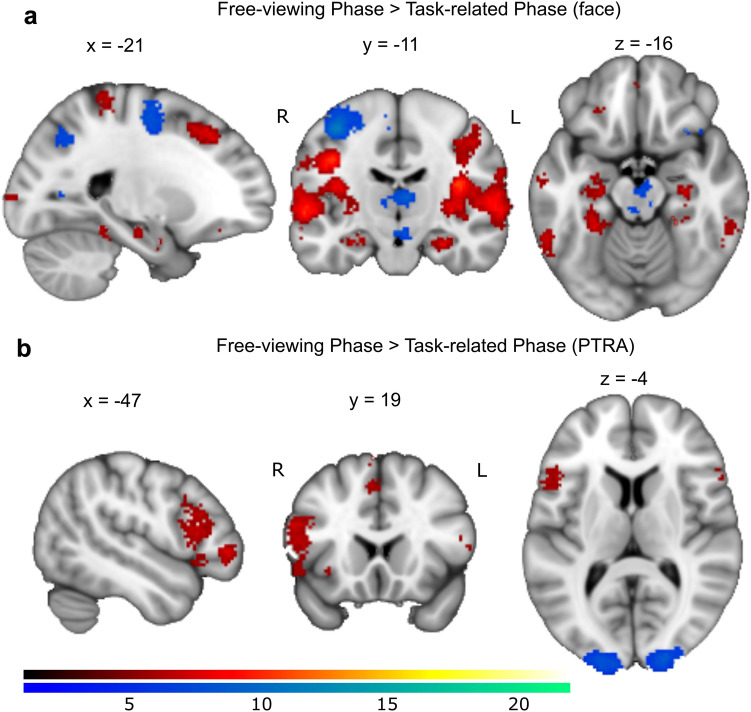
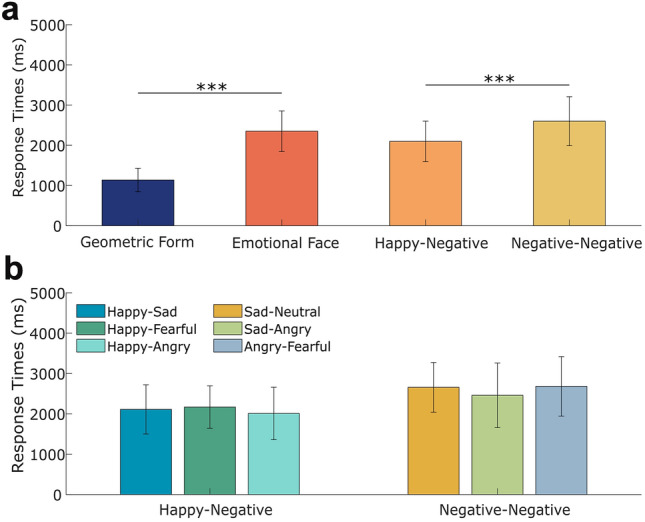
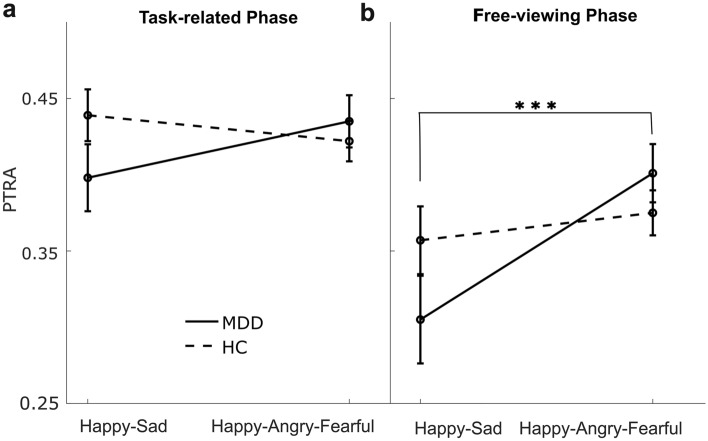
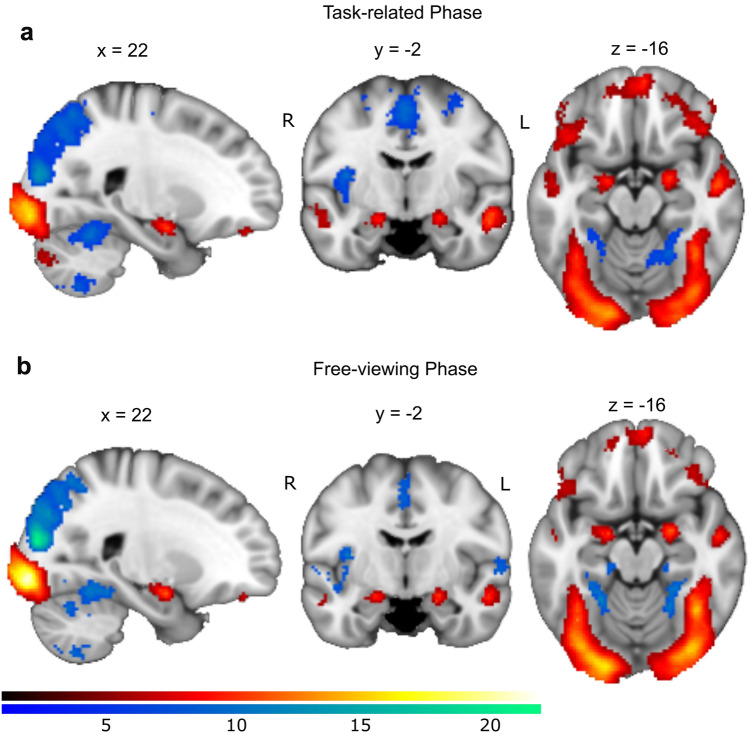
Major depressive disorder (MDD) has been related to abnormal amygdala activity during emotional face processing. However, a recent large-scale study (n = 28,638) found no such correlation, which is probably due to the low precision of fMRI measurements. To address this issue, we used simultaneous fMRI and eye-tracking measurements during a commonly employed emotional face recognition task. Eye-tracking provide high-precision data, which can be used to enrich and potentially stabilize fMRI readouts. With the behavioral response, we additionally divided the active task period into a task-related and a free-viewing phase to explore the gaze patterns of MDD patients and healthy controls (HC) and compare their respective neural correlates. Our analysis showed that a mood-congruency attentional bias could be detected in MDD compared to healthy controls during the free-viewing phase but without parallel amygdala disruption. Moreover, the neural correlates of gaze patterns reflected more prefrontal fMRI activity in the free-viewing than the task-related phase. Taken together, spontaneous emotional processing in free viewing might lead to a more pronounced mood-congruency bias in MDD, which indicates that combined fMRI with eye-tracking measurement could be beneficial for our understanding of the underlying psychopathology of MDD in different emotional processing phases.Trial Registration: The BeCOME study is registered on ClinicalTrials (gov: NCT03984084) by the Max Planck Institute of Psychiatry in Munich, Germany.
重度抑郁症(MDD)与情绪面孔处理过程中杏仁核活动异常有关。然而,最近一项大规模研究(n=28638)发现没有这种相关性,这可能是由于 fMRI 测量的精度较低。为了解决这个问题,我们在常用的情绪面孔识别任务中同时进行 fMRI 和眼动追踪测量。眼动追踪提供高精度的数据,可用于丰富和潜在稳定 fMRI 读数。结合行为反应,我们还将活跃任务期分为与任务相关的期和自由观察期,以探索 MDD 患者和健康对照组(HC)的注视模式,并比较它们各自的神经相关性。我们的分析表明,与健康对照组相比,在自由观察期,MDD 患者可以检测到情绪一致性注意偏向,但没有并行的杏仁核破坏。此外,注视模式的神经相关性反映了自由观察期比任务相关期更多的额前 fMRI 活动。总的来说,自由观察中的自发情绪处理可能导致 MDD 中更明显的情绪一致性偏向,这表明结合 fMRI 和眼动追踪测量可能有助于我们在不同的情绪处理阶段理解 MDD 的潜在心理病理学。
BeCOME 研究由德国慕尼黑马克斯·普朗克精神病学研究所在 ClinicalTrials(gov:NCT03984084)上注册。