Dopp Alex R, Narcisse Marie-Rachelle, Mundey Peter, Silovsky Jane F, Smith Allison B, Mandell David, Funderburk Beverly W, Powell Byron J, Schmidt Susan, Edwards Daniel, Luke Douglas, Mendel Peter
Department of Behavioral and Policy Sciences, RAND Corporation, Santa Monica, CA, USA.
Department of Community Health and Research, University of Arkansas for Medical Sciences, Fayetteville, AR, USA.
Implement Res Pract. 2020 Aug 30;1:2633489520939980. doi: 10.1177/2633489520939980. eCollection 2020 Jan-Dec.
Increased availability of evidence-based practices (EBPs) is essential to alleviating the negative public health and societal effects of behavioral health problems. A major challenge to implementing and sustaining EBPs broadly is the limited and fragmented nature of available funding.
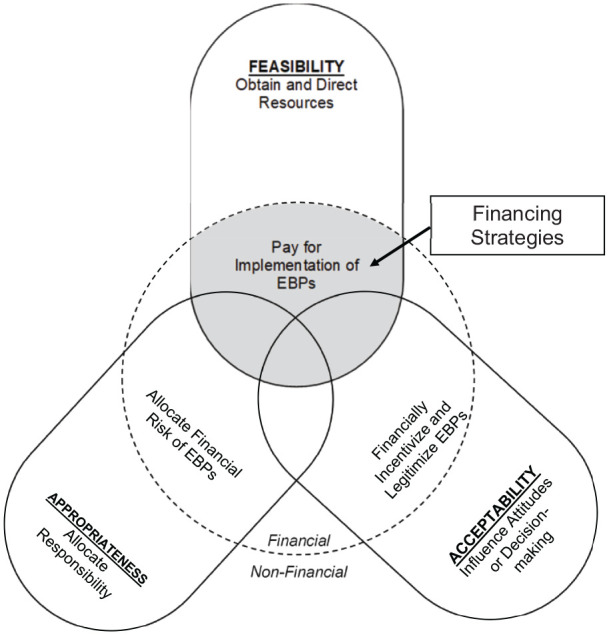
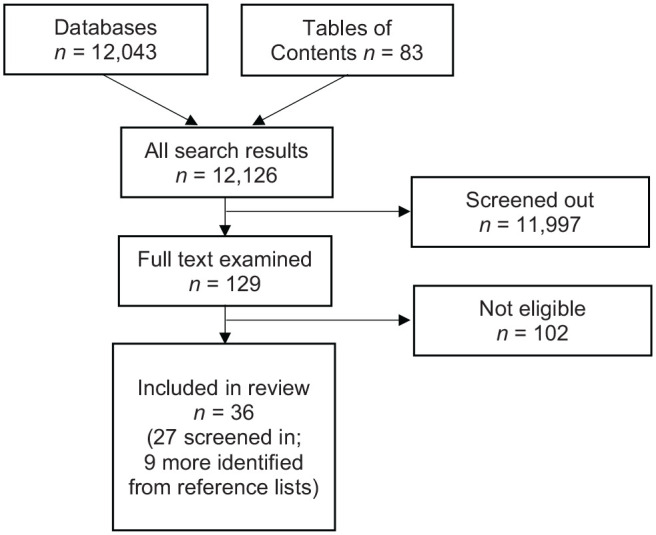
We conducted a scoping review that assessed the current state of evidence on EBP financing strategies for behavioral health based on recent literature (i.e., post-Affordable Care Act). We defined financing strategies as techniques that secure and direct financial resources to support EBP implementation. This article introduces a conceptualization of financing strategies and then presents a compilation of identified strategies, following established reporting guidelines for the implementation strategies. We also describe the reported level of use for each financing strategy in the research literature.
Of 23 financing strategies, 13 were reported as being used within behavioral health services, 4 had potential for use, 5 had conceptual use only, and 1 was potentially contraindicated. Examples of strategies reported being used include increased fee-for-service reimbursement, grants, cost sharing, and pay-for-success contracts. No strategies had been evaluated in ways that allowed for strong conclusions about their impact on EBP implementation outcomes.
The existing literature on EBP financing strategies in behavioral health raises far more questions than answers. Therefore, we propose a research agenda that will help better understand these financing strategies. We also discuss the implications of our findings for behavioral health professionals, system leaders, and policymakers who want to develop robust, sustainable financing for EBP implementation in behavioral health systems.
Organizations that treat behavioral health problems (mental health and substance use) often seek to adopt and use evidence-based practices (EBPs). A challenge to adopting EBPs broadly is the limited funding available, often from various sources that are poorly coordinated with one another. To help organizations plan effectively to adopt EBPs, we conducted a review of recent evidence (i.e., since the passage of the 2010 Affordable Care Act) on strategies for financing EBP adoption in behavioral health systems. We present definitions of 23 identified strategies and describe each strategy's reported (in the research literature) level of use to fund EBP adoption in behavioral health services. Of the 23 financing strategies, 13 strategies had evidence of use, 4 had potential for use, 5 had conceptual use only, and 1 was potentially contraindicated. Examples of strategies with evidence of use include increased fee-for-service reimbursement, grants, cost sharing, and pay-for-success contracts. This comprehensive list of EBP financing strategies may help guide decision-making by behavioral health professionals, system leaders, and policymakers. The article also presents a research agenda for building on the current research literature by (1) advancing methods to evaluate financing strategies' effects, (2) partnering with stakeholders and decision-makers to examine promising financing strategies, (3) focusing on strategies and service systems with the greatest needs, (4) improving methods to guide the selection of financing strategies, and (5) paying greater attention to sustainable long-term financing of EBPs.
增加循证实践(EBPs)的可及性对于减轻行为健康问题对公众健康和社会的负面影响至关重要。广泛实施和维持循证实践面临的一个主要挑战是可用资金有限且分散。
我们进行了一项范围审查,根据近期文献(即《平价医疗法案》之后的文献)评估行为健康循证实践融资策略的现有证据状况。我们将融资策略定义为确保并引导财政资源以支持循证实践实施的技术。本文介绍了融资策略的概念化,然后按照既定的实施策略报告指南,呈现了已识别策略的汇总。我们还描述了研究文献中报告的每种融资策略的使用水平。
在23种融资策略中,有13种据报告已在行为健康服务中使用,4种有使用潜力,5种仅在概念上使用,1种可能存在禁忌。据报告已使用的策略示例包括增加按服务收费报销、补助金、成本分摊和成功付费合同。尚无策略以能够就其对循证实践实施结果的影响得出有力结论的方式进行评估。
关于行为健康循证实践融资策略的现有文献提出的问题远多于答案。因此,我们提出了一个研究议程,将有助于更好地理解这些融资策略。我们还讨论了研究结果对行为健康专业人员、系统领导者和政策制定者的影响,他们希望为行为健康系统中的循证实践实施制定强大、可持续的融资方案。
治疗行为健康问题(心理健康和物质使用)的组织通常寻求采用和使用循证实践。广泛采用循证实践面临的一个挑战是可用资金有限,这些资金通常来自各个相互协调不佳的来源。为帮助组织有效规划采用循证实践,我们审查了近期关于行为健康系统中循证实践采用融资策略的证据(即自2010年《平价医疗法案》通过以来)。我们给出了23种已识别策略的定义,并描述了每种策略在研究文献中报告的用于资助行为健康服务中循证实践采用的使用水平。在这23种融资策略中,13种策略有使用证据,4种有使用潜力,5种仅在概念上使用,1种可能存在禁忌。有使用证据的策略示例包括增加按服务收费报销、补助金、成本分摊和成功付费合同。这份全面的循证实践融资策略清单可能有助于指导行为健康专业人员、系统领导者和政策制定者的决策。本文还提出了一个研究议程,以在当前研究文献的基础上(1)推进评估融资策略效果的方法,(2)与利益相关者和决策者合作,研究有前景的融资策略,(3)关注需求最大的策略和服务系统,(4)改进指导融资策略选择的方法,以及(5)更加关注循证实践的可持续长期融资。