Shi Liang, Zhang Yuhao, Wang Hong
School of Clinical Medicine, Hebei University, Baoding, Hebei, China.
The First Department of General Surgery, Cangzhou Central Hospital of Hebei Province, Cangzhou, Hebei, China.
Front Med (Lausanne). 2023 Apr 6;10:1154077. doi: 10.3389/fmed.2023.1154077. eCollection 2023.
To automatically quantify colorectal tumor microenvironment (TME) in hematoxylin and eosin stained whole slide images (WSIs), and to develop a TME signature for prognostic prediction in colorectal cancer (CRC).
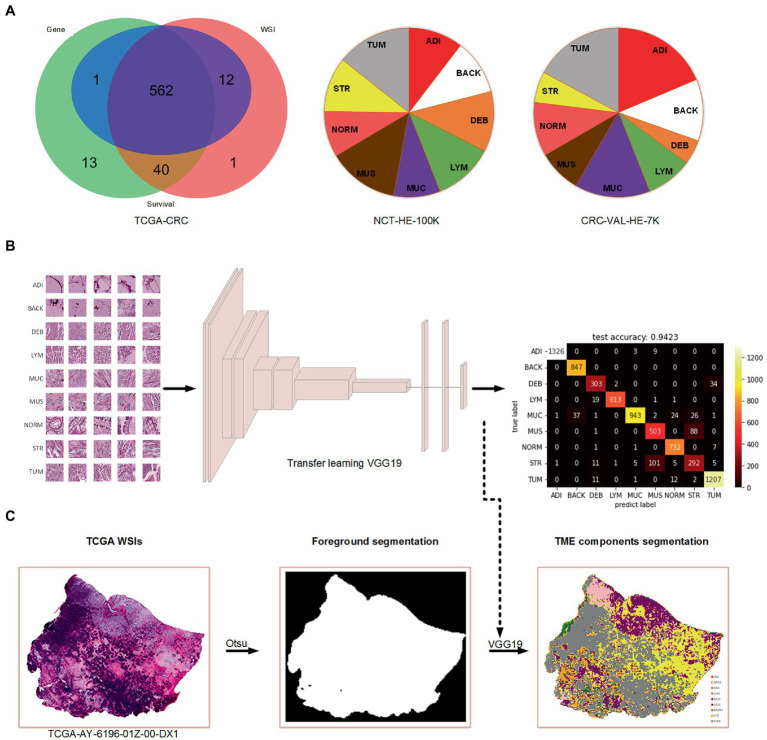
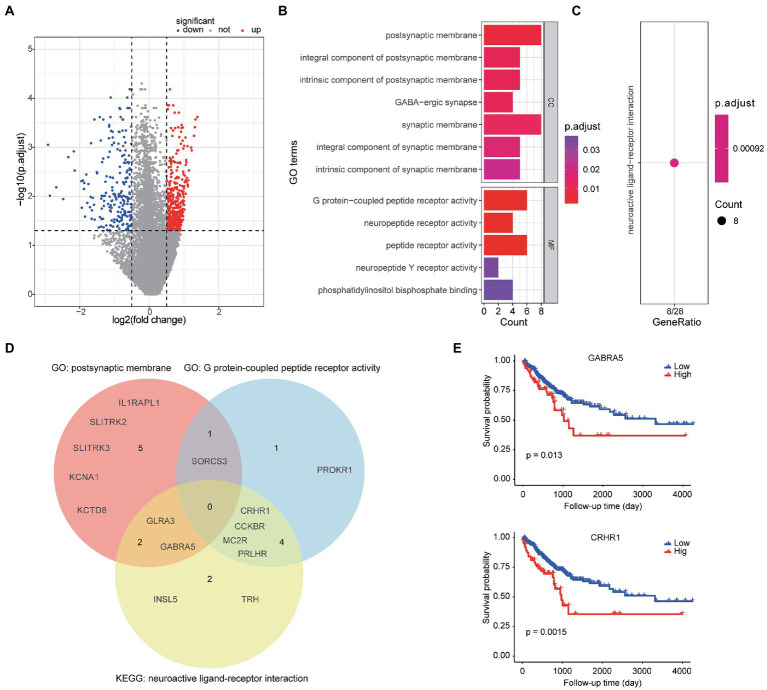
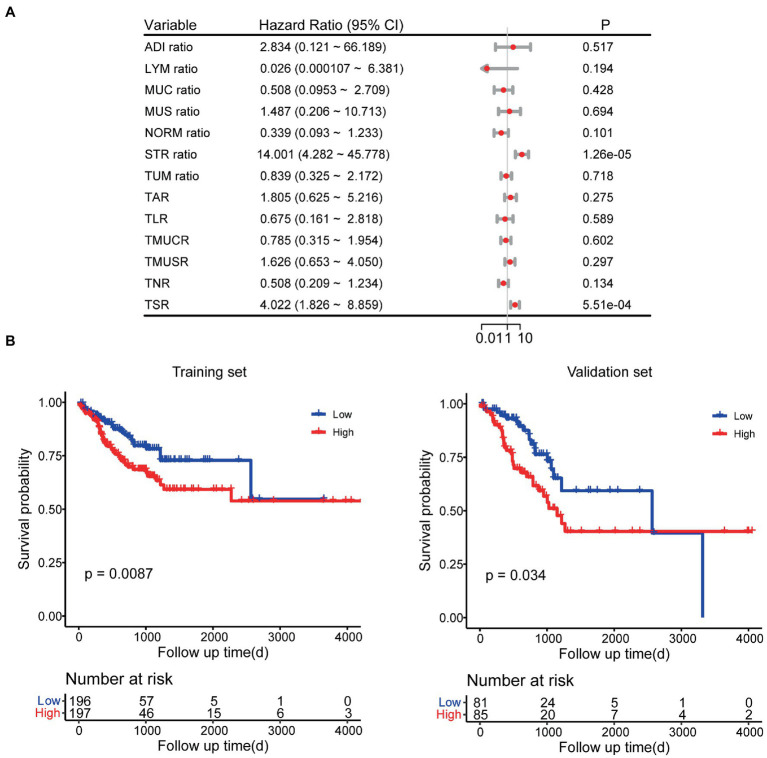
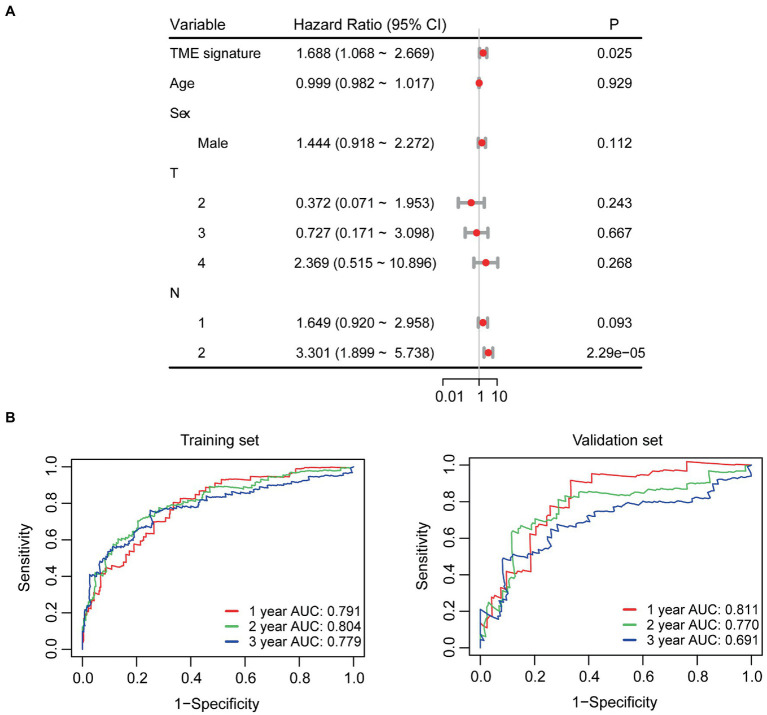
A deep learning model based on VGG19 architecture and transfer learning strategy was trained to recognize nine different tissue types in whole slide images of patients with CRC. Seven of the nine tissue types were defined as TME components besides background and debris. Then 13 TME features were calculated based on the areas of TME components. A total of 562 patients with gene expression data, survival information and WSIs were collected from The Cancer Genome Atlas project for further analysis. A TME signature for prognostic prediction was developed and validated using Cox regression method. A prognostic prediction model combined the TME signature and clinical variables was also established. At last, gene-set enrichment analysis was performed to identify the significant TME signature associated pathways by querying Gene Ontology database and Kyoto Encyclopedia of Genes and Genomes database.
The deep learning model achieved an accuracy of 94.2% for tissue type recognition. The developed TME signature was found significantly associated to progression-free survival. The clinical combined model achieved a concordance index of 0.714. Gene-set enrichment analysis revealed the TME signature associated genes were enriched in neuroactive ligand-receptor interaction pathway.
The TME signature was proved to be a prognostic factor and the associated biologic pathways would be beneficial to a better understanding of TME in CRC patients.
自动定量苏木精和伊红染色的全玻片图像(WSIs)中的结直肠肿瘤微环境(TME),并开发一种TME特征用于结直肠癌(CRC)的预后预测。
基于VGG19架构和迁移学习策略训练一个深度学习模型,以识别CRC患者全玻片图像中的九种不同组织类型。除背景和碎片外,九种组织类型中的七种被定义为TME成分。然后根据TME成分的面积计算13个TME特征。从癌症基因组图谱项目中收集了562例具有基因表达数据、生存信息和WSIs的患者进行进一步分析。使用Cox回归方法开发并验证了用于预后预测的TME特征。还建立了一个结合TME特征和临床变量的预后预测模型。最后,通过查询基因本体数据库和京都基因与基因组百科全书数据库进行基因集富集分析,以识别与TME特征相关的显著通路。
深度学习模型在组织类型识别方面的准确率达到94.2%。发现所开发的TME特征与无进展生存期显著相关。临床联合模型的一致性指数为0.714。基因集富集分析显示,与TME特征相关的基因在神经活性配体-受体相互作用通路中富集。
TME特征被证明是一个预后因素,相关的生物学通路将有助于更好地理解CRC患者的TME。