Department of General Surgery, Zhujiang Hospital, Southern Medical University, Guangdong, Guangzhou, 510282, P.R. China.
Department of Medical Ultrasound, Guangzhou Women and Children's Medical Center, Guangdong, Guangzhou 510623, P.R. China.
Biosci Rep. 2021 Feb 26;41(2). doi: 10.1042/BSR20203336.
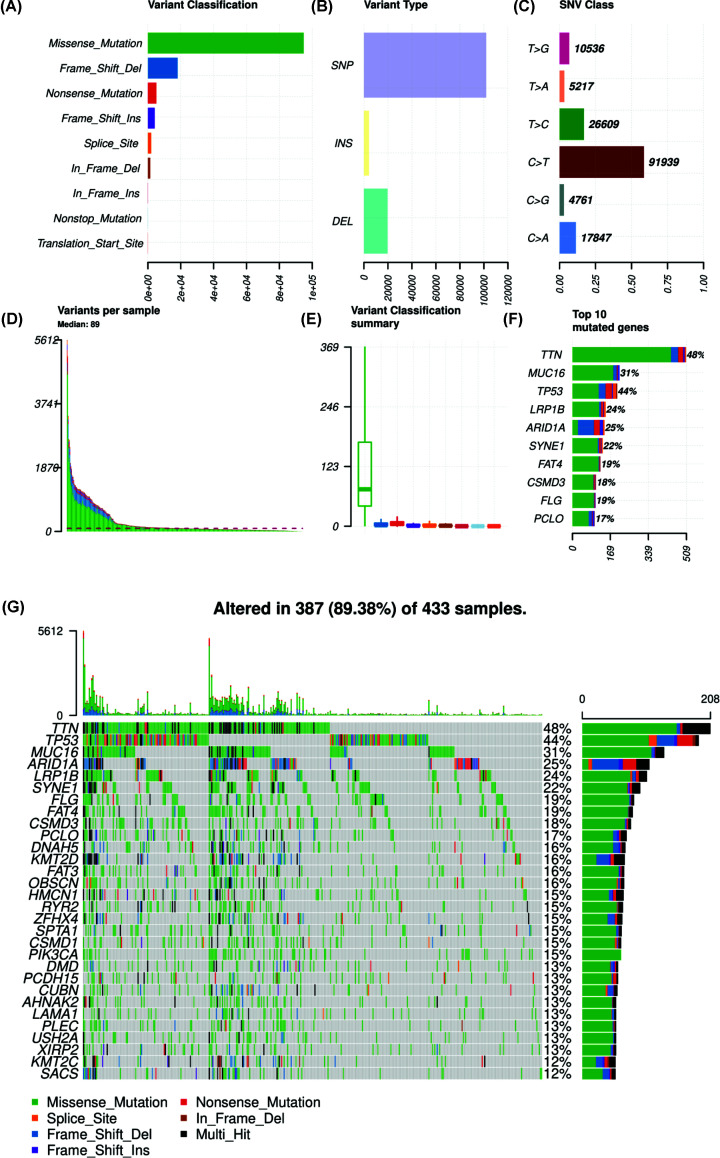
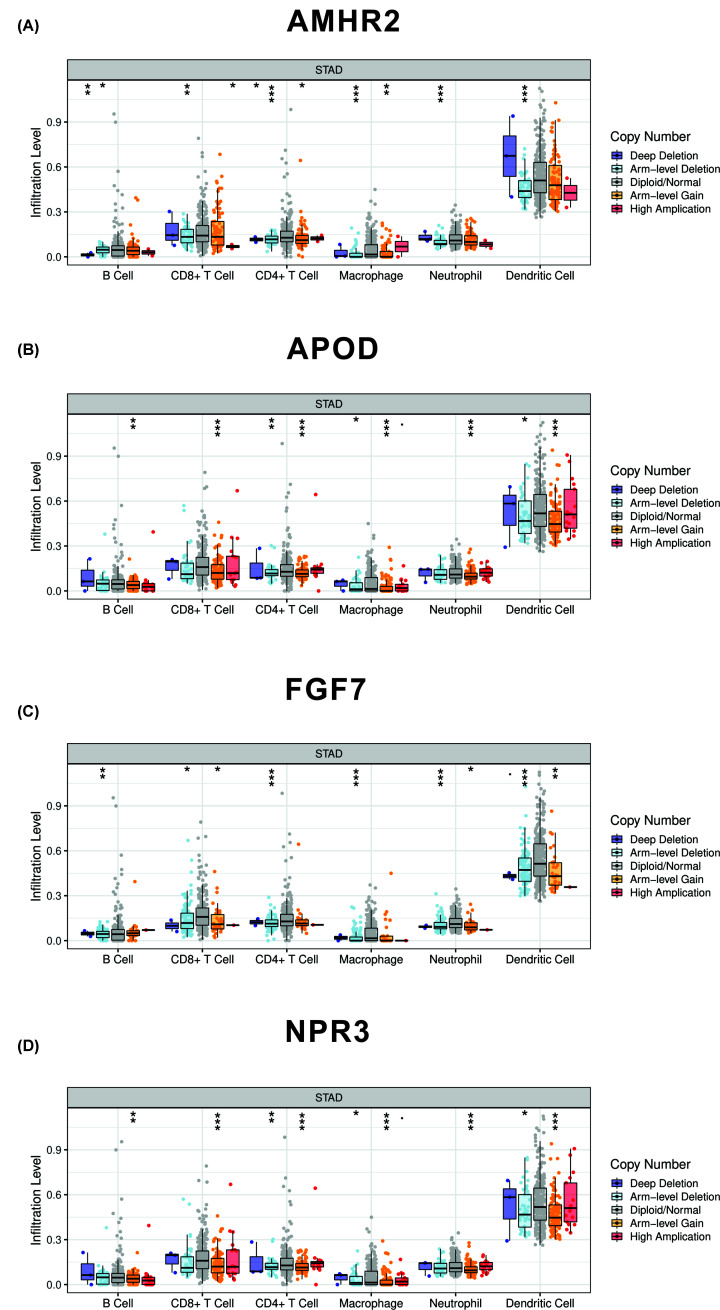
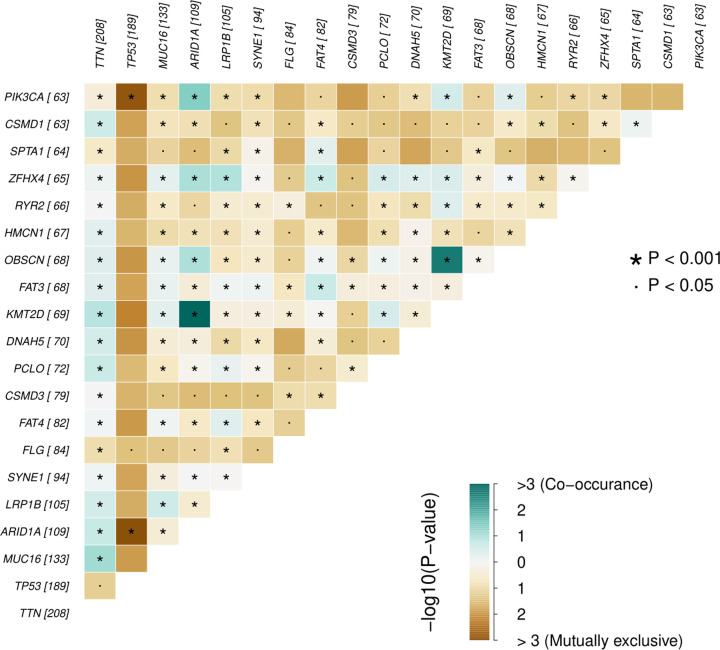
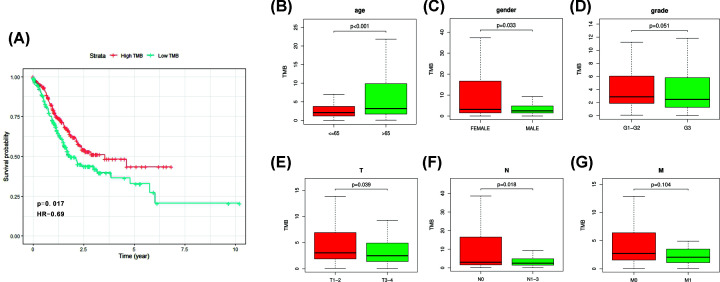
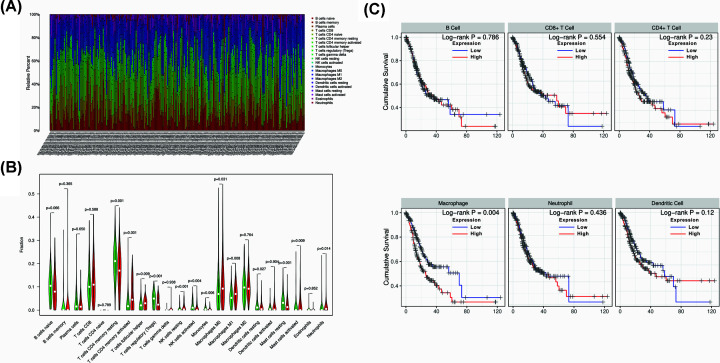
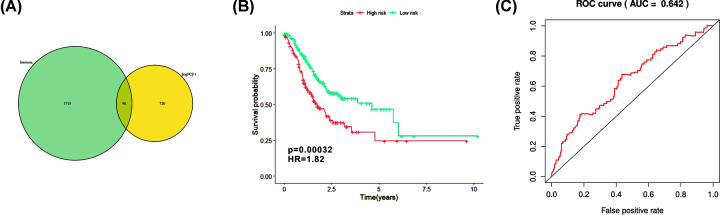
Tumor mutation burden (TMB) was a promising marker for immunotherapy. We aimed to investigate the prognostic role of TMB and its relationship with immune cells infiltration in gastric cancer (GC). We analyzed the mutation landscape of all GC cases and TMB of each GC patient was calculated and patients were divided into TMB-high and TMB-low group. Differentially expressed genes (DEGs) between the two groups were identified and pathway analysis was performed. The immune cells infiltration in each GC patient was evaluated and Kaplan-Meier analysis was performed to investigate the prognostic role of immune cells infiltration. At last, hub immune genes were identified and a TMB prognostic risk score (TMBPRS) was constructed to predict the survival outcome of GC patients. The relationships between mutants of hub immune genes and immune infiltration level in GC was investigated. We found higher TMB was correlated with better survival outcome and female patients, patients with T1-2 and N0 had higher TMB score. Altogether 816 DEGs were harvested and pathway analysis demonstrated that patients in TMB-high group were associated with neuroactive ligand-receptor interaction, cAMP signaling pathway, calcium signaling pathway. The infiltration of activated CD4+ memory T cells, follicular helper T cells, resting NK cells, M0 and M1 macrophages and neutrophils in TMB-high group were higher compared than that in TMB-low group and high macrophage infiltration was correlated with inferior survival outcome of GC patients. Lastly, the TMBPRS was constructed and GC patients with high TMBPRS had poor prognosis.
肿瘤突变负荷(TMB)是免疫治疗的一个有前途的标志物。我们旨在研究 TMB 在胃癌(GC)中的预后作用及其与免疫细胞浸润的关系。我们分析了所有 GC 病例的突变情况,并计算了每个 GC 患者的 TMB,并将患者分为 TMB 高和 TMB 低组。鉴定两组之间的差异表达基因(DEGs),并进行通路分析。评估每个 GC 患者的免疫细胞浸润情况,并进行 Kaplan-Meier 分析以研究免疫细胞浸润的预后作用。最后,确定关键免疫基因,并构建 TMB 预后风险评分(TMBPRS)以预测 GC 患者的生存结果。研究了 GC 中关键免疫基因的突变与免疫浸润水平之间的关系。我们发现较高的 TMB 与较好的生存结果和女性患者、T1-2 期和 N0 期患者相关。共筛选到 816 个差异表达基因,通路分析表明 TMB 高组与神经活性配体受体相互作用、cAMP 信号通路、钙信号通路相关。与 TMB 低组相比,TMB 高组中活化的 CD4+记忆 T 细胞、滤泡辅助 T 细胞、静止 NK 细胞、M0 和 M1 巨噬细胞和中性粒细胞的浸润更高,而巨噬细胞浸润较高与 GC 患者的生存预后不良相关。最后,构建了 TMBPRS,TMBPRS 高的 GC 患者预后不良。