• 文献检索
  • 文档翻译
  • 深度研究
  • 学术资讯
  • Suppr Zotero 插件Zotero 插件
  • 邀请有礼
  • 套餐&价格
  • 历史记录
应用&插件
Suppr Zotero 插件Zotero 插件浏览器插件Mac 客户端Windows 客户端微信小程序
定价
高级版会员购买积分包购买API积分包
服务
文献检索文档翻译深度研究API 文档MCP 服务
关于我们
关于 Suppr公司介绍联系我们用户协议隐私条款
关注我们

Suppr 超能文献

核心技术专利:CN118964589B侵权必究
粤ICP备2023148730 号-1Suppr @ 2026

文献检索

告别复杂PubMed语法,用中文像聊天一样搜索,搜遍4000万医学文献。AI智能推荐,让科研检索更轻松。

立即免费搜索

文件翻译

保留排版,准确专业,支持PDF/Word/PPT等文件格式,支持 12+语言互译。

免费翻译文档

深度研究

AI帮你快速写综述,25分钟生成高质量综述,智能提取关键信息,辅助科研写作。

立即免费体验

移动医疗对脊髓损伤的自我管理支持:系统文献回顾。

Mobile Health Self-management Support for Spinal Cord Injury: Systematic Literature Review.

机构信息

Swiss Paraplegic Research, Nottwil, Switzerland.

Faculty of Health Sciences and Medicine, University of Lucerne, Lucerne, Switzerland.

出版信息

JMIR Mhealth Uhealth. 2023 Apr 26;11:e42679. doi: 10.2196/42679.

DOI:10.2196/42679
PMID:37099372
原文链接:https://pmc.ncbi.nlm.nih.gov/articles/PMC10173031/
Abstract

BACKGROUND

Self-management plays a critical role in maintaining and improving the health of persons with spinal cord injury (SCI). Despite their potential, existing mobile health (mHealth) self-management support (SMS) tools for SCI have not been comprehensively described in terms of their characteristics and approaches. It is important to have an overview of these tools to know how best to select, further develop, and improve them.

OBJECTIVE

The objective of this systematic literature review was to identify mHealth SMS tools for SCI and summarize their characteristics and approaches to offering SMS.

METHODS

A systematic review of the literature published between January 2010 and March 2022 was conducted across 8 bibliographic databases. The data synthesis was guided by the self-management task taxonomy by Corbin and Strauss, the self-management skill taxonomy by Lorig and Holman, and the Practical Reviews in Self-Management Support taxonomy. The PRISMA (Preferred Reporting Items for Systematic Reviews and Meta-Analyses) standards guided the reporting.

RESULTS

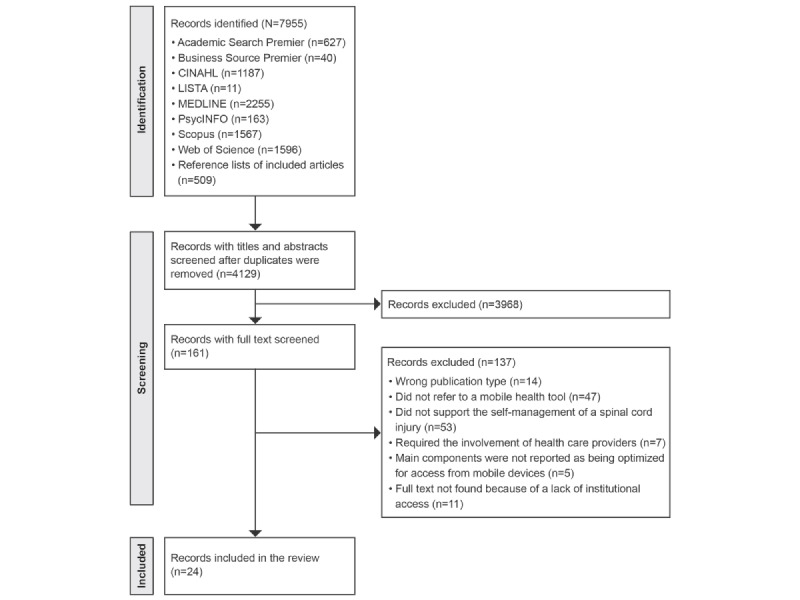
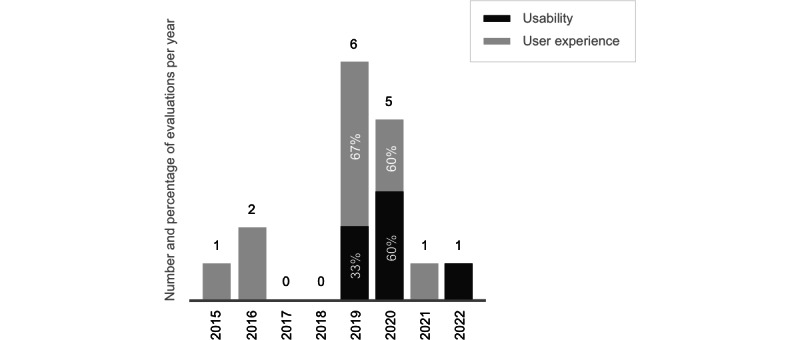
A total of 24 publications reporting on 19 mHealth SMS tools for SCI were included. These tools were introduced from 2015 onward and used various mHealth technologies and multimedia formats to provide SMS using 9 methods identified by the Practical Reviews in Self-Management Support taxonomy (eg, social support and lifestyle advice and support). The identified tools focused on common SCI self-management areas (eg, bowel, bladder, and pain management) and overlooked areas such as sexual dysfunction problems and environmental problems, including barriers in the built environment. Most tools (12/19, 63%) unexpectedly supported a single self-management task instead of all 3 tasks (ie, medical, role, and emotional management), and emotional management tasks had very little support. All self-management skills (eg, problem-solving, decision-making, and action planning) had coverage, but a single tool addressed resource use. The identified mHealth SMS tools were similar in terms of number, introduction period, geographical distribution, and technical sophistication compared with SMS tools for other chronic conditions.

CONCLUSIONS

This systematic literature review provides one of the first descriptions of mHealth SMS tools for SCI in terms of their characteristics and approaches to offering SMS. This study's findings highlight a need for increased coverage of key SMS for SCI components; adopting comparable usability, user experience, and accessibility evaluation methods; and related research to provide more detailed reporting. Future research should consider other data sources such as app stores and technology-centric bibliographic databases to complement this compilation by identifying other possibly overlooked mHealth SMS tools. A consideration of this study's findings is expected to support the selection, development, and improvement of mHealth SMS tools for SCI.
https://cdn.ncbi.nlm.nih.gov/pmc/blobs/edac/10173031/01070359a351/mhealth_v11i1e42679_fig2.jpg
https://cdn.ncbi.nlm.nih.gov/pmc/blobs/edac/10173031/f5ea618db7d0/mhealth_v11i1e42679_fig1.jpg
https://cdn.ncbi.nlm.nih.gov/pmc/blobs/edac/10173031/01070359a351/mhealth_v11i1e42679_fig2.jpg
https://cdn.ncbi.nlm.nih.gov/pmc/blobs/edac/10173031/f5ea618db7d0/mhealth_v11i1e42679_fig1.jpg
https://cdn.ncbi.nlm.nih.gov/pmc/blobs/edac/10173031/01070359a351/mhealth_v11i1e42679_fig2.jpg
摘要

背景

自我管理在维持和改善脊髓损伤(SCI)患者的健康方面起着至关重要的作用。尽管现有的移动医疗(mHealth)自我管理支持(SMS)工具具有潜力,但尚未全面描述其特点和提供 SMS 的方法。了解这些工具的全貌有助于更好地选择、进一步开发和改进它们。

目的

本系统文献综述旨在确定用于 SCI 的 mHealth SMS 工具,并总结其提供 SMS 的特点和方法。

方法

对 2010 年 1 月至 2022 年 3 月期间发表的文献进行了系统的文献综述,检索了 8 个文献数据库。数据综合采用 Corbin 和 Strauss 的自我管理任务分类法、Lorig 和 Holman 的自我管理技能分类法以及 Practical Reviews in Self-Management Support 分类法。PRISMA(系统评价和荟萃分析的首选报告项目)标准指导报告。

结果

共纳入 24 项报告 19 种用于 SCI 的 mHealth SMS 工具的出版物。这些工具于 2015 年以后推出,使用了各种 mHealth 技术和多媒体格式,通过 Practical Reviews in Self-Management Support 分类法确定的 9 种方法提供 SMS(例如,社会支持和生活方式建议和支持)。确定的工具侧重于常见的 SCI 自我管理领域(例如,肠、膀胱和疼痛管理),但忽略了性性功能问题和环境问题等领域,包括建筑环境中的障碍。大多数工具(19 个中的 12 个,63%)意外地支持单个自我管理任务,而不是所有 3 个任务(即医疗、角色和情感管理),并且对情感管理任务的支持很少。所有自我管理技能(例如,解决问题、决策和行动计划)都有涵盖,但单个工具解决了资源利用问题。与其他慢性疾病的 SMS 工具相比,确定的 mHealth SMS 工具在数量、引入时间、地理分布和技术复杂性方面具有相似性。

结论

本系统文献综述首次从提供 SMS 的特点和方法方面描述了用于 SCI 的 mHealth SMS 工具。本研究的结果强调了需要增加对 SCI 关键 SMS 组成部分的覆盖;采用可比的可用性、用户体验和可访问性评估方法;以及相关研究以提供更详细的报告。未来的研究应该考虑其他数据源,如应用商店和以技术为中心的文献数据库,以通过识别其他可能被忽视的 mHealth SMS 工具来补充这一汇编。考虑本研究的结果有望支持用于 SCI 的 mHealth SMS 工具的选择、开发和改进。

相似文献

1
Mobile Health Self-management Support for Spinal Cord Injury: Systematic Literature Review.移动医疗对脊髓损伤的自我管理支持:系统文献回顾。
JMIR Mhealth Uhealth. 2023 Apr 26;11:e42679. doi: 10.2196/42679.
2
Health professionals' experience of teamwork education in acute hospital settings: a systematic review of qualitative literature.医疗专业人员在急症医院环境中团队合作教育的经验:对定性文献的系统综述
JBI Database System Rev Implement Rep. 2016 Apr;14(4):96-137. doi: 10.11124/JBISRIR-2016-1843.
3
Tools for Evaluating the Content, Efficacy, and Usability of Mobile Health Apps According to the Consensus-Based Standards for the Selection of Health Measurement Instruments: Systematic Review.根据基于共识的健康测量仪器选择标准评估移动健康应用程序的内容、疗效和可用性的工具:系统评价。
JMIR Mhealth Uhealth. 2021 Dec 1;9(12):e15433. doi: 10.2196/15433.
4
Home treatment for mental health problems: a systematic review.心理健康问题的居家治疗:一项系统综述
Health Technol Assess. 2001;5(15):1-139. doi: 10.3310/hta5150.
5
Mobile phone messaging for facilitating self-management of long-term illnesses.利用手机短信促进慢性病自我管理。
Cochrane Database Syst Rev. 2012 Dec 12;12(12):CD007459. doi: 10.1002/14651858.CD007459.pub2.
6
Cost-effectiveness of using prognostic information to select women with breast cancer for adjuvant systemic therapy.利用预后信息为乳腺癌患者选择辅助性全身治疗的成本效益
Health Technol Assess. 2006 Sep;10(34):iii-iv, ix-xi, 1-204. doi: 10.3310/hta10340.
7
mHealth Strategies Related to HIV Postexposure Prophylaxis Knowledge and Access: Systematic Literature Review, Technology Prospecting of Patent Databases, and Systematic Search on App Stores.移动医疗策略与 HIV 暴露后预防知识和获取相关:系统文献综述、专利数据库技术展望以及应用商店系统检索。
JMIR Mhealth Uhealth. 2021 Feb 16;9(2):e23912. doi: 10.2196/23912.
8
Survivor, family and professional experiences of psychosocial interventions for sexual abuse and violence: a qualitative evidence synthesis.性虐待和暴力的心理社会干预的幸存者、家庭和专业人员的经验:定性证据综合。
Cochrane Database Syst Rev. 2022 Oct 4;10(10):CD013648. doi: 10.1002/14651858.CD013648.pub2.
9
Mobile phone messaging for preventive health care.用于预防性医疗保健的手机短信服务。
Cochrane Database Syst Rev. 2012 Dec 12;12(12):CD007457. doi: 10.1002/14651858.CD007457.pub2.
10
What is the value of routinely testing full blood count, electrolytes and urea, and pulmonary function tests before elective surgery in patients with no apparent clinical indication and in subgroups of patients with common comorbidities: a systematic review of the clinical and cost-effective literature.在没有明显临床指征的患者和常见合并症患者亚组中,在择期手术前常规检测全血细胞计数、电解质和尿素以及肺功能测试的价值:对临床和成本效益文献的系统评价。
Health Technol Assess. 2012 Dec;16(50):i-xvi, 1-159. doi: 10.3310/hta16500.

引用本文的文献

1
Experiences of Wheelchair Users With Spinal Cord Injury With Self-Tracking and Commercial Self-Tracking Technology ("In Our World, Calories Are Very Important"): Qualitative Interview Study.脊髓损伤轮椅使用者使用自我追踪及商业自我追踪技术的体验(“在我们的世界里,卡路里非常重要”):定性访谈研究
JMIR Hum Factors. 2025 Apr 15;12:e65207. doi: 10.2196/65207.
2
Self-Management Support Apps for Spinal Cord Injury: Results of a Systematic Search in App Stores and Mobile App Rating Scale Evaluation.脊髓损伤的自我管理支持应用程序:在应用商店中的系统搜索结果及移动应用评分量表评估
JMIR Mhealth Uhealth. 2024 Dec 19;12:e53677. doi: 10.2196/53677.
3

本文引用的文献

1
User experience and acceptance of patients and healthy adults testing a personalized self-management app for depression: A non-randomized mixed-methods feasibility study.患者和健康成年人对一款用于抑郁症的个性化自我管理应用程序的测试体验及接受度:一项非随机混合方法可行性研究。
Digit Health. 2022 Apr 7;8:20552076221091353. doi: 10.1177/20552076221091353. eCollection 2022 Jan-Dec.
2
The Use of Mobile Apps for Heart Failure Self-management: Systematic Review of Experimental and Qualitative Studies.移动应用程序在心力衰竭自我管理中的应用:实验性和定性研究的系统评价
JMIR Cardio. 2022 Mar 31;6(1):e33839. doi: 10.2196/33839.
3
mHealth Apps for Self-Management of Cardiovascular Diseases: A Scoping Review.
A sociotechnical framework to assess patient-facing eHealth tools: results of a modified Delphi process.
一种评估面向患者的电子健康工具的社会技术框架:改良德尔菲法的结果
NPJ Digit Med. 2023 Dec 15;6(1):232. doi: 10.1038/s41746-023-00982-w.
用于心血管疾病自我管理的移动健康应用程序:一项范围综述
Healthcare (Basel). 2022 Feb 8;10(2):322. doi: 10.3390/healthcare10020322.
4
A mobile app for home-based exercise in spinal cord injured persons: Proposal and pilot study.一款用于脊髓损伤患者居家锻炼的移动应用程序:方案与初步研究。
Digit Health. 2022 Feb 3;8:20552076211070724. doi: 10.1177/20552076211070724. eCollection 2022 Jan-Dec.
5
Use of Mobile Apps for Self-care in People With Parkinson Disease: Systematic Review.使用移动应用程序进行帕金森病患者的自我护理:系统评价。
JMIR Mhealth Uhealth. 2022 Jan 21;10(1):e33944. doi: 10.2196/33944.
6
Measurement Performance of Activity Measurements with Newer Generation of Apple Watch in Wheelchair Users with Spinal Cord Injury.新一代 Apple Watch 在脊髓损伤轮椅使用者活动测量中的测量性能评估。
Methods Inf Med. 2021 Dec;60(S 02):e103-e110. doi: 10.1055/s-0041-1740236. Epub 2021 Dec 2.
7
Mobile applications in HIV self-management: A systematic review of scientific literature.移动应用在 HIV 自我管理中的应用:系统文献回顾。
AIDS Rev. 2022 Mar 1;24(1):24-31. doi: 10.24875/AIDSRev.21000025.
8
Mobile App (WHEELS) to Promote a Healthy Lifestyle in Wheelchair Users With Spinal Cord Injury or Lower Limb Amputation: Usability and Feasibility Study.用于促进脊髓损伤或下肢截肢轮椅使用者健康生活方式的移动应用程序(WHEELS):可用性和可行性研究。
JMIR Form Res. 2021 Aug 9;5(8):e24909. doi: 10.2196/24909.
9
Changes in Internet Use Over Time Among Individuals with Traumatic Spinal Cord Injury.随着时间的推移,创伤性脊髓损伤患者的互联网使用变化。
Arch Phys Med Rehabil. 2022 Apr;103(4):832-839.e2. doi: 10.1016/j.apmr.2021.04.021. Epub 2021 May 29.
10
Experiences of secondary health conditions amongst people with spinal cord injury in South Africa: A qualitative study.南非脊髓损伤患者继发健康状况的经历:一项定性研究。
S Afr J Physiother. 2021 Apr 6;77(1):1530. doi: 10.4102/sajp.v77i1.1530. eCollection 2021.