Health Services Research Unit, Health Sciences Building, University of Aberdeen, Foresterhill, Aberdeen, AB25 2ZD, UK.
Institute of Applied Health Sciences, University of Aberdeen, Aberdeen, UK.
Trials. 2023 Apr 26;24(1):296. doi: 10.1186/s13063-023-07268-2.
Clinical trials are essential to evidence-based medicine. Their success relies on recruitment and retention of participants: problems with either can affect validity of results. Past research on improving trials has focused on recruitment, with less on retention, and even less considering retention at the point of recruitment, i.e., what retention-relevant information is shared during consent processes. The behaviour of trial staff communicating this information during consent is likely to contribute to retention. So, developing approaches to mitigate issues in retention at the point of consent is necessary. In this study, we describe the development of a behavioural intervention targeting the communication of information important to retention during the consent process.
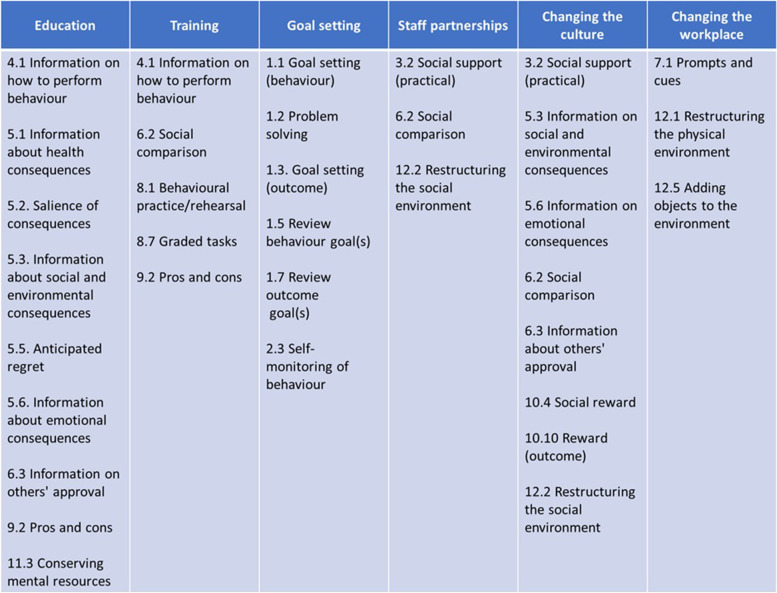
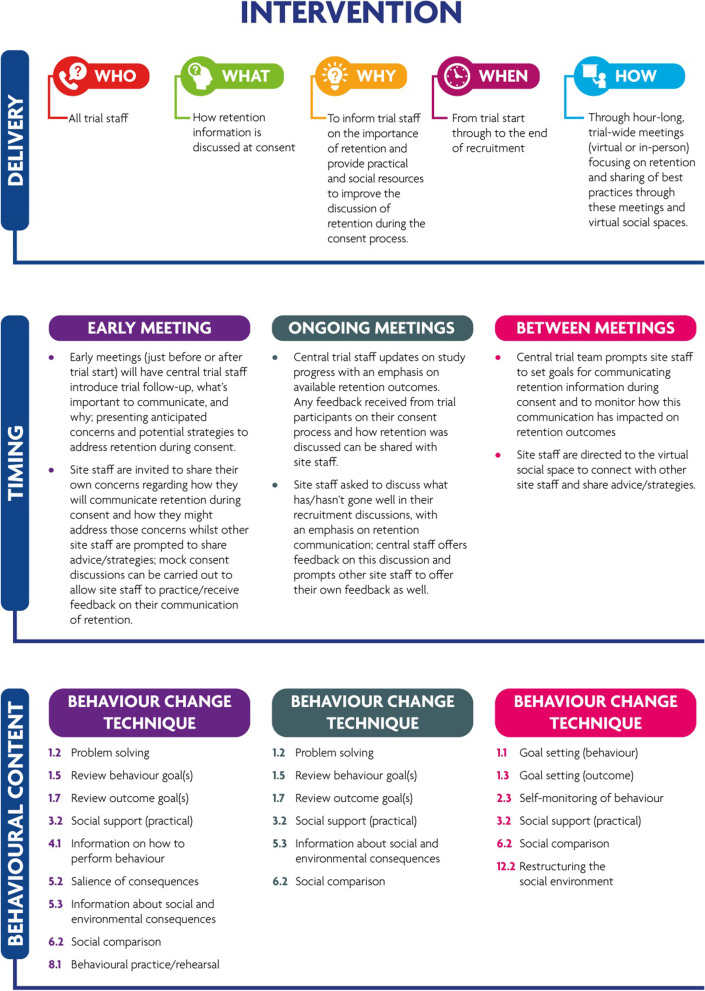
We applied the Theoretical Domains Framework and Behaviour Change Wheel to develop an intervention aimed at changing the retention communication behaviours of trial staff. Building on findings from an interview study to understand the barriers/facilitators to retention communication during consent, we identified behaviour change techniques that could moderate them. These techniques were grouped into potential intervention categories and presented to a co-design group of trial staff and public partners to discuss how they might be packaged into an intervention. An intervention was presented to these same stakeholders and assessed for acceptability through a survey based on the Theoretical Framework of Acceptability.
Twenty-six behaviour change techniques were identified with potential to change communication of retention-information at consent. Six trial stakeholders in the co-design group discussed means for implementing these techniques and agreed the available techniques could be most effective within a series of meetings focussed on best practices for communicating retention at consent. The proposed intervention was deemed acceptable through survey results.
We have developed an intervention aimed at facilitating the communication of retention at informed consent through a behavioural approach. This intervention will be delivered to trial staff and will add to the available strategies for trials to improve retention.
临床试验对于循证医学至关重要。其成功依赖于参与者的招募和保留:任何一方的问题都可能影响结果的有效性。过去关于提高试验的研究重点是招募,而保留方面的研究较少,甚至更少考虑在招募时的保留,即,在同意过程中共享哪些与保留相关的信息。试验工作人员在同意过程中传达这些信息的行为可能会影响保留率。因此,有必要开发在同意时减轻保留问题的方法。在这项研究中,我们描述了一种行为干预措施的开发,该措施旨在改变同意过程中与保留相关的信息的沟通。
我们应用理论领域框架和行为改变轮来制定一项干预措施,旨在改变试验工作人员在同意过程中保留沟通的行为。在对访谈研究的结果进行分析以了解同意过程中保留沟通的障碍/促进因素的基础上,我们确定了可以调节这些因素的行为改变技术。这些技术被分为潜在的干预类别,并呈现给一个由试验工作人员和公众合作伙伴组成的共同设计小组,以讨论如何将它们纳入干预措施中。同一批利益相关者也对干预措施进行了评估,并根据可接受性的理论框架进行了基于调查的评估。
确定了 26 种行为改变技术,这些技术有可能改变同意时保留信息的沟通。在共同设计小组中有六名试验利益相关者讨论了实施这些技术的方法,并同意可用技术在一系列会议中最有效,这些会议侧重于在同意时保留沟通的最佳实践。通过调查结果,拟议的干预措施被认为是可以接受的。
我们已经开发了一种通过行为方法来促进知情同意时保留信息沟通的干预措施。该干预措施将提供给试验工作人员,并为试验提高保留率提供更多策略。