Zainol Abidin Qamarul Hafiz, Ida Tomoaki, Morita Masanobu, Matsunaga Tetsuro, Nishimura Akira, Jung Minkyung, Hassan Naim, Takata Tsuyoshi, Ishii Isao, Kruger Warren, Wang Rui, Motohashi Hozumi, Tsutsui Masato, Akaike Takaaki
Department of Environmental Medicine and Molecular Toxicology, Tohoku University Graduate School of Medicine, Sendai 980-8575, Japan.
Department of Health Chemistry, Showa Pharmaceutical University, Machida, Tokyo 194-8543, Japan.
Antioxidants (Basel). 2023 Apr 3;12(4):868. doi: 10.3390/antiox12040868.
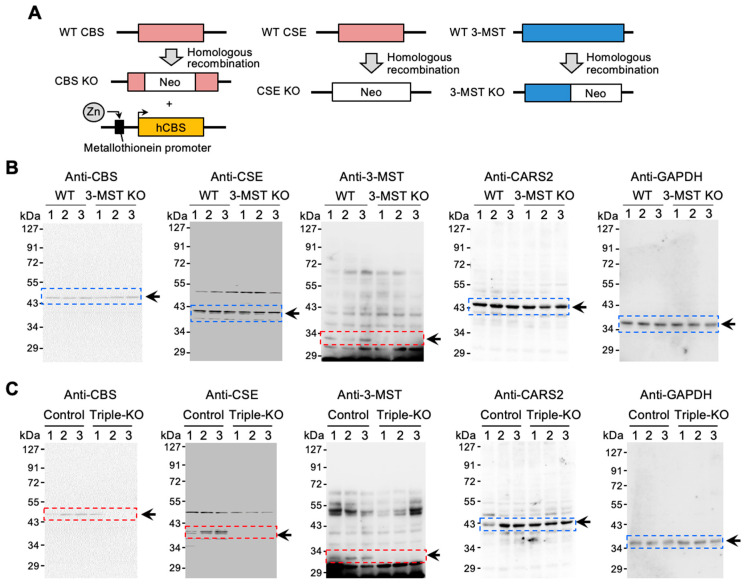
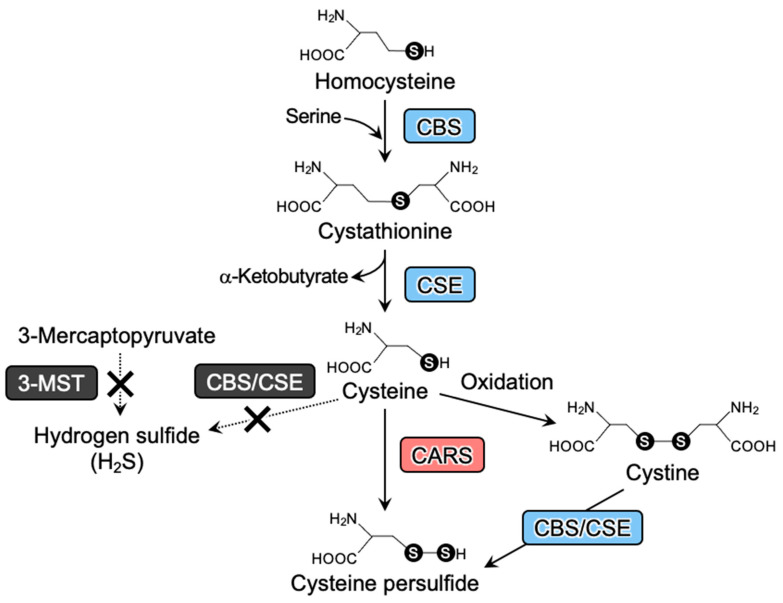
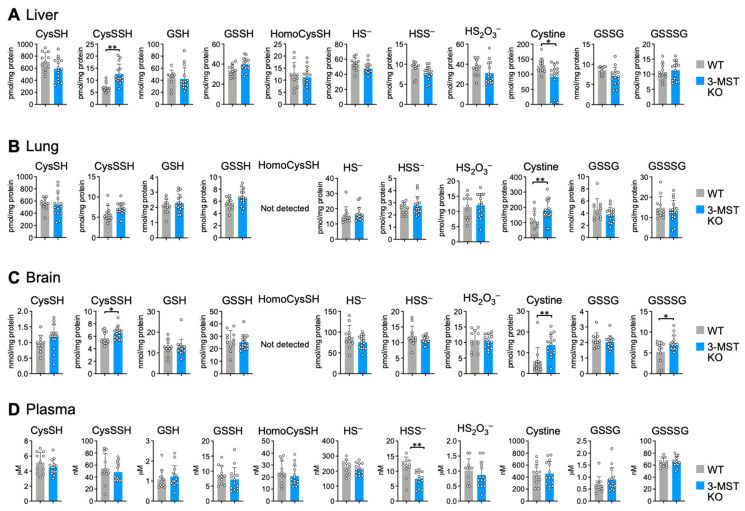
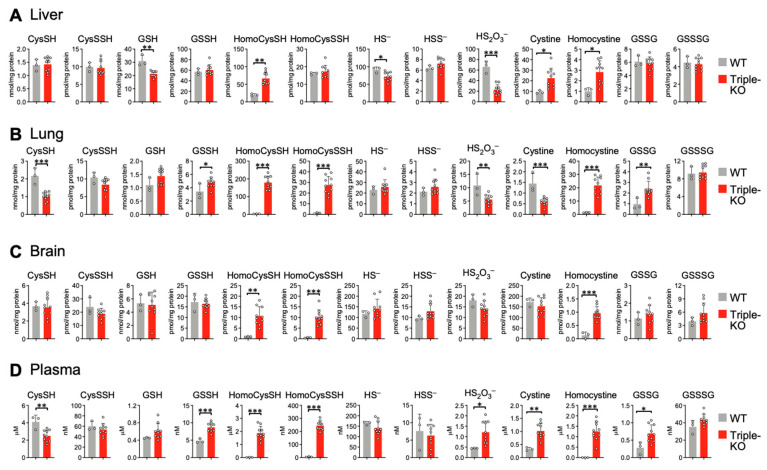
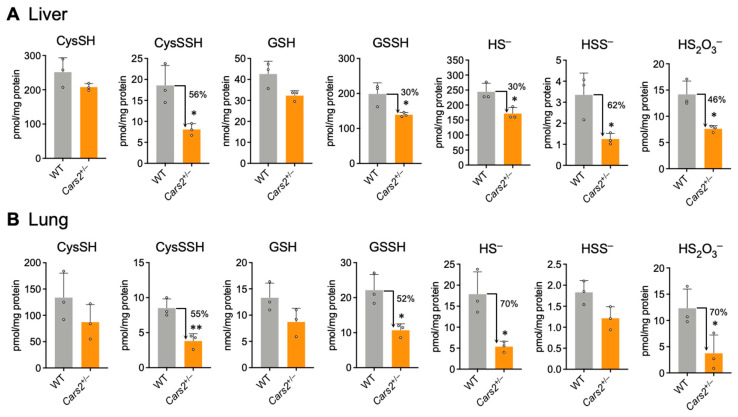
Reactive sulfur species, or persulfides and polysulfides, such as cysteine hydropersulfide and glutathione persulfide, are endogenously produced in abundance in both prokaryotes and eukaryotes, including mammals. Various forms of reactive persulfides occur in both low-molecular-weight and protein-bound thiols. The chemical properties and great supply of these molecular species suggest a pivotal role for reactive persulfides/polysulfides in different cellular regulatory processes (e.g., energy metabolism and redox signaling). We demonstrated earlier that cysteinyl-tRNA synthetase (CARS) is a new cysteine persulfide synthase (CPERS) and is responsible for the in vivo production of most reactive persulfides (polysulfides). Some researchers continue to suggest that 3-mercaptopyruvate sulfurtransferase (3-MST), cystathionine β-synthase (CBS), and cystathionine γ-lyase (CSE) may also produce hydrogen sulfide and persulfides that may be generated during the transfer of sulfur from 3-mercaptopyruvate to the cysteine residues of 3-MST or direct synthesis from cysteine by CBS/CSE, respectively. We thus used integrated sulfur metabolome analysis, which we recently developed, with 3-MST knockout (KO) mice and CBS/CSE/3-MST triple-KO mice, to elucidate the possible contribution of 3-MST, CBS, and CSE to the production of reactive persulfides in vivo. We therefore quantified various sulfide metabolites in organs derived from these mutant mice and their wild-type littermates via this sulfur metabolome, which clearly revealed no significant difference between mutant mice and wild-type mice in terms of reactive persulfide production. This result indicates that 3-MST, CBS, and CSE are not major sources of endogenous reactive persulfide production; rather, CARS/CPERS is the principal enzyme that is actually involved in and even primarily responsible for the biosynthesis of reactive persulfides and polysulfides in vivo in mammals.
反应性硫物种,即过硫化物和多硫化物,如半胱氨酸氢过硫化物和谷胱甘肽过硫化物,在包括哺乳动物在内的原核生物和真核生物中都大量内源性产生。各种形式的反应性过硫化物存在于低分子量和蛋白质结合的硫醇中。这些分子物种的化学性质和大量供应表明反应性过硫化物/多硫化物在不同的细胞调节过程(如能量代谢和氧化还原信号传导)中起关键作用。我们之前证明,半胱氨酰-tRNA合成酶(CARS)是一种新的半胱氨酸过硫化物合成酶(CPERS),负责体内大多数反应性过硫化物(多硫化物)的产生。一些研究人员继续认为,3-巯基丙酮酸硫转移酶(3-MST)、胱硫醚β-合酶(CBS)和胱硫醚γ-裂合酶(CSE)也可能产生硫化氢和过硫化物,它们可能分别在硫从3-巯基丙酮酸转移到3-MST的半胱氨酸残基过程中或由CBS/CSE从半胱氨酸直接合成过程中产生。因此,我们使用我们最近开发的综合硫代谢组分析方法,对3-MST基因敲除(KO)小鼠和CBS/CSE/3-MST三联基因敲除小鼠进行研究,以阐明3-MST、CBS和CSE对体内反应性过硫化物产生的可能贡献。因此,我们通过这种硫代谢组对这些突变小鼠及其野生型同窝小鼠的器官中的各种硫化物代谢物进行了定量,结果清楚地表明,在反应性过硫化物产生方面,突变小鼠和野生型小鼠之间没有显著差异。这一结果表明,3-MST、CBS和CSE不是内源性反应性过硫化物产生的主要来源;相反,CARS/CPERS是实际参与并甚至主要负责哺乳动物体内反应性过硫化物和多硫化物生物合成的主要酶。