Gong Youhui, Li Ting, Xiu Xiaojian, Desneux Nicolas, Hou Maolin
State Key Laboratory for Biology of Plant Diseases and Insect Pests, Institute of Plant Protection, Chinese Academy of Agricultural Sciences, Beijing 100193, China.
Department of Biological Sciences, Alabama State University, Montgomery, AL 36104, USA.
Toxics. 2023 Mar 31;11(4):332. doi: 10.3390/toxics11040332.
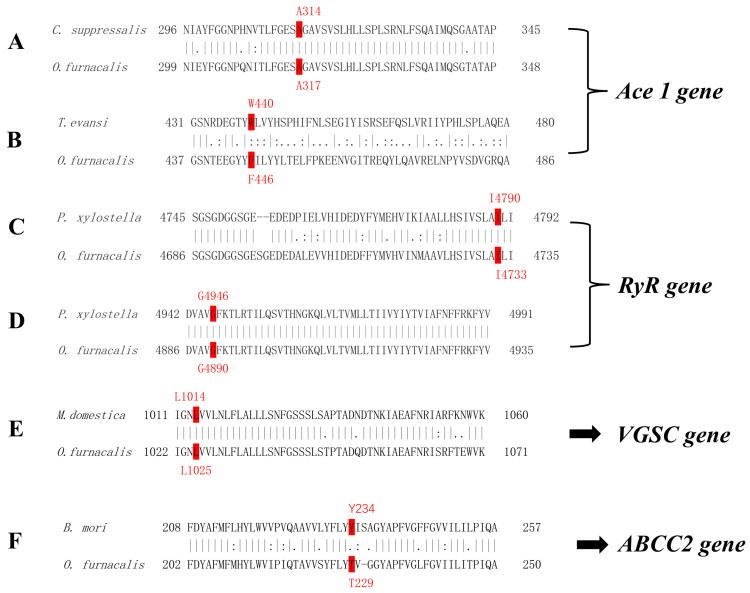
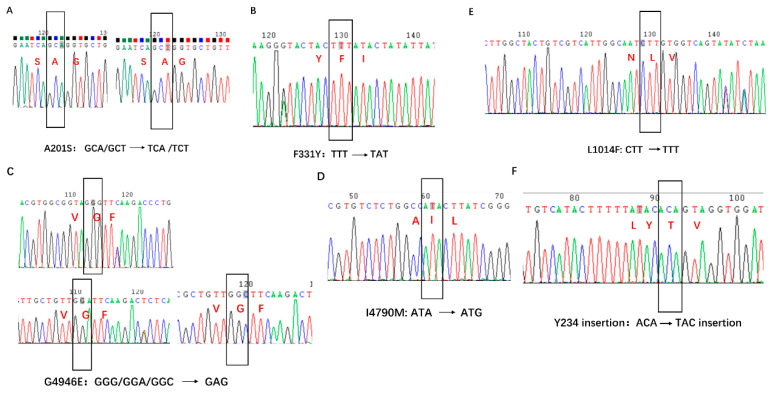
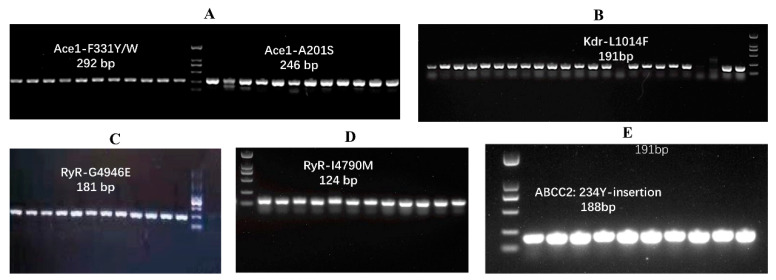
The Asian corn borer, (Guenée) (Lepidoptera; Pyralidae), is one of the most destructive insect pests of corn, for which chemical insecticides have been the primary method of control, especially during outbreaks. Little information is currently available on the status of insecticide resistance and associated mechanisms in field populations. Invasions and outbreaks of in China in recent years have increased chemical application in corn fields, which adds to the selection pressure on . This study was conducted to estimate the risk of insecticide resistance by investigating the frequency of insecticide resistant alleles associated with target site insensitivity in field populations of . Using the individual-PCR genotype sequencing analysis, none of the six target-site insecticide resistant mutations were detected in field populations collected from 2019 to 2021 in China. These investigated insecticide resistance alleles are common in resistant Lepidoptra pests and are responsible for resistance to pyrethroids, organophosphorus, carbamates, diamide, and Cry1Ab. Our results support the low insecticide resistance status in field populations and betokens the unlikely development of high resistance mediated by the common target-site resistance alleles. Additionally, the findings would serve as references for further efforts toward the sustainable management of .
亚洲玉米螟,Ostrinia furnacalis(Guenée)(鳞翅目;螟蛾科),是玉米最具破坏性的害虫之一,化学杀虫剂一直是主要的防治方法,尤其是在爆发期间。目前关于田间种群中杀虫剂抗性状况及相关机制的信息很少。近年来,亚洲玉米螟在中国的入侵和爆发增加了玉米田化学药剂的使用,这增加了对亚洲玉米螟的选择压力。本研究通过调查亚洲玉米螟田间种群中与靶标位点不敏感相关的抗药性等位基因频率来评估抗药性风险。利用个体PCR基因型测序分析,在2019年至2021年从中国采集的亚洲玉米螟田间种群中未检测到六个靶标位点抗药性突变。这些被研究的抗药性等位基因在抗性鳞翅目害虫中很常见,并且导致对拟除虫菊酯、有机磷、氨基甲酸酯、双酰胺和Cry1Ab产生抗性。我们的结果支持亚洲玉米螟田间种群抗药性较低的现状,并表明不太可能由常见的靶标位点抗性等位基因介导产生高抗性。此外,这些发现将为亚洲玉米螟的可持续治理进一步努力提供参考。